Why Hasn’t Israel’s Economy Collapsed Despite Prolonged War?

Since 7 October 2023, Israel has been engaged in a sustained, multi-front military campaign. What began with Israel’s genocidal onslaught against the Gaza Strip expanded to include military operations in Lebanon and the Red Sea before escalating into a direct confrontation with Iran in 2026. This was reflected economically in heightened uncertainty and rising risk premiums, a contraction in labour supply due to the mobilisation of military reservists, and a decline in the non-Israeli workforce, particularly affecting economic sectors such as the construction sector. At the same time, public finances were increasingly redirected toward financing the war effort, with higher defence spending accompanied by widening fiscal deficits and growing public debt, thereby intensifying pressures on civilian expenditure and productive investment spending.
The economic repercussions of the conflict were clearly reflected in Israel’s sovereign creditworthiness, as the major international credit rating agencies downgraded its sovereign credit rating during 2024. Moody’s downgraded Israel’s rating from A1 to A2 in February, then downgraded it again to BAA1 in September. Standard & Poor’s also downgraded the rating from AA- to A+ in April, then to A in October, while Fitch downgraded the rating from A+ to A in August. These downgrades reflect the escalation of geopolitical risks, and the increasing burdens of military spending, alongside the growing pressures on the fiscal deficit, the public debt, and the cost of borrowing.
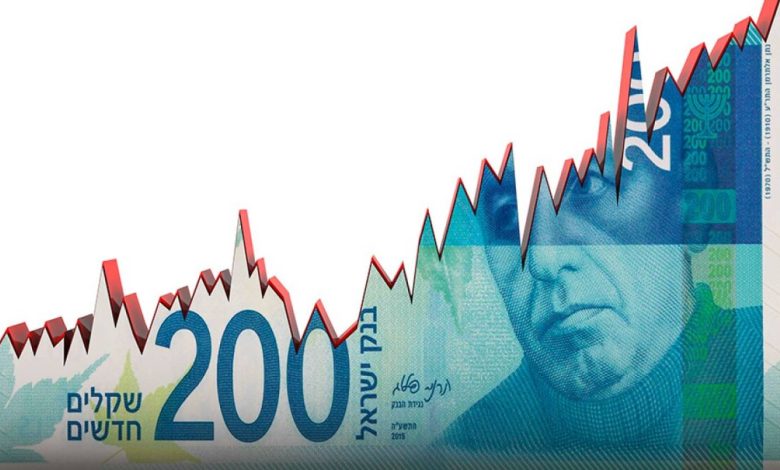
But the paradox is that the Israeli economy did not collapse; it declined, and slowed, and paid a large financial and social cost, yet it remained able to function and to recover between the waves of escalation. According to the World Bank, the size of Israel’s gross domestic product reached around 540.4 billion dollars at current prices in 2024, while the economy recorded weak growth of 1.0% in 2024, then improved to 2.9% in 2025. And even when output contracted in the first quarter of 2026 at an annual rate of 3.3% because of the Iran war, the economic estimates expected the return of activity if the confrontation were not renewed. Therefore, a fundamental question emerges: why did the damage that struck the Israeli economy not turn into a comprehensive collapse?
This article argues that the answer does not lie in reading the economy as a single bloc, but rather in disassembling it into a map of sectors; for there is a daily civilian economy that receives the blow first, and it includes: hotels, restaurants, construction, trade, consumption, and supply chains. By contrast, there is a security-technological economy that benefits from the state of global fear and from the increase in demand for air defence, counter-drone systems, cybersecurity, and military data analysis. In other words: the war is not reflected positively on the economy as a whole, but it redistributes the pain and the gains within it, weakening sectors and opening markets for others.
An Economy Under Pressure, Not a Collapsing Economy
After 2024, the Israeli economy witnessed a noticeable improvement in general. Israel’s gross domestic product grew by 2.9%, unemployment averaged around 3.0%, and annual inflation declined to 2.6% in December 2025. But these numbers do not cancel the cost of the conflict. The central government deficit reached 4.7% of GDP in 2025, while the general government deficit reached 6.5%, and the ratio of public debt to output rose from 67.6% to 68.5%. The Bank of Israel also estimated the fiscal cost of the genocidal war that began in October 2023 at around 350 billion shekels during the period from 2023 to 2026, excluding subsequent decisions connected to the Iran campaign in 2026. And by counting the cost of the latest confrontation with Iran, the cost rises to reach 405 billion shekels, that is, the equivalent of nearly 116 billion US dollars. Also added to it are nearly 200 billion shekels of indirect economic losses as a result of the disruption of economic activity, so that the total cumulative estimate of the cost of the war reaches nearly 200 billion US dollars.
In addition to that, the increase in military spending continues, as the Stockholm International Peace Research Institute estimated Israeli military spending in 2025 at around 48.3 billion dollars, and despite its decline by 4.9% from 2024, it remained higher by around 97% than its level in 2022. Therefore, the resilience here is financed by debt, taxes, and the rearrangement of public priorities. And this is the essential point at which one must pause: for the numbers do not indicate that the economy is at its best, but they do not at the same time mean that it collapsed; rather they confirm that a high-income economy, relatively large, and supported by a strong technology sector, is able to absorb large shocks, so long as it possesses vital sectors that bring in hard currency and continue to export to global markets.
The point of external resilience is also clarified by the balance of payments, for the Organisation for Economic Co-operation and Development estimated the current account surplus at around 3.8% of output, with exports of goods and services equivalent to 30.4% of output, against imports at 27.6%. And although the goods balance usually tends toward deficit, the surplus of services, especially technology and software services, helps to alleviate the effect of the decline of tourism and some traditional exports.
And to clarify the picture in a concentrated manner, some of the basic indicators can be summarised as follows:
| Indicator | Value | Significance |
| Gross Domestic Product | 540.4 billion dollars in 2024 | A relatively large economy, granting a margin for absorbing shocks |
| Real Growth | 1.0% in 2024, then 2.9% in 2025 | A sharp slowdown then a partial recovery, which does not mean a full return to the previous path |
| Inflation | 2.6% at the end of 2025 and 1.9% in April 2026 | Price pressures exist but did not turn into inflationary runaway |
| Deficit and Debt | General government deficit 6.5% and debt 68.5% of output in 2025 | The fiscal problem accumulates despite operational resilience |
| Military Spending | 48.3 billion dollars in 2025 | The war raised the military burden to a level far higher compared with what preceded 2023 |
| Current Account | A surplus of 3.8% of output according to OECD estimates | Services and technology exports grant the economy external support |
The Sectoral Map… Where Does the Weakness Lie and Where Are the Gains Formed?
The Israeli economy is founded, like most advanced economies, on the services sector, as the data of the World Bank indicate that services contributed around 72.5% of GDP in 2024, while industry, including construction, represented around 17.35% according to the same indicator. The importance of this composition lies in the fact that it explains the speed of the appearance of the effects of the war on daily activities such as tourism, aviation, restaurants, and trade, against the ability of other sectors that depend on international contracts, or software, or defence, to endure and continue even in times of war.
On the civilian side, the impact appears clearly in tourism, construction, and consumption, for the report of the Organisation for Economic Co-operation and Development for 2026 clarified that inbound tourism to Israel almost dried up, in addition to the fact that the decline of commercial flights disrupts the movement of the business sector, which is a matter of extreme importance for the technology sector. And in the construction sector, the restrictions on Palestinian labour led to the occurrence of a large gap. Reuters mentioned that around 200 thousand workers from the West Bank, in addition to 18.5 thousand workers from Gaza, were no longer able to enter Israel since the beginning of the war, and that tens of thousands of them were working in essential skills inside construction sites. Therefore, the disruption of construction was not merely a contracting problem, but rather a shock extending to iron, cement, transport, real-estate financing, and the housing market.
And this is what explains the reason for the newspaper “Le Monde” speaking of an economy that entered a zone of uncertainty, not because of the cessation of all activities, but because entire civilian sectors became shackled by the constraints of labour shortage, the decline of air traffic, the rise of the cost of insurance, and military mobilisation. The Israeli data also estimated that the decline of the labour supply in the business sector reached 4.9% in 2024 as a result of the absence of Palestinian labour and the call-up of the reserves, which was reflected negatively on production, prices, and vacancies. And despite the attempts to bring in labour from India, Sri Lanka, Moldova, and other countries, the replacement of a nearby and trained workforce does not take place quickly, and is not free of exorbitant costs.
By contrast, the numbers reveal a sector capable of carrying a large part of the economy, and it is the technology sector. According to the Israel Innovation Authority, high technology contributed around 17% of GDP in 2024, and employed around 403 thousand people in the first half of 2025, that is, the equivalent of 11.5% of the total workforce, and it also constituted around 57% of exports during the same period. Bearing in mind that the Authority had indicated in its reports the arrival of the contribution of this sector at around 20% of output, and 53% of exports. These data confirm that the resilience of the Israeli economy does not depend only on domestic consumption, but on a high-value export sector, capable of bringing in the dollar even when other domestic sectors are damaged.
Investing Global Security Fears
It can be said that the Israeli economy feeds on the fears of security and defence that the world is witnessing in the current stage, which is politically and security-wise turbulent across various arenas.
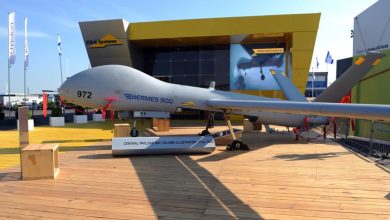
The defence industries sector is considered the most prominent model of this “economy of fear”; for in 2024 Israeli defence exports reached around 15 billion dollars, an increase of 13% over the same period of 2023, where missile systems and air defence captured 48% of these exports, and 54% of them went to Europe. Then exports jumped in 2025 to more than 19 billion dollars, an increase approaching 30% over the previous year. These escalating numbers confirm that we are not dealing with a sector that merely survives the repercussions of the war, but rather we are before a system that employs military operations, or at the least their contemporary field experience, as a principal marketing tool; through presenting weapons and systems that have proven their effectiveness in real confrontations and against composite threats that include missiles and drones.
And this does not happen in a vacuum. For the Russian invasion of Ukraine pushed European countries to rebuild their air defences, while the drone attacks in the Middle East stimulated international efforts to search for more advanced radars and interception systems. And by virtue of these factors, Israel became the seventh largest supplier of weapons in the world during the period (2021–2025), surpassing Britain for the first time. And thus the security fears of other countries turn into external demand for Israeli products, even under wide political and human-rights criticisms of Israel’s conduct in Gaza, Lebanon, and Iran.
Cybersecurity represents the other face of this equation, as it includes the protection of banks, hospitals, energy networks, cloud platforms, and global companies. In this context, the deal of Google’s acquisition of the Israeli cloud-security company “Wiz,” at a value of 32 billion dollars, came to constitute a clear indication that Israeli technology still represents a strategic asset for the major companies. Likewise, the Israeli company “Bold” obtained financing amounting to 40 million dollars to develop device-protection solutions supported by artificial intelligence. In this type of market, the ability of institutions to work under pressure may turn into a factor for enhancing trust, where these entities are viewed as capable of continuing to provide their vital security services to their clients around the world, despite their existence in a country passing through a state of war.
Artificial intelligence added a new layer to the war economy, for in the press investigations about the Gaza genocide, the names of Israeli systems appeared as tools that help in gathering data or suggesting targets or tracking persons. “Time” magazine presented this issue as a model for the future of wars, where artificial intelligence does not necessarily work as an independent machine that presses the trigger, but rather as a tool that accelerates sorting and classification and pushes humans to take faster decisions. Economically, these expertises can feed the companies of analysis, defence, and surveillance, but they raise at the same time an ethical question about the limits of turning war data into a product. The Center for Strategic and International Studies described modern war as a continuous race in technological adaptation; and here Israel finds itself at the forefront of the dominant countries in the field of security technology.
And here, the effect of the boycott and the pressures of human-rights organisations cannot be ignored, yet it is necessary to evaluate their repercussions from a sectoral perspective; for in the fields of consumer goods, academic circles, and cultural events, the boycott can affect reputation and public presence, because consumers, students, and civil institutions are more sensitive to image. As for the defence and cybersecurity sectors, decision-making remains largely the preserve of governments, security institutions, and major companies that measure risks according to entirely different calculations and criteria. In this regard, the Associated Press agency indicated that some of the countries that politically announce their desire to reduce dependence on Israeli weapons continue to purchase or to contract for security and defence products away from the spotlight.
Conclusion
It can be said that the winning sectors cannot alone cancel the general cost of the war, for the rise of debt and the deficit, the possibility of increasing taxes, and the freezing or reduction of some civilian expenditures, are all factors whose effects may appear gradually. The Taub Center cautioned that the Israeli economy during 2024 was the economy of a nation at war, where the cost of security overlaps with the labour market, income, and public services. Moreover, the continuation of the mobilisation of reserve forces or the repetition of the waves of escalation presses on small and medium companies more than on the major technology companies; because the former depend on domestic stability, daily labour, and short-term liquidity, while the latter are able to operate through foreign markets and international contracts.
Likewise, it should not be ignored that technology itself may be affected by political isolation. For although this sector brought in hard currency and preserved the interest of investors, Israel faced a slowdown in the growth of technological employment, a decline in research and development roles in the first half of 2025, and a decrease in the founding of new companies compared with what the situation was a decade ago. That is, the sector is strong, but it is not insulated from the effect of the war or the political environment. And hence, the current resilience may conceal future problems in human investment, the attraction of talent, and the confidence of global companies.
From here, the numbers of growth or exports alone are not sufficient to understand the picture, just as the images of empty hotels and halted construction sites are not sufficient to declare collapse. The war redistributes the economy: it moves resources from the civilian to the military, from consumption to security, and from the domestic market to external demand for defence and cybersecurity systems. And in this equation, companies and sectors may win, but society, public finances, and political legitimacy pay a price that accumulates slowly. And for this reason the question “why does the Israeli economy not collapse?” does not lead to a single answer, but rather to a complete paradox: because it is a damaged economy, but diversified; crisis-stricken, but able to export; and drained, but possessing sectors that profit from fear.
NOTE: This text is adapted from original Arabic article.