Educide in Gaza: The Future of a Generation at Stake
Amid more than two and a half years of continuing genocide in the Gaza Strip, the education sector has suffered an unprecedented catastrophe. The official education system has been brought to a standstill, schools and universities have been systematically destroyed, thousands of students and hundreds of educators have been killed or detained, and hundreds of thousands of children and young people have been deprived of their fundamental right to education.
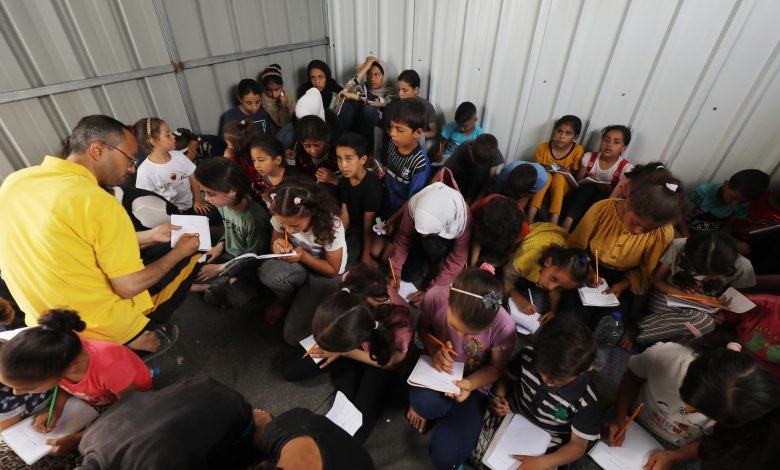
As successive waves of displacement continued, reconstruction was prevented, and the entry of educational supplies remained prohibited. In response, “learning spaces”, community-led educational initiatives, and temporary schools emerged as alternative mechanisms for delivering education in the absence of a functioning formal system. While these initiatives have helped mitigate interruptions to learning, their limited resources, coupled with the absence of consistent educational standards and institutional oversight, have constrained their effectiveness. This raises critical questions about the future of education in Gaza and the capacity of these initiatives to address the mounting challenges facing the sector.
The State of Education in the Gaza Strip During the Genocide
The Israeli military has strategically sought to impose educational deprivation on the Palestinian people, despite their long-standing recognition as one of the world’s most literate populations. According to the indicators of the Palestinian National Information Center, illiteracy rates in Palestine are among the lowest globally, having reached 2.1% among individuals (15 years and older) for the year 2023, the same year in which the Israeli occupation launched its devastating genocide in the Gaza Strip, targeting the very foundations of Palestinian existence. By the end of April 2026, the genocide had resulted in the killing of 20,051 students and the injury of 28,337 others. More than 532 teachers employed in government, UNRWA, and private schools had also been killed, while 3,291 were injured. The systematic destruction extended to the educational infrastructure itself. Approximately 95% of all government and UNRWA schools sustained damage, rendering the continuation of formal education nearly impossible and jeopardising the future of thousands of students.[1] This widespread devastation reflects a broader assault on the future of Palestinian human capital by targeting the institutions, educators, and students upon which it depends.
The resumption of in-person education was further impeded by the displacement of large numbers of students and teachers, many of whom were preoccupied with securing basic necessities such as water and food for their families. These challenges were compounded by the absence of a safe and stable learning environment, as schools and displacement shelters housing the learning centres were repeatedly targeted. At the same time, the Israeli authorities prohibited the entry of all educational and logistical supplies, ranging from stationery and teaching materials to desks and classroom furniture. Collectively, these conditions have widened the learning gap to a degree that threatens to deprive an entire generation of access to formal education, particularly during the foundational years in which core knowledge and learning skills are developed.
Despite the diversity of educational initiatives in the Gaza Strip, 60% of school-age children currently do not receive in-person education, according to the spokesperson for the United Nations Children’s Fund (UNICEF), James Elder, who said: “Before this war on children, education was a source of pride, resilience, and progress for generations, whereas today this legacy is under severe attack; schools, universities, and libraries have been destroyed, and years of progress have been erased. This is not merely material destruction; it is an assault on the future itself.”
A report by the People’s Company for Policy and Survey Research (PCPSR), issued on 8 June 2026, confirmed what James Elder pointed to regarding the limited access to education in the Gaza Strip, as 24% of families reported that all of their school-age children receive some form of education, while 43% stated that only some of their children obtain education, whereas 31% clarified that none of their children were able to enroll in education during the current school year.
In confronting this crisis, the Ministry of Education has developed a plan to accommodate students during the coming year through the expansion of establishing tent schools[2], and compensating for the educational and value-based loss, and providing psychological and recreational support to children to alleviate the psychological effects resulting from the conflict, in partnership with a number of institutions, foremost among them the United Nations Children’s Fund (UNICEF).
Learning Centres as an Emergency Response
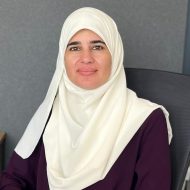
In confronting the collapse of the educational system, “learning centres” emerged as a community response to reduce students’ interruption from study, as these points spread in shelter centers, camps, and temporary population gatherings. According to the Director-General of the Planning Unit at the Ministry of Education, Mona al-Sadeq[3], these efforts succeeded in accommodating around 400,000 students from the first grade to the twelfth, distributed across 821 field schools throughout the Gaza Strip, supervised by the Ministry in partnership with the United Nations Children’s Fund (UNICEF), while tens of thousands of students continue their education through the schools of the United Nations Relief and Works Agency for Palestine Refugees (UNRWA), or via e-learning tracks integrated with the (EMIS) program and the various virtual communication groups.
Despite the continuation of the educational process in multiple forms, it faces major challenges, foremost among them the difficult living conditions of displaced teachers and the weakness of financial return, which has driven many of them to volunteer work at the learning centres, in an effort to prevent the loss of an entire generation, according to the teacher Lina Samour[4], a volunteer in teaching the English language.
These points operate in environments that lack the minimum of educational essentials, as students study in tents and overcrowded shelter centers, with an acute shortage of seats, teaching aids, laboratories, and playgrounds, which is reflected negatively on the quality of the educational process and its outcomes.
1. The Absence of Educational Standards
The vast majority of these learning centres rely on individual improvisations, in the absence of a unified methodological framework that organizes the learning environment and its various stages, as most of them lack school regularity and discipline, in addition to the fact that some initiatives are forced to be confined to particular age stages rather than others. In this context, Dua Ammar, the mother of one of the students, recounts the details of her suffering with the faltering completion of the educational process for her children, as she says: “My daughter passed the general secondary stage with extreme difficulty and great self-reliance, due to the unavailability of learning centres or educational points, while my son Muhammad is still faltering amid the absence of official schools. The educational points and initiatives have many problems that led to his aversion to continuing his education there, among them: the instability of the timings of the class sessions, which the teacher sets according to her personal circumstances. In addition to the fact that the educational classes are irregular, as my son was placed at a level that exceeds his current abilities and without regard for the missed lessons, which led to the aggravation of his educational loss, and made his comprehension of the current concepts and lessons an extremely difficult matter.”[5]
2. The Shortage of Qualified Teachers
In addition to the foregoing, a wide segment of those working at these points are volunteers who lack sufficient educational and pedagogical experience, which affects the quality of the educational process negatively. Regarding that, Dua Ammar says: “My son Muhammad did not achieve any benefit from the learning centres, as the teachers lack sufficient experience to deal with the students and to explain the curriculum in a way that suits their psychological and educational situation, so the administration is forced to replace them from time to time, which distracts the students and leads to their reluctance to continue studying, particularly the adolescents among them at this critical age-stage, where disciplining them behaviourally and guiding them becomes a complex matter in the absence of a stable and pedagogically qualified teacher.”[6]
From here, it becomes clear that “educational genocide” (also referred to as “educide”), does not merely represent an academic term, but rather is an obstacle that ends the aspirations of the rising generation and destroys its professional future. This dilemma is embodied in the experience of the student Muhammad Samour, who was forced to give up his aspiration to study engineering, and to shift by compulsion from the scientific track to the literary track; this was due to the absence of a foundational knowledge structure with him during the two stages of the ninth and tenth grades, amid the inability of the temporary learning centres to provide teaching competencies capable of bridging this acute knowledge interruption, or of providing remedial programs suited to the complexities of the scientific subjects.[7]
3. The Limitation of Time and Capacities
The widespread destruction of schools, together with the broader conditions created by the genocide, compelled thousands of students to continue their education in tents and displacement shelters lacking even the minimum requirements for effective learning. Abeer Ghurab, a mother of five students in various educational stages, describes this environment as unsuitable for learning, as the tents flood in winter and turn into extremely hot places in summer, in addition to the overlapping of sounds, which undermines the students’ ability to pay attention and concentrate, making these learning centres a source of psychological pressure as much as they are a means for the continuation of education.[8]
The narrowness of spaces also imposes a reduction of study hours, through dividing the educational stages into multiple periods, which limits the students’ ability to comprehend the curriculum. In this context, Aya Sukkar, a mother of children attending these learning centres, explains that her children receive far fewer lessons than before, as the weekly instructional time has fallen to approximately seven hours, compared with six hours per day prior to the destruction of the formal education system, significantly exacerbating learning loss.
She adds that the confinement to some basic subjects, along with the limited nature of the educational packages, threatens the weak grounding of students in important subjects, foremost among them the English language and the other sciences.[9]
4. The Weakness of Assessment and Follow-up
There are no clear mechanisms to measure the level of attainment, or to guarantee the students’ transition between the various educational stages. Maysara Shaban[10], who is the mother of one of the students, comments on that by saying: “The absence of a monthly or annual assessment pushes the student toward laziness, complacency, and not following up with enthusiasm, for it is the continuous examinations that motivate students to diligence and effort in order to reach the level of success and excellence.”
5. The Rise of Private Schools
Some private schools have sought to close the educational gap by providing more integrated services compared to the learning centres; however, the rise in their fees made enrollment in them confined to a limited segment of families amid the decline of economic conditions and the loss of sources of income. This raises fears of education turning into a privilege linked to financial capacity, in a way that threatens to deepen the social gap between those who were able to obtain a private education and those who were deprived of it because of poverty and displacement.
The Psychosocial Repercussions of the Continuation of the (Temporary) Learning Centres and the Absence of Formal Education
The transformation of “learning centres” from a temporary emergency solution into a long-term reality produces a deep imbalance in the child’s developmental environment. The specialist Hala Sukkar[11] sees that the most prominent of its effects lie in the continuation of psychological over-arousal as a result of the absence of the safe school routine, which entrenches anxiety and post-traumatic stress disorders, in addition to the decline of cognitive growth and the feeling of learned helplessness and the decrease of self-efficacy because of the poverty of the educational environment in the stimuli and tools necessary for learning. The educational process, under conditions of overcrowding, noise, and the absence of comfort, also turns into a source of psychological and cognitive exhaustion, so focus and attention decline, while the absence of an organized school framework leads to the weakening of self-control and the entrenchment of behavioural patterns based on immediate adaptation instead of planning and social responsibility.
These repercussions are further aggravated for young children aged 5–8, for whom prolonged deprivation of schooling threatens the distortion of developmental identity, as war and displacement become the primary frames of reference through which they develop their sense of self and understanding of the world. The child also loses the opportunities to learn emotional regulation and social interaction, which increases the likelihood of withdrawal or aggressive behaviour. The deprivation of the natural cultural and linguistic environment leads to an expressive and emotional poverty that limits the child’s ability to understand and express his feelings. In the long term, the absence of foundational skills aggravates the risks of child labour, early marriage, and social marginalization, threatening the emergence of a generation excluded psychologically and socially, lacking the tools of integration, production, and effective participation in the future.
From School Desks to the Burdens of Survival: A Disrupted Childhood
Behind the statistics of the 60% of children deprived of education in Gaza, real faces and stories are hidden, such as that of the 12-year old child Adnan al-Wadiya, whose image can represent a model for an entire generation that replaced the pen and knowledge with fetching water and working to support his family. After the martyrdom of his father near the aid centers, he found himself responsible, together with his brother, for a family consisting of 9 members. Adnan describes his gruelling day by saying: “I go out in the early morning to fetch fresh water for drinking, and then I return to help my brother in selling at a stall that contributes to caring for the family, and then I go to fetch salt water for daily use, and afterward I wait for hours in the line of the soup kitchen (takiyya) to fetch the lunch meal, then I complete my day in selling.”[12]
Muhammad Ali, a 14-year-old student, summarises the current state of education as follows:
“The so-called learning centres are merely an attempt to prevent illiteracy; they do not provide real education. The learning environment is not suitable, and the available resources are inadequate for explaining even basic concepts. Above all, at any moment we may become among the ranks of the martyrs and the wounded.”[13]
Despite the importance of the educational points as an emergency response, they remain a first aid that prevents the complete interruption from learning, but they cannot be a permanent alternative to formal schooling. The continuation of this reality threatens to entrench a disguised illiteracy, the widening of learning gaps, and the rise of school dropout rates and child labour, which weakens the ability of an entire generation to contribute to the reconstruction of Gaza and its future.
What is most alarming is that the ongoing educational genocide is not limited to the destructional of the educational ecosystem and the loss of school years; it also creates a hostile environment that drives families to seek a different future for their children outside the country, at a time when the world is witnessing a rapidly accelerating knowledge and technological revolution. Therefore, rebuilding schools and restoring formal education is no longer merely an educational issue, but an urgent humanitarian and national necessity to protect an entire generation from loss.
[1]Interview conducted by the researcher with Mona al-Sadeq, Director-General of the Planning Unit at the Ministry of Education, 15 June 2026.
[2]Jawad al-Sheikh Khalil, Director of the Directorate of Education – West Gaza, interview conducted by the researcher, 2026.
[3]Mona al-Sadeq, Director-General of the Planning Unit at the Ministry of Education, interview conducted by the researcher, Gaza Strip, 11 June 2026.
[4]Lina Samour, a volunteer teacher at one of the educational points, interview conducted by the researcher, 11 June 2026.
[5]Dua Ammar, mother of a student, interview conducted by the researcher, 7 June 2026.
[6]Ibid.
[7]Muhammad Samour, a student, interview conducted by the researcher, Gaza Strip, 7 June 2026.
[8]Abeer Ghurab, mother of a student, interview conducted by the researcher, Gaza Strip, 9 June 2026.
[9]Aya Sukkar, mother of a student, interview conducted by the researcher, Gaza Strip, 8 June 2026.
[10]Maysara Sha‘ban, mother of a student, interview conducted by the researcher, Gaza Strip, 8 June 2026.
[11]Hala Sukkar, a psychosocial specialist, interview conducted by the researcher, Gaza Strip, 7 June 2026.
[12]Adnan al-Wadiya, a student not enrolled in education, interview conducted by the researcher, Gaza Strip, 11 June 2026.
[13]Muhammad Ali, a student not enrolled in education, interview conducted by the researcher, Gaza Strip, 11 June 2026.
NOTE: This text is adapted from original Arabic article.