Whether Hormuz Reopens or Not, The Fuel Crisis Never Ends in The West Bank

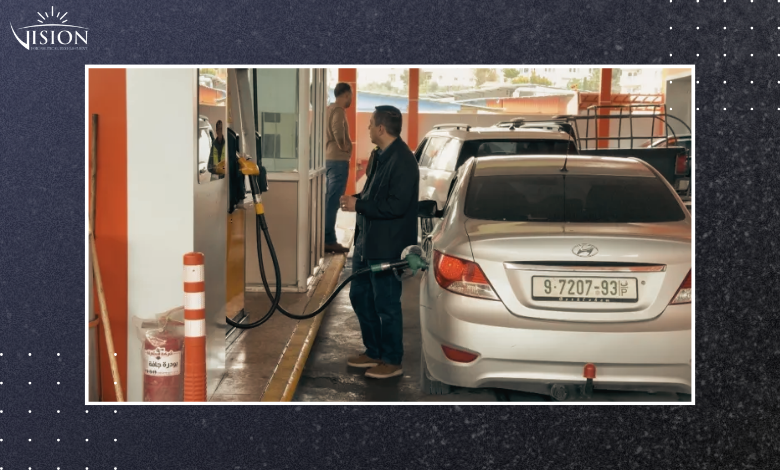
Every escalation in the region triggers renewed panic over fuel supplies in the West Bank. Long queues at petrol stations have become a familiar sight as residents fear the depletion of already constrained reserves, turning energy insecurity into a recurring structural crisis that accompanies each new cycle of regional conflict.
The recurring fuel crisis raises broader questions about the structural factors that make securing a stable energy supply such a persistent challenge. At its core, the crisis is one of the clearest manifestations of Israeli economic control over the Palestinians. Since the signing of the Paris Economic Protocol in April 1994, the energy sector has remained subject to a system of restrictions that has entrenched the Palestinian economy’s dependence on Israel, limiting Palestinians’ ability to independently procure, import, and manage energy resources. Israeli control over border crossings, imports, and the broader Palestinian economic system has further reinforced this dependency. At the same time, Palestinian administrative and institutional policies have compounded the crisis, particularly during periods of heightened tension and instability.
This paper reviews the main issues related to the fuel sector in Palestinian territories (specifically the West Bank), by tracing the legal and economic background that governs it, documenting the crises it has experienced in recent years, and analyzing the external and internal factors that contribute to their escalation.
The Crisis-Stricken Palestinian Energy Sector
Although the recent fuel crisis, triggered by the Israeli-U.S. war against Iran that began in March, ranks among the most severe crises to hit the West Bank in recent years, it is far from unprecedented. The Palestinian fuel sector has experienced a succession of recurring crises, ranging from sharp price increases to supply shortages. Despite their different immediate causes, all have exposed the fragility of the Palestinian fuel supply system and its near-total dependence on Israeli suppliers.
In 2012, widespread protests erupted across the West Bank after the government of Salam Fayyad raised fuel prices by approximately 5 percent. The demonstrations quickly evolved into a broad popular movement that forced the government to roll back part of the planned increases, highlighting both the political sensitivity of fuel prices and their immediate impact on the economic and social conditions of Palestinians.
The fuel shortages experienced in the West Bank and the Gaza Strip in 2015, exposed an even more alarming reality: the absence of any Palestinian strategic fuel reserve. At the time, specialized reports revealed that the Palestinian Authority’s strategic fuel stockpile was effectively nonexistent, with the only available reserves consisting of the fuel already held at petrol stations. Even under the most favourable circumstances, these supplies were sufficient for no more than five days following the last delivery authorized by the Israeli occupation. This situation has remained largely unchanged, helping to explain the recurring public panic whenever a new crisis emerges. Many residents rush to stockpile fuel well beyond their immediate needs, seeking to create personal reserves to compensate for the absence of a national strategic stockpile.
In 2022, the West Bank experienced another fuel crisis as many petrol stations ran out of fuel. At the time, Nizar Al-Jaabari, head of the Fuel Station Owners’ Union in the West Bank, attributed the shortage to the failure to supply the local market with adequate quantities of fuel, resulting in severe shortages and the return of long queues at filling stations.
These episodes are only a few examples of the recurring crises that periodically disrupt the Palestinian fuel sector. Although they are often perceived as temporary disruptions that end once fuel deliveries from Israel resume, their repeated occurrence points to a deeper structural problem. Rather than isolated emergencies, they reflect a system built on dependence for fuel supplies, the absence of viable domestic alternatives, and the lack of a strategic fuel reserve capable of absorbing political, security, or economic shocks.
Every new fuel crisis is therefore more than an isolated incident; it serves as a reminder of the structural weaknesses embedded in the Palestinian energy system and its overwhelming dependence on a single external supplier, namely, Israel. By exercising effective control over the flow of fuel into the Palestinian market, Israel is able to leverage that dependence in pursuit of broader objectives of control, settlement expansion, and annexation.
The Paris Protocol and the Institutionalization of Economic Occupation
Under the Oslo Accords and the Paris Protocol, which governs the economic relationship between the Palestinian Authority and Israel, Israel retained extensive control over key sectors of the Palestinian economy. As a result, the Palestinian economy became structurally dependent on Israel across many vital sectors, significantly limiting Palestinians’ ability to manage their own economic resources and develop an independent system of production and trade.
Although the establishment of the Palestinian Authority in 1994 raised expectations that a national economy with a degree of independent decision-making, production, and distribution could emerge, the implementation of the Paris Protocol left most of the key levers of economic control in Israeli hands. Israel continues to control border crossings, external trade, and the movement of goods, regulating the entry of raw materials and commodities into the Palestinian territories as well as the export of Palestinian products to international markets. Consequently, the Palestinian economy operates within a highly constrained framework, with only limited room for autonomous economic decision-making.
The energy sector has been one of the clearest manifestations of this structural dependency. The economic arrangements established under the Paris Protocol have effectively prevented Palestinians from importing fuel directly from neighboring countries such as Jordan or Egypt, leaving Israeli suppliers as their sole source of fuel. Israel also retains control over the quantities delivered to the Palestinian Authority. This became particularly evident in March, when, without prior notice or coordination, Israel sharply reduced fuel deliveries. Supplies of gasoline and diesel were cut to approximately 3.5 million liters, down from the 4.5 million liters that normally constituted the standard supply.
During periods of regional conflict or instability, Israeli authorities naturally prioritize meeting domestic energy demand, often with little regard for the consequences in the Palestinian territories. Yet the available data suggest that Israel does not face an overall shortage that would prevent it from supplying the Palestinian market. According to figures published by the Palestinian General Petroleum Corporation for 2022, the Palestinian market consumes an average of 120 million liters of petroleum products each month. Annual consumption exceeds 1.4 billion liters, with diesel accounting for approximately 57 percent of total demand. On a global scale, Palestine consumes around 34,405 barrels of oil per day, ranking 123rd worldwide and representing just 0.034 percent of global daily oil consumption, which exceeds 102 million barrels.
These figures, however, do not fully reflect Palestine’s actual fuel needs. They account only for officially recorded sales and exclude fuel traded through informal channels, including unlicensed and smuggled fuel stations, much of whose supply originates from the Israeli market. Even so, Palestinian fuel consumption remains negligible by global standards, reflecting the relatively small size of the Palestinian market and the limited scale of its economy.
Taken together, these figures indicate that Palestine’s recurring energy shortages cannot be explained primarily by logistical or financial constraints. Rather, they are rooted in a system of Israeli control that turns the supply of even this modest level of demand into a recurring crisis. The structural imbalance becomes even clearer when Palestinian consumption is compared with Israel’s own daily fuel use, estimated at around 220,000 barrels per day. Supported by domestic oil refineries, extensive storage facilities, and alternative energy sources, most notably natural gas, Israel possesses the capacity not only to satisfy its domestic demand but also to export surplus energy. The difficulty in securing fuel for the Palestinian market, therefore, reflects political control rather than a shortage of available supply.
The Paris Protocol further entrenched this dependency through its fuel-pricing provisions. Under Article 12, fuel prices in the Palestinian market must remain closely aligned with those in Israel, preventing gasoline prices in the Palestinian territories from falling below a specified percentage of the Israeli price. This arrangement effectively limits the Palestinian Authority’s ability to benefit from alternative suppliers or more competitive regional markets. For example, if a liter of 95-octane gasoline sells for 7 shekels (US$2.38) in Israel, its price in the Palestinian market cannot fall below 6.65 shekels (US$2.26).
In 1994, the Palestinian General Petroleum Corporation was established to oversee the importation and distribution of petroleum products in the Palestinian territories. The corporation purchases refined fuel from Israeli companies and distributes it to licensed fuel stations throughout the West Bank after adding local taxes, including the “Bloo” (excise) tax and value-added tax (VAT). As a result, the entire fuel supply chain remains tied to Israeli sources—not only in terms of supply volumes, but also pricing and delivery schedules.
This dependence is further reinforced by the absence of Palestinian sovereignty over natural resources and the lack of independent energy infrastructure, including oil refineries, seaports, and direct import networks. These deficiencies are not merely technical but stem from political restrictions imposed by Israel, which have prevented the development of the Palestinian energy sector and prohibited the construction of strategic infrastructure or the independent exploitation of natural resources.
Israeli control over large areas of the occupied Palestinian territories has likewise prevented Palestinians from exploring for oil or developing known energy reserves. The Rantis oil field, also known as the Meged field, illustrates Israel’s control over Palestinian natural resources. The field is estimated to contain approximately 1.5 billion barrels of oil, in addition to around 182 billion cubic feet of natural gas. Although modest by global energy standards, these reserves would represent a significant economic asset for a relatively small economy, capable of meeting a substantial share of Palestine’s domestic energy needs and strengthening its economic resilience.
Since 2010, however, Israel has extracted oil from the field through wells drilled on the side located within Israel’s pre-1967 borders, despite estimates indicating that roughly 60 percent of the reservoir extends beneath the occupied West Bank. Although the Palestinian Authority has sought to develop the field and benefit from its resources, Israeli restrictions on access to the area have effectively prevented any such development.
Israeli control over the Palestinian energy sector also carries substantial economic costs. Palestinians import energy from Israel worth nearly US$2 billion annually, while the Palestinian economy is estimated to lose approximately US$5 billion each year as a result of Israeli monopoly control and restrictions on the exploitation of Palestinian natural resources. Household expenditure data and statistics illustrate the burden this places on Palestinian consumers. Transportation accounts for roughly 16 percent of household spending in the West Bank, making it the second-largest expenditure category after food and beverages. Fuel alone represents around 4 percent of total household expenditure, while an additional 6 percent is spent on public transport and taxis, and another 6 percent on vehicle purchases, licensing, registration fees, and driving tests.
Palestine also records some of the highest fuel prices in the Arab world. In July 2022, it had the region’s highest retail price for 95-octane gasoline. A major reason for this is the heavy tax burden imposed on petroleum products. The Bloo excise tax, which amounts to 100 percent, accounts for more than half of the final retail price of fuel. Although this is fundamentally an Israeli tax, the Palestinian Authority is obliged to apply it under the framework of economic integration established by the Paris Protocol, while also relying on the resulting revenues. A further 16 percent value-added tax (VAT) is added, significantly increasing fuel costs for Palestinian consumers and making gasoline prices among the highest in the Arab region.
Internal Palestinian Factors
The crisis affecting the fuel sector in the West Bank cannot be attributed solely to the political realities of Israeli control. It is also compounded by internal administrative and financial constraints that further limit the Palestinian Authority’s ability to respond effectively. The Palestinian Authority owes hundreds of millions of shekels to Israeli fuel companies for imported petroleum products, significantly reducing its financial flexibility during periods of crisis. In 2024, the government was forced to use approximately 767 million shekels of Palestinian funds held in Norway to settle outstanding fuel payments and finance fuel purchases for the following weeks. This was carried out as part of an arrangement brokered with the United States to secure the release of a portion of Palestinian revenues that had been withheld by Israel. As a result, the Palestinian Authority remains under dual pressure: Israel not only controls the quantities of fuel supplied but can also deduct fuel payments directly from Palestinian clearance revenues that it withholds.
Although external constraints remain the primary driver of the crisis, internal governance shortcomings have also contributed to its persistence. A lack of transparency in the management of the fuel sector has limited the public’s ability to understand the actual state of fuel supplies. The Palestinian General Petroleum Corporation rarely publishes regular information on strategic reserves or monthly fuel deliveries, instead releasing information only during periods of crisis. This lack of transparency leaves citizens without a clear picture of market conditions, fueling rumors, uncertainty, and recurring waves of public anxiety whenever fuel shortages emerge.
At the same time, despite the flexibility available under the Paris Protocol, the Palestinian Authority has made little progress in developing alternative regional sources of fuel supply. While the Protocol requires gasoline prices to remain within a specified margin of Israeli prices, it does not impose comparable restrictions on the importation of other petroleum products such as diesel, kerosene, or liquefied petroleum gas (LPG). Nevertheless, the Palestinian Authority has not pursued sustained efforts to diversify fuel imports through neighboring countries such as Jordan or Egypt. The importance of such diversification extends beyond the broader objective of reducing economic dependence on Israel. It would also provide alternative supply routes and strategic reserves that could mitigate the impact of future disruptions should Israel decide to reduce or suspend fuel deliveries and continue using energy supplies as an instrument of political leverage and control.
For many years, this issue remained largely absent from government policy. One notable exception came in September 2019, when the government of Mohammad Shtayyeh formally requested Israel’s approval to import oil from Iraq as part of an effort to diversify fuel sources available to the Palestinian market. Around the same time, the Palestinian Authority also reached an agreement to import fuel from Jordanian companies. However, the initiative was later abandoned following understandings with Israel that allowed the Palestinian Authority to collect the Bloo excise tax domestically as part of broader negotiations over the clearance revenue crisis.
Another factor exacerbating the crisis is the erosion of public trust in official institutions. Whenever signs of an impending fuel shortage emerge, many citizens respond by stockpiling fuel far beyond their immediate needs, intensifying pressure on already limited supplies. Regulatory oversight also remains a weak point in the management of the sector. Although the relevant authorities have taken steps to monitor the market and combat price manipulation and hoarding, many consumers and fuel station operators believe that enforcement remains insufficient to prevent speculation and ensure the equitable distribution of fuel during periods of crisis.
Conclusion
In conclusion, the recurring fuel crises in the West Bank are not isolated or exceptional events but manifestations of a structural economic system rooted in dependency and the absence of Palestinian control over natural resources, border crossings, and energy supplies. Each crisis may eventually subside, only to be followed by another, as long as Palestinians remain unable to exercise meaningful control over the fundamental pillars of their economy and continue to rely on a single external supplier. When that supplier is the occupying power itself, the crisis extends far beyond the realm of economic scarcity, becoming a political instrument through which control and dependency are reinforced.
This reality has steadily drained Palestinian society by forcing people to focus on securing their most basic daily necessities—food, medicine, and fuel—amid a succession of crises that steadily erode economic and social stability. As Palestinians grapple with the immediate consequences of these recurring disruptions, settlement expansion, land appropriation, and the control of natural resources and other foundations of Palestinian development continue unabated. Together, these dynamics intensify the pressures on Palestinian society, narrowing the conditions for sustainable livelihoods and contributing to policies that many observers argue are intended to make continued life in the occupied territories increasingly untenable.
NOTE: This text is adapted from original Arabic article.