Medical Supplies under Siege: Israeli Restrictions and the Denial of Essential Healthcare in Gaza
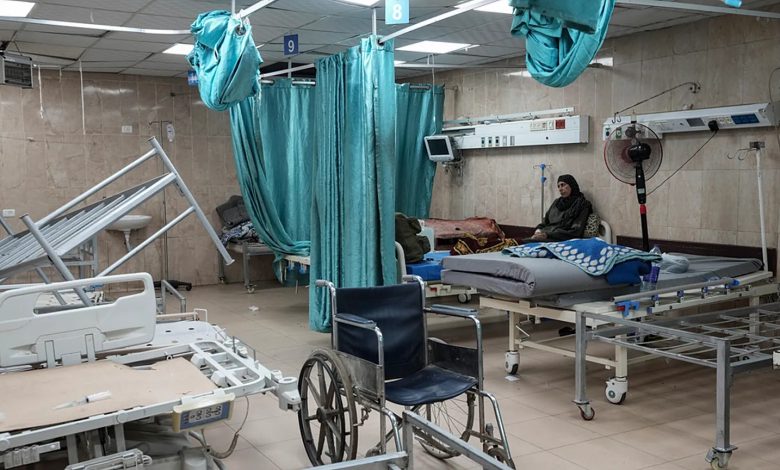
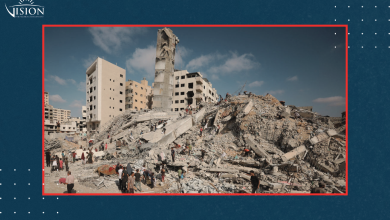
The siege of Gaza and the sustained targeting of its healthcare system have produced a catastrophe that extends far beyond the immediate injuries and loss of life caused by military violence. By devastating healthcare infrastructure, restricting access to essential medical supplies and equipment, and obstructing the provision of basic services, these measures have progressively undermined the conditions necessary for everyday life, eroding both human dignity and the population’s capacity to survive. Amid the ongoing genocide and the Israeli occupation’s tightening restrictions on medical supplies and equipment, even the most basic healthcare and preventive services have consequently become inaccessible to many, transforming what should be a fundamental human right into a luxury beyond their reach.
The following report documents the catastrophic impact on every sector of Gaza’s healthcare system. The systematic destruction of hospitals and medical clinics, the targeting and exhaustion of specialist medical personnel, and the severe restrictions on the entry of medical equipment, supplies, and essential medicines have brought routine treatment services to the brink of collapse. The remaining facilities operate at severely diminished capacity, often struggling to provide even emergency care for critical injuries. Consequently, thousands of wounded and sick people are left without access to the treatment and pain relief they urgently need, enduring prolonged and often excruciating suffering as their conditions go untreated.
Damage to Medical Equipment and Restrictions on Spare Parts and Replacement Devices
The Israeli occupation’s assault on Gaza’s healthcare sector extends beyond the disruption of treatment services to the systematic destruction of the medical infrastructure on which diagnosis, surgery, and ongoing care depend. Damage to essential medical devices and hospital equipment is compounded by restrictions on the entry of spare parts and replacements, leaving vital machinery unrepaired and critical medical facilities unable to operate at full capacity. As equipment failures persist without the means for repair or replacement, medical teams are deprived of essential diagnostic and therapeutic tools, further constraining their ability to treat thousands of patients whose conditions require urgent or specialised care.
According to Assistant Deputy Minister of Health Bassam al-Hamadin,[1] damage inflicted by the Israeli occupation forces has rendered 80% of medical devices in Gaza inoperable, while continued breakdowns among the remaining equipment further undermine essential diagnostic services. Al-Hamadin noted that occupation forces impose stringent restrictions on the entry of medical equipment and spare parts into the Strip, “which has caused them to go out of service repeatedly, especially in radiology and laboratory departments, in parallel with a severe shortage of emergency medications and medications used in surgical procedures.”
The scale of the disruption is further reflected in the findings reported by Sahar Ghanem, director of the laboratory unit at the Ministry of Health, who indicated that the shortfall in essential laboratory testing materials exceeds 87%. These shortages have forced the suspension of numerous critical diagnostic tests, particularly those required by oncology and kidney patients. The resulting loss of diagnostic capacity not only delays the detection and monitoring of serious illnesses but also compromises clinicians’ ability to assess treatment outcomes and adjust therapeutic protocols, placing patients at further risk.
A report by Médecins Sans Frontières documents the organisation’s being prevented from bringing in any medical supplies since the beginning of the year. The organisation’s medical advisor, Randa Abu al-Kheir Masoud, states that approximately 50% of essential medications for chronic diseases suffer from severe shortages, in addition to shortages of gauze, compresses, and wound dressings in field hospitals, as well as the absence of new equipment and spare parts, meaning that any device breakdown may lead to the postponement or suspension of operations, and can cause a case to be complicated or worsened. She gave as an example the incident of the only bone drill at the Deir al-Balah field hospital, which broke down during surgery on a two-year-old child, delaying the operation until a replacement was brought from another hospital.
Maxillofacial surgery specialist Rami al-Jaeidi[2] points out that the continuation of the Israeli occupation’s ban on the entry of dental materials for several months has had a negative impact on the entire health sector. This includes local anaesthetics, root-canal filling materials and their instruments, desiccants, and cosmetic materials, in addition to prosthetics laboratory supplies — and when such items are found at all, they cost up to 50 times their normal price, which affects the ability to continue providing services to citizens.
Open Wounds and Banned Medications
Behind the shocking figures and the devastation of Gaza’s healthcare system lie thousands of human tragedies, stories of pain, etched into the daily suffering of patients and the wounded. The Israeli siege and its severe restrictions on the entry of medical supplies and medicines are not merely logistical or administrative obstacles; their consequences are borne by people whose pain goes untreated, whose recovery is delayed, and whose lives are permanently altered by injuries that could otherwise have been treated, whereby treatable injuries become permanent disabilities. As access to medical care diminishes, a fundamental human right becomes an increasingly unattainable necessity, with devastating consequences for children and adults alike. The following testimonies offer a glimpse into the lived experiences of civilians enduring these conditions and the human cost of the ongoing assault on Gaza’s healthcare system.
The testimony of patient Walid, injured by shrapnel from Israeli occupation bombardment which ruptured his intestines and necessitated a colostomy operation, reveals the psychological and physical impact of the ban on specialised medical supplies. Walid found himself forced to use primitive plastic bags fixed to his bleeding wounds with household adhesive tape, after medically sterile colostomy bags had completely disappeared from hospitals due to crossing closures and tightened restrictions. He says: “My condition makes me feel that my psychological dignity is being insulted. I cannot explain to people in toilet queues what is happening, which causes the plastic bag to tear and waste to leak into my only set of clothes. I spend my day sitting in a fixed position, afraid to turn over, to laugh, or to sneeze, because any sudden movement means the primitive adhesive fails. I have become afraid of my own body, and I feel as though I am a ticking bomb waiting for the moment to explode and expose my helplessness to everyone.”
Muhammad Uwais,[3] who was injured in a strike that targeted him while he was trying to rescue his sister from a dangerous area in eastern Gaza at the outset of the genocide, says: “I lost my right eye, and I still suffer from a piece of shrapnel lodged in my left eye that requires urgent surgery. However, the unavailability of appropriate medical devices and equipment and necessary treatments prevents the surgery from being performed. Because of this, I can see simple things during the day, while I lose vision entirely at night. The pain also extends throughout the rest of my body, in which approximately 40 pieces of shrapnel are scattered. I need analgesic and antiseptic ointments to relieve this continuous pain, but they are not available in medical centres, and when they are found on the market, they are at very high prices I cannot afford — depriving me of sleep day and night from the intensity of the pain.”
The suffering does not stop at the boundary of individual injury but extends to affect the children of a family; a scene that repeats itself across thousands of families. Uwais adds,[4] documenting the crisis of the shortage of orthopaedic surgery supplies: “My nine-year-old child was injured in a strike near the place where we were displaced in central Gaza. He urgently needs platinum plates implanted to fix the broken bones of his leg, but the severe shortage of these plates and surgical supplies continues to delay the operation for him — constituting a danger and consequences for his growth and bodily safety.”
In the case of Naila Mreish,[5] aged 24, who suffered a fracture in her spinal vertebrae and damage to the spinal cord causing her to lose movement and control of her body, she states in her personal testimony: “I need to complete my medical assessment and undergo specialised examinations, among them an MRI scan that is not available in Gaza’s hospitals and clinics — which makes travel abroad an urgent necessity to understand the nature of my injury and determine the appropriate course of treatment and rehabilitation for me. The shortage of medications I need worsens my health condition and exposes me to bouts of painful spasms throughout all parts of my body.”
The medical blockade catastrophe does not stop at operating and treatment departments alone; it extends to paralyse the precision diagnostic laboratory sector. The husband of patient “Um Muhammad”[6] recounts his encounter with the relentless ordeal of being unable to access essential medical care, saying: “My wife suffers from continuous and excruciating pain throughout her body, which led me to take her to the hospital to have precise and advanced tests related to glandular and hormonal disorders necessary to determine diagnosis and treatment. There, the shocking surprise was that none of the requested tests was available, owing to the massive and systematic scarcity of reagents and laboratory supplies. I was at a loss as I watched my wife suffer without being able to help … what on earth am I to do now?”
In another case, the extended consequences of the siege and the targeting of medical centres on disabled children and special-needs cases are laid bare. The mother, Malak,[7] says in her field testimony: “The Israeli occupation did not content itself with killing my husband and destroying my home — it continues to torment and exterminate us by depriving my child of the treatment he needs. He suffers from hydrocephalus and cannot sit or walk, and so we conduct movement stimulation and rehabilitation sessions for him. However, the shortage of medical devices and equipment noticeably impedes the progress of his health condition. He is in acute need of a device that holds my child in a standing position safely to help stimulate the growth of his hip and leg bones and strengthen his trunk muscles — a device that has now gone missing and is no longer available following the systematic destruction of hospitals and physiotherapy departments in Gaza.”
In the case of child Anas Hirz Allah, aged one and a half, his mother, Hana,[8] says that the shortage of treatment has worsened the intensity of the convulsions he suffers. She recounts: “My child’s condition was diagnosed as epilepsy at four months of age. When we searched for the medication prescribed by the doctor, we could not find it in any pharmacy in Gaza. His condition deteriorated and convulsions became continuous. We were forced to give him a medication prescribed for those older than him — cortisol — which doubled his weight and impeded his movement. And there may be other complications.”
In a related context, the repercussions of the Israeli occupation’s systematic policies to deprive Palestinians of the essentials of life are becoming evident even in matters of physical well-being and public health. Citizen Sharif Ibrahim[9] recounts his suffering, saying: “With the occupation’s imposition of genocide and forced displacement, and the cutting off of basic necessities such as clean water and personal hygiene supplies—not to mention the policy of starvation and forced dietary changes, myhe teeth that had previously received fillings began to break and fall out. When I went to the dental clinic, I was confronted with a catastrophic economic reality created by the occupation: the cost of a single dental crown exceeds $200, while treating some teeth requires a three-tooth bridge costing $600, an amount that is impossible to afford amid total economic collapse. Faced with this inability to pay, I was forced to have my broken teeth extracted at a cost of about $30 per tooth. Because the occupation prevents the import of medical supplies and proper sterilization equipment, the extractions were performed with substandard tools in an environment lacking proper sterilization, which led to severe mouth sores that persisted for a long time.”
Crossings: Between Declared Opening and Limited Access
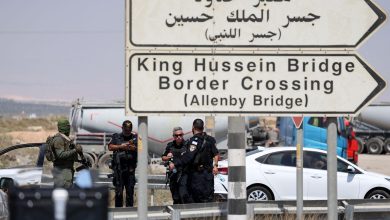
The issue of Gaza’s border crossings, which are controlled by the Israeli occupation army represents one of the most complex instruments in managing the siege in its policies. The occupation takes care to project a media image suggesting that it permits aid to flow into the Strip, while imposing strict field restrictions that empty this declaration of its content, turning the crossings under this architecture into programmed control points that determine the type and quantity of what is permitted to enter, bypassing urgent humanitarian and medical needs.
This “architecture” rests on what the Israeli occupation calls “dual-use materials”, materials it considers simultaneously civilian and military, which are not permitted to enter the Strip except with special approval. COGAT published an updated list of “dual-use materials” in November 2024, claiming they had received prior approval for entry while stipulating non-approval for hospitals under Hamas control. The list included X-ray devices, oxygen generators and concentrators, ultrasound devices, portable anaesthesia devices, vital-signs and ECG monitors, as well as pre-pregnancy and post-natal supplies, wheelchairs, and crutches.
Director General of the Government Media Office Ismail al-Thawabta[10] deconstructs, in the language of figures and field indicators, the reality of work at the crossings — exposing the gap between Israeli occupation claims and the catastrophic reality of the health sector. He says: “The reality of the crossings’ operation is nothing more than an organised and fully-formed crime. The occupation has turned these supposed humanitarian corridors into tools of blackmail, pressure, and security traps to ensnare civilians.”
According to al-Thawabta, the figures “expose the falsehood of the alleged ceasefire.” Over the course of 379 days, it was expected that 600 trucks would enter daily to meet the minimum humanitarian and commercial needs (a total of 227,400 trucks). However, what was actually permitted to enter did not exceed 76,497 trucks — a dangerously low compliance rate of no more than 33.6%. This vast gap represents a deliberate political decision to deprive the Strip of more than 66% of its needs in order to push it towards the edge of total collapse.
The occupation exploits the limited permission granted to some trucks as a smokescreen to advance its bloody project and obscure its siege from the international community. In practice, the occupation pursues a policy of “programmed control over the type of cargo.” The crime was not limited to reducing numbers; it extended to the direct prevention of specialised medical supplies and medications, the banning of the supply of cooking gas and fuel needed to operate hospitals, water stations, and bakeries, resulting in total paralysis of the health and relief sector and a catastrophic worsening of malnutrition crises among children and women.
According to the Director General of the Government Media Office,[11] the catastrophic scale of the figures is evident in monitoring teams’ documentation of 5,783 military violations since the alleged ceasefire agreement, which resulted in 1,547 martyrs killed and 5,559 wounded — all in acute need of advanced medical interventions. As for freedom of movement through Rafah crossing, only 14,307 patients were permitted to travel abroad for treatment, against 38,800 patients scheduled (a shameful compliance rate of 36.8%), coinciding with the continuation of the policy of returning patients, preventing them from receiving life-saving treatment, and even arresting travellers at the crossings.
This brutal control by the Israeli occupation over the quality and quantity of goods has led to a structural health crisis, says Al-Thawabta: “In addition to the shortage of medicines, the ban on food imports and the drying up of support for international kitchens and local food banks have perpetuated a food security disaster that has weakened patients’ immune systems and reduced their chances of recovery, With more than 1.5 million people enduring dire conditions in shelters and tents, and a lack of building materials to rehabilitate housing, the rates of epidemics and diseases have skyrocketed amid the complete collapse of health institutions.”
Conclusion
The crisis of medical supplies and devices in Gaza is not the product of collateral consequences of the genocide; it represents a programmed Israeli policy of engineering that employs crossings and administrative restrictions as tools of collective punishment and indirect extermination. The insistence on banning the entry of spare parts, diagnostic examination equipment, specialised supplies, and sterilisation materials under the pretext of “dual-use materials” has practically paralysed the last instruments of medical defence, transforming hospitals and clinics from centres of recovery into spaces for managing enforced pain and preventable deaths.
The continued use of the medical siege, the weapon of starvation, and the stripping away of the means of healing remains a defined war crime and an explicit violation of the rules of international humanitarian law and international conventions, requiring UN organisations and international judicial bodies to move from the circle of documentation and diagnosis to the imposition of binding measures that guarantee the immediate and unconditional opening of the crossings to relief convoys and life-saving medical equipment.
[1] Bassam Al-Hamadin, Assistant Undersecretary for Engineering and Medical Equipment at the Palestinian Ministry of Health in the Gaza Strip, in an interview conducted by the researcher on October 25, 2026.
[2] Rami Al-Jaeidi, maxillofacial surgeon; interview conducted by the researcher on October 25, 2026.
[3] Mohammed Uwais, an injured and displaced person living in a tent on the sidewalk west of Gaza City; interview conducted by the researcher on October 24, 2026.
[4] Mohammed Uwais, same source.
[5] Naila Mreish, an injured and displaced woman living in a tent west of Gaza City; interview conducted by the researcher on October 24, 2026.
[6] Abu Muhammad, husband of a patient who needs laboratory tests; interview conducted by the researcher on October 25, 2026.
[7] Malak al-A’rair, a displaced woman living in a tent west of Gaza City; interview conducted by the researcher on October 25, 2026.
[8] Hana Harzallah, a resident of Gaza City, interviewed by the researcher on October 24, 2026.
[9] Sharif Ibrahim, a resident of Gaza, interviewed by the researcher on October 27, 2026.
[10] Ismail Al-Thawabta, Director General of the Government Media Office, in an interview conducted by the researcher on October 24, 2026.
[11] Ismail al-Thawabta.