The Eighth Front: Israel’s War on the United Nations

Ben-Gurion is attributed with the Yiddish expression “Um-Shmum”[1] (literally meaning: the United Nations is nothing), which he coined in 1955 as an embodiment of his contempt for the United Nations and his dismissal of its resolutions, and as an affirmation of his claim that “Jewish courage founded the state, not the empty resolutions of the United Nations.” This was no passing sentiment and has continued to echo repeatedly on the lips of politicians, historians, and researchers ever since. Nor was this sardonic expression confined to the political literature alone; it extended to documentary film production, with the 2011 film “Um-Shmum: Seven Hours to Death” examining the evolution of Israel’s relationship with the United Nations through the lens of Ben-Gurion’s sarcasm.
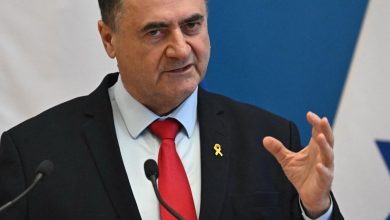
The present reality differs little from earlier historical junctures, whether 1955, when Israel was preparing to occupy the Gaza Strip, or the 2006 war, when it shelled international shelters and headquarters. This behaviour extends in an escalating chain of violations of international laws and resolutions since 7 October 2023, culminating in Israel’s launch of a propaganda campaign against the United Nations and its institutions, in the course of which Israeli Foreign Minister Israel Katz described the United Nations as “the eighth front” on which they are fighting.
In light of this, this article deconstructs Israel’s comprehensive position toward the parent international organisation, from the moment of its pursuit of legitimacy, through the transformations in the relationship from instrumentalization to tension, and on to the systematic enmity that escalated in the wake of 7 October. This enmity has manifested in persistent attempts to undermine the organisation’s legitimacy, cast doubt on the integrity of its methodology, and reframe it internationally as an entity that is (hostile and antisemitic). The purpose of this tracing is to reveal the nature of the relationship between power and law in international politics, and how the former can create a structural exception within the international legal architecture, one that permits violation without consequences and an engineered immunity that drains the international legal system of its force.
The Zionist Movement’s Pursuit of International Legitimacy
From the very first moment, the Zionist movement recognised that a settler colonial project in the heart of the Arab world could not endure by force alone but required an international legal foundation that would render it an irreversible fait accompli. Accordingly, among the resolutions of the First Zionist Congress in Basel, Switzerland, in 1897 was the decision to “adopt all necessary measures to obtain the support of the world’s states for the Zionist goal”, reflecting Theodor Herzl’s vision presented in his book “The Jewish State,” in which he argued for the importance of transforming the Jewish question into an international political problem, to be gathered around by all “civilised” nations for discussion and resolution, with the assistance of the governments concerned.
This coincided with various legitimisation tracks, foremost among them the obtaining of the Balfour Declaration in 1917, issued by the British Foreign Secretary and carrying no legal binding force at the time, though it did provide international political support for the Zionist project, and later acquired a formal legal status when it was incorporated into the British Mandate instrument issued by the League of Nations in 1922.
In addition, there was the construction of an integrated network of institutions performing the functions of a nascent state, what became known as the “state before the state” structure, encompassing financial, military, educational, and administrative institutions independent of the Palestinian population and of the British Mandate administration itself.
No sooner had the Nakba of 1949 concluded with the actual establishment of the state, and a declaration of independence that selectively drew on the language of Partition Resolution 181, describing Israel as “faithful to the principles of the United Nations Charter”, than the new entity marshalled its efforts in pursuit of full UN membership, submitting an application to the Security Council in March 1949, less than a year after the displacement and the Nakba.
This swift movement toward international legitimacy which culminated in Israel’s recognition as a full member of the United Nations, was not solely a product of military victory. Rather, like Resolution 181, it was the crowning of a gradual strategy. This trajectory rested on the completion of military occupation in 1948, the transformation of the settler community into a state ready to manage its own affairs, and the manoeuvring conducted by the Jewish Agency in presenting itself to the United Nations as a party, in contrast to Arab rejection, before the partition decision. The role of the architect of early Israeli diplomacy, Moshe Sharett, is particularly prominent here. He launched an intensive campaign to convince states that Israel was a country of stable institutions that abided by the UN Charter and was capable of playing important roles within the new international system that emerged after the Second World War. He secured the support of both the United States and the Soviet Union while remaining under the UN umbrella, exploiting the West’s narrative of “moral responsibility” to compensate the Jews by securing a safe state for them after the Holocaust.
The decisive point in this campaign was Israel’s political and legal commitment to accepting the United Nations’ solutions to the questions of refugees and Jerusalem and respecting the resolutions related to them, a commitment on which the General Assembly resolution rested when granting Israel full membership on 11 May 1949, following the acknowledgment that it was “a peace-loving state which accepts the obligations contained in the United Nations Charter and is able and willing to carry them out.” This was the basis on which it undertook to honour them from the day it became a member of the United Nations!
And so the “peace-loving state” passed through the gates of the United Nations, becoming the fifty-ninth state to join the organisation since its founding in 1945, and the relationship from that moment has been marked by a succession of oscillations and transformations, in which Israel relies on the international organisation at some junctures to affirm its legitimacy, and at others places it in the camp of enemies and antisemites.
A Thorny Relationship from the Outset
No sooner had Israel set foot on the threshold of the United Nations than its exploitation of the American-Soviet rivalry turned into a loss of its UN gains, particularly after the realignment of the Cold War, which made Israel part of the American axis and cost it Soviet support. With the changing structure of the United Nations and its membership surpassing 100 by the end of the 1950s, the majority from post-colonial states in Africa and Asia, Israel found itself confronted with the dilemma of marginalisation, as the Palestinian cause rose to the top of the priority lists of the African and Asian blocs, neither of which admitted Israel.
The first confrontation came in 1956, when the United Nations adopted a position rejecting the tripartite aggression against Egypt and moved against the vetoes of Britain and France by establishing the first real international emergency force to bypass the Security Council’s paralysis. The General Assembly, convening in an emergency session, passed resolutions demanding an immediate ceasefire, the withdrawal of Israeli, British, and French forces, and respect for Egyptian sovereignty. Although the organisation did acknowledge facilitating Israeli navigation in the Gulf of Aqaba and keeping the Straits of Tiran and Sanafir open to it, Israel, and particularly Prime Minister Ben-Gurion, attacked the organisation violently. At a later stage, Ben-Gurion decided to transfer the offices of government ministries to Jerusalem as a challenge to the General Assembly’s initiative to internationalise Jerusalem, telling Moshe Sharett: “If we are faced with a choice between leaving Jerusalem or leaving the United Nations, we prefer to leave the United Nations.”
For Israel, the conclusion of each military confrontation meant encountering UN positions that were increasingly strict and adverse toward it, and resolutions opposed to its ambitions. This trajectory manifested clearly in the aftermath of the 1967 war, when Israel found itself confronting Resolution 242, and the diplomatic shocks continued thereafter. In Resolution 2535 of 1970, the General Assembly recognised “the inalienable rights of the Palestinian people” and their right to self-determination. In 1974, Resolution 3210 represented a notable political breakthrough by inviting PLO Chairman Yasser Arafat to address the General Assembly, while granting the PLO observer status in all United Nations institutions. Resolution 3379, issued in November 1975, then constituted a principal turning point in the deterioration of relations between Israel and the United Nations, declaring that “Zionism is a form of racism and racial discrimination.”
Proactive Policy Since the 1990s
With the early 1990s, Israel’s relationship with the United Nations witnessed a notable shift driven by the accelerating political changes, foremost among them the collapse of the Soviet Union and the rise of the United States as the sole superpower. This imbalance of power was reflected at the diplomatic level in conjunction with the Madrid Peace Conference, for participation in which Israel made the revocation of Resolution 3379, defining Zionism as a form of racism, a precondition. This UN thaw was consolidated through the series of peace agreements subsequently signed with the Palestinian and Jordanian sides, and the broad campaigns of economic normalisation with Arab, African, and Asian states that accompanied them.
As a result of these changes, Israeli policy directed itself toward increasing its effectiveness in the United Nations. The decisive juncture, however, came after 2000, when Israel managed to circumvent the refusal of the Asian and African blocs to admit it, becoming a member of the Western European and Others Group (the United States, Canada, Australia, New Zealand). This was accompanied by Israel’s adoption of what it called its “proactive policy toward engagement in the United Nations.” According to Yaron Salman[2], the Israeli scholar of international relations, Israel identified three strategies for penetrating the United Nations within its proactive policy since 2000: first, participation in achieving the Millennium Development Goals; second, obtaining key positions within UN institutions; and third, seeking to influence voting patterns in the General Assembly.
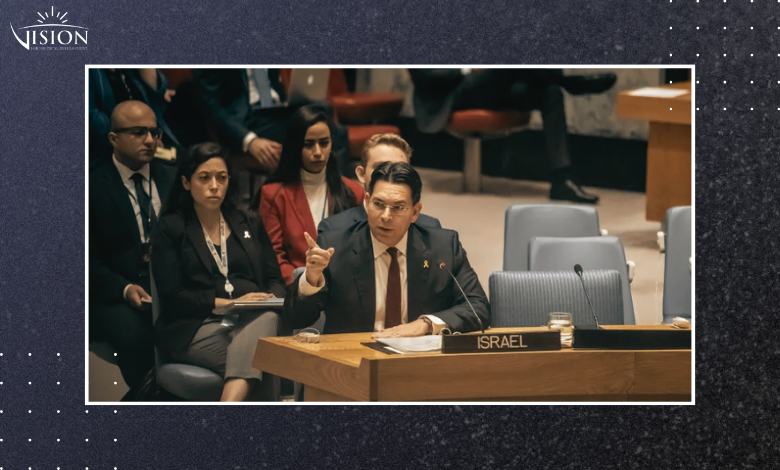
In the first strategy, Israel deployed its technological capabilities in fields such as drip irrigation systems, solar energy development, economic management, and the provision of economic assistance to “Third World” states. As regards positions, over just 19 years Israel succeeded in placing 103 Israelis in sensitive and senior positions in the United Nations, including the selection of Dan Gillerman as representative to the Global Working Group, Ron Prosor for the same position in 2012, and Danny Danon, Israel’s Ambassador to the United Nations, as Vice President of the General Assembly in 2016. As regards influencing voting patterns, the strategy concentrates on raising the rate of abstention or absence rather than directly converting voting patterns in Israel’s favour, focusing on African states and developing countries in Asia and Latin America through diplomatic and economic relations and joint development projects.
Although this strategy succeeded with some African and Latin American states, the fact that it settles for abstention or absence as a substitute for voting in Israel’s favour reflects the limited scope of Israeli influence, particularly given that the General Assembly passed 94 resolutions hostile to Israel between 2015 and 2019. The United Nations Human Rights Council has also been issuing periodic reports since 2006 on “the situation of human rights in Palestine and other occupied Arab territories,” documenting Israeli violations against Palestinians. Added to this is the UNESCO report of October 2016, which calls into question the links between Judaism and the Western Wall, and the May 2017 report, which denies Israeli sovereignty over Jerusalem.
This, however, does not for Israel mean withdrawing from the United Nations or abandoning the proactive approach to engagement in its institutions. Dan Gillerman, the former Israeli Ambassador to the United Nations, expresses this view by saying: “Any decision by Israel to withdraw or not to join the various bodies would serve Israel’s opponents, who would fill the vacuum Israel leaves sooner or later, and would work against it with greater freedom. The United Nations is an important arena, it is the parliament of the world, and an opportunity to show the real Israel and build relations with the world’s states.”
In this context, Israel’s relationship with the United Nations has depended on a fundamental role played by the United States, manifested in pressuring states and their representatives, directing the drafting of resolutions, and the repeated use of the veto. From October 2023 to the end of 2025, 11 draft resolutions relating to Gaza were put before the Security Council, calling for an immediate ceasefire, enabling access for aid, a ceasefire during Ramadan, and lifting the siege. Of these, only three were passed, calling for increased humanitarian assistance and a truce through American abstention, while the American veto blocked the rest.
The United States’ role has not historically been limited to securing immunity through the veto, which it has used 51 times in the Security Council in Israel’s favour since the founding of the United Nations. It has extended to the nature of the immunity it has established: Washington holds the largest number of vetoes that have killed resolutions critical of Israel compared to any other permanent member. Approximately a third of these vetoes were used specifically to prevent the passage of resolutions relating to Israel’s occupation of Palestinian territories or to violations against Palestinians, making the American veto a shield of protection that severs the connection between violations of international law and any legal consequences for Israel.
In 2002, the veto was transformed into a systematic policy under the “Negroponte Doctrine,” when US Ambassador to the United Nations John Negroponte announced American preconditions for accepting any Security Council resolution relating to the Israeli-Palestinian conflict, including the requirement of an explicit condemnation of Palestinian terrorism by name, and the absence of any demand for Israeli withdrawal without linking it to security conditions. This provided Israel with a sustained institutional guarantee that renders the Security Council incapable of taking any binding action against it, regardless of the nature of its conduct.
This was further consolidated in Trump’s second term, when the American role shifted from providing cover and immunity to active participation in delegitimising and dismantling the international institutions that seek to hold Israel accountable, when Trump issued an executive order in February 2025 imposing sanctions on the International Criminal Court, preceded by weeks by a vote in the US House of Representatives on legislation imposing sanctions on the Court.
The Collision After 7 October
The relationship entered a more acute phase in the wake of 7 October 2023, under Israel’s genocide against the Gaza Strip. Israeli policy adopted a specific strategy in dealing with the United Nations and its bodies, one of imposing a ceiling of international discourse below which it refuses to accept anything from international and UN bodies. This discourse rests on the demand for permanent sympathy, implicit endorsement of its military crimes, justification of the results of its actions, and the dismissal of any violations that come to light by classifying them as individual incidents or as coming from Palestinian sources. However, the United Nations’ position on the operation was negative from Israel’s perspective: the Security Council did not respond to the Israeli demand to “unequivocally condemn ‘Hamas’s war crimes’ and for Israel to receive strong support for its right to ‘self-defense’”, particularly in light of the Russian and Chinese position calling for “an immediate cessation of fighting and meaningful negotiations,” and their view that the events of 7 October were partly the result of “unresolved issues.”
Then came the position of the UN Secretary-General to inflame Israeli anger: despite condemning the 7 October operation, his reminder that it “did not come out of a vacuum” and that the Palestinians had suffered under “an oppressive occupation” for decades, along with his reference to Israel having committed “violations against international humanitarian law in Gaza,” ignited a wave of angry Israeli reactions. In its wake, the spokesperson for the Israeli Foreign Ministry declared that António Guterres had “crossed the red line,” while Israel’s Ambassador to the United Nations, Gilad Erdan, demanded his immediate resignation and announced that the Israeli government would refuse to grant visas to UN representatives. These measures were crowned by Foreign Minister Katz’s announcement in October 2024 declaring Secretary-General António Guterres a “persona non grata,” and describing him as “a stain on the history of the organisation.”
The situation subsequently developed through Israel’s accusations against UNRWA, alleging the involvement of a number of its employees in the events of 7 October and the connections of others with Palestinian resistance factions in Gaza, leading to a series of Israeli decisions and legislation that culminated in the severing of relations with UNRWA and the termination of its operations inside “Israel” and Jerusalem.
In the same year, the United Nations General Assembly voted in favour of 7 resolutions demanding an immediate ceasefire, upgrading Palestine’s status to full membership, calling for an end to the occupation, supporting UNRWA, referring Israel’s obligations toward UNRWA to the International Court of Justice, and demanding the opening of all crossings. Israel continued in turn to oppose UN resolutions, escalated its attacks on international personnel, prevented Special Rapporteur Francesca Albanese from entering the occupied territories, and continued its drive to smother UNRWA in Gaza and the West Bank.
At a subsequent stage, Israel moved beyond the boundaries of discourse toward action on the ground: the Knesset’s approval of a ban on UNRWA operations compelled the organisation’s members to vacate its headquarters in East Jerusalem following the expulsion of its international staff. This then expanded in Lebanon when Israel targeted UNIFIL forces in the south of the country, in addition to the continued prevention of international organisations from entering the Gaza Strip, the restriction of their humanitarian, documentation, and monitoring roles, and the persistent questioning of their reports and figures.
Conclusion
In sum, Israeli behaviour toward the United Nations oscillates between “the member state of the international organisation” and “the confrontation between the state that defends its existence and an international system biased toward the states that hate it”, a formulation Netanyahu expressed in his address to the United Nations in 2024, when he said: “The organisation has taken sides against Israel, and unless it addresses this antisemitic situation, principled people around the world will come to see the United Nations as a joke.”
According to this approach, Israel does not content itself with rejecting UN resolutions but inverts the legal logic in its own favour, presenting itself as a victim of the international legal system by accusing it of being “a tool in the hands of the Iranian axis” or “a legal arm of Hamas,” and claiming that its responses reflect “a trajectory extending over decades of seeking to destroy Israel, delegitimise it, and apply double standards against it.” This is the strategy adopted by an Israeli and American academic and political team that calls for holding the United Nations accountable, taking forms that include the policy of delegitimising certain UN institutions, challenging the neutrality of their reports and legal mechanisms and data sources, and focusing on the Israeli hostages and Israel’s right to self-defence under Article 51 of the UN Charter.
Accordingly, any conceivable rupture between the United Nations and Israel is not necessarily a structural matter but is limited to specific UN bodies or to decisions that fall outside Israel’s capacity for regulation (through the American veto) or control (through development assistance). Within this framework fall the UN’s position on the war on Lebanon in 2006, its adoption of the Goldstone Commission’s investigation into the Israeli war on Gaza in 2011, and the Palestinian efforts to obtain full membership. These issues have long constituted a crisis between Israel and the United Nations, yet despite all this, the United Nations remains an important arena for Israeli diplomacy, in whose corridors Israel finds space to affirm its existence and to compete with the Palestinians and their supporters in imposing the narrative.
[1] Also referred to as “oom-shmoom”.
[2] Salman, Yaron & Assessment, Strategic. (2020). The UN and Israel: From Confrontation to Participation. 23.