Forgotten Gaza in the Shadow of Regional Conflict: International Silence Transformed into Cover for Deepening Genocide
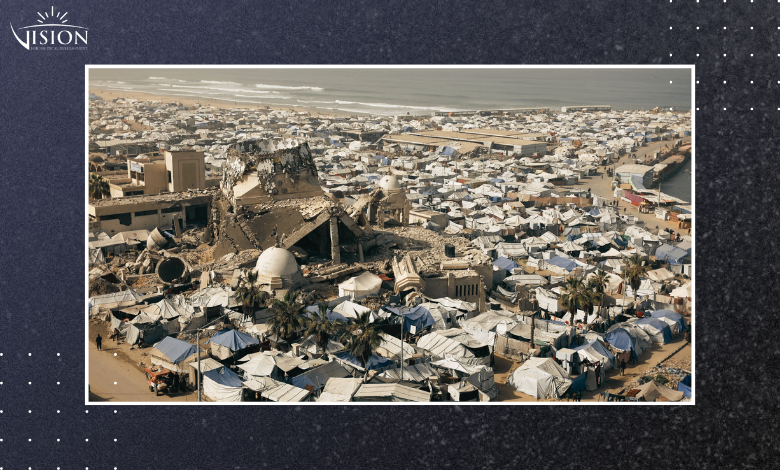
Amid global preoccupation with the regional war and the receding presence of the Gaza Strip in the international arena, the Israeli war machine continues to target civilians and deepen the crime of genocide through a tightening siege and the closure of border crossings. Residents are denied the most basic necessities of life; food, medicine, and water, forcing Gazans to travel long distances to obtain drinking water. Dozens of the wounded and sick are losing their lives while waiting for permission to travel abroad to complete medical treatment, amid the collapse of the healthcare system and the prohibition on the entry of any medical supplies.
This was confirmed by Olga Cherevko, spokesperson for the UN Office for the Coordination of Humanitarian Affairs, who noted that escalating tensions in the Middle East have caused a decline in the international community’s focus on the Gaza Strip, which is enduring extremely harsh living conditions, particularly given that only approximately 42% of health facilities continue to operate, and only partially, while the majority of the population remains displaced due to the destruction of their homes, forcing thousands to sleep in the open.
All of this and more is occurring under a complete media blackout, as cameras have shifted from covering the daily crimes of genocide in the Gaza Strip to the skies above surrounding regional capitals. Gaza, which had been the lead story in Arab and international news bulletins, has been reduced to a margin barely mentioned, providing the Israeli occupation army with solid ground on which to impose a new reality.
In this context, this article examines the policies of the Israeli occupation against the Gaza Strip during the world’s preoccupation with the war on Iran, the violations committed during that period on military and humanitarian levels, and their political implications for the Strip.
Intensification of Military Attacks
Field evidence indicates that the Israeli occupation army exploited the international community’s preoccupation with the Zionist-American war on Iran, launched on 28 February 2026, as cover to continue the genocide in the Gaza Strip. Through intensive aerial and artillery bombardment, the demolition of residential blocks, and the targeting of displaced persons on the seashore, the periods following the ceasefire announcement were marked by bloody violations; 823 martyrs were killed and 2,308 citizens wounded in the period from the ceasefire announcement to 29 April 2026, including 134 martyrs and 615 injuries during the regional war period alone[1].
Field developments during March and April 2026 reveal a systematic Israeli escalation targeting Palestinian police personnel and security centres in the Gaza Strip. On Friday 24 April 2026, 13 people were martyred in three separate strikes, most notably occupation aircraft bombing a police vehicle in Khan Yunis after it had completed a civilian mission to resolve a family dispute, resulting in eight deaths including two officers, two police assistants, and four civilians. Simultaneously, occupation aircraft struck a security checkpoint in the Sheikh Radwan area northwest of Gaza City, killing two police officers. In northern Gaza, a woman and her two children were killed in Israeli strikes on Palestinian homes near Kamal Adwan Hospital in Beit Lahiya.
In this context, the Palestinian Centre for Human Rights confirmed that the continued execution of mass killings by occupation forces, targeting civilians and security and police personnel while performing public order duties in displacement areas, contributes to the dismantling of the civilian protection system and deepens the state of chaos and insecurity among the population. The Centre stressed that the simultaneous occurrence of these attacks alongside the policy of starvation and siege constitutes a comprehensive pattern of acts that rise to the level of genocide under international law.
In addition, the Israeli occupation forces provide aerial cover through aircraft and drones for collaborator gangs working with them, facilitating their attacks on citizens and the arrest of their sons. This policy reached its criminal peak in the massacre at al-Maghazi camp, which resulted in 12 deaths and the wounding of others.
Claire San Filippo, Emergency Director at Médecins Sans Frontières, states that despite a reduction in the intensity of violence, Israeli attacks are ongoing and the situation remains catastrophic, adding that the ceasefire has failed to end the genocide against Palestinians in Gaza, with Israeli authorities continuing to impose conditions aimed at destroying the conditions of life.
Deepening Humanitarian Crises
Amid the decline of international attention and pressure on the current humanitarian situation in the Gaza Strip diverted by the regional escalation, daily Palestinian life grows ever more difficult and complex. Beyond the shortage of water and food, the collapse of the healthcare system and basic services, and the absence of safe shelter; disease spreads among the displaced, psychological conditions deteriorate, and a growing sense of isolation and hopelessness pervades.
According to field indicators, the Israeli occupation has reverted to its heinous strategy of weaponization of starvation by reducing the number of trucks entering the Gaza Strip. While the Strip requires 600 trucks daily, the average actually entering does not exceed 37% of the minimum required, with the Strip needing approximately 450 tonnes of bread daily while only around 200 tonnes are available, less than 50% of actual need[2]. Data show that less than 50% of food market needs are being met, while only approximately 30% of the population can afford to purchase meat and poultry, amid approximately 99% of the population relying on humanitarian aid as their primary food source, a situation that compounds residents’ suffering in securing basic nutrition and exposes them to the threat of escalating famine, according to Media Advisor to the Government Media Office Tayser Mheisin.[3]
With the Israeli occupation controlling Gaza’s border crossings, the occupation army proceeded to close the crossings at the outset of the Zionist-American war on Iran, and intensified its restrictions upon reopening them after long days, permitting the entry of limited quantities of food, part of which consists of luxury items, while preventing the entry of any essential necessities such as therapeutic medicines and medical supplies, cleaning materials, clothing, fuel, vehicle oils, generators, and spare parts.[4] In this context, the UN Office for the Coordination of Humanitarian Affairs confirmed that the needs of the population in the Gaza Strip continue to far exceed what relief organisations can provide, under stringent restrictions and other obstacles. The Senior Representative of the Peace Council in Gaza, Nickolay Mladenov, added that Israeli restrictions at the crossings, particularly regarding the classification of dual-use materials, are being used to restrict the entry of essential goods needed by the health sector and the population. San Filippo, Emergency Director of Médecins Sans Frontières, confirms that “people’s needs are immense, yet Israeli authorities have continued to systematically restrict the entry of humanitarian aid,” threatening the collapse of hospitals and health centres, and compounding the environmental catastrophe that has accelerated the spread of rodents and disease among the population, particularly children and the elderly, with some dying in silence behind the curtain of regional escalation.
The occupation authorities systematically pursue a policy of strangulation against the population of the Gaza Strip by denying their right to movement and travel, particularly for the sick and wounded, in an attempt to transform the Strip into a massive iron-cage closed completely to individuals, press missions, and international delegations. The Israeli occupation army closed the Rafah crossing entirely for several weeks from the outset of the war on Iran on 28 February 2026, under the pretext of ‘security conditions’, which suspended medical evacuation operations from the Gaza Strip and the return of Palestinians stranded abroad. Based on data from the Director of the Health Information Centre, Zaher al-Wahidi, more than 20,000 patients are still waiting to travel to complete their treatment abroad, including 4,000 cancer patients, 4,500 children, 6,000 wounded, and 195 critical cases classified as “life-saving.”[5] These groups regard the Rafah crossing as their last and only refuge amid the comprehensive collapse of the healthcare system within the Strip.
On the educational and social level, the closure of the Rafah crossing is undermining the futures of hundreds of students holding academic scholarships, depriving approximately 1,000 students, from secondary school graduates to postgraduate students (Masters and PhD), of their right to travel to complete their education abroad. Beyond academic loss, the crossing’s closure compounds the tragedy of “family fragmentation,” with these restrictions depriving thousands of families of their right to reunification, as family members have been forcibly scattered between the besieged Gaza Strip and abroad, with no near prospect of meeting.
From Genocide to Structural and Political Liquidation
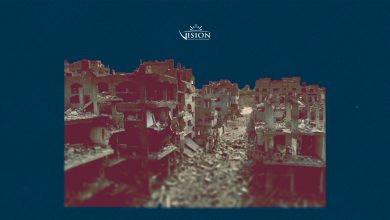
With the continuation of regional and international escalation, the priority of the Gaza cause has receded in global agendas and media, granting the occupation ideal cover to transition from military operations to structural liquidation. This strategy involves transforming the Strip into an uninhabitable environment through the systematic destruction of physical foundations, infrastructure and environment; and demographic foundations through the forced displacement of more than two million Palestinians and their confinement in 9% of the Strip’s area, in addition to targeting young age groups and destroying the population pyramid. This liquidation also encompasses economic foundations through the destruction of factories, productive and agricultural installations, and the prevention of any resources capable of restoring vitality to these foundations, ensuring the paralysis of Gazan society’s capacity for survival and the restoration of the means of livelihood in the future.
The Israeli occupation army does not stop there in its policies, but has proceeded to re-engineer the geographic reality of the Gaza Strip. In addition to its continued demolition of buildings and homes east of the Yellow Line, the construction of military corridors, and the permanent alteration of the Strip’s features, open-source intelligence investigations conducted by the ACAD platform, based on recent satellite imagery, have revealed that the occupation army is conducting large-scale fortification operations in the Gaza Strip, digging trenches extending for tens of kilometres in areas north and east of the Strip, specifically along what is known as the “Yellow Line,” indicating the transformation of a temporary presence into a permanent field reality.
Amid these policies that have compounded the humanitarian and environmental crises of citizens in the Gaza Strip, stagnation has pervaded the negotiating track for completing the second phase of the ceasefire agreement, announced under American auspices with Egyptian, Qatari, and Turkish mediation. With the United States entering the war against Iran directly, the Gaza file shifted from one requiring an urgent solution to a forgotten file with no horizon for ending the war, particularly as the centre of American attention moved to the confrontation with Iran, leaving the Gaza truce agreement in a state of near-complete deadlock.
According to the plan of US President Donald Trump and the statements of American officials, the terms of the second phase are supposed to include:
- The establishment of a Peace Council and its executive arm, an International Stability Force, and the withdrawal of the occupation army to the Red Line, making the area under its control approximately 20% of the Gaza Strip’s area.
- A plan for dealing with the resistance’s weapons and the destruction of what remains of tunnels in the Gaza Strip.
- The formation of a Palestinian technocrat government and the launch of a reconstruction plan for the Strip.
Despite the Israeli occupation’s agreement to these terms, it continues to prevaricate and refuses to implement the first phase’s humanitarian protocol obligations, insisting on a single provision, the dismantling of the resistance and disarmament, without regard for any other obligations. This leaves ‘forgotten Gaza’ hostage to the demands of the Israeli occupation, which exploits global preoccupation to impose its demands and policies, so that Gaza today is a victim not only enduring the food and water siege, but suffering from political and international neglect. The Palestinian people are thus slaughtered twice: once by the shell, and once by abandonment.
Conclusion
Amid regional transformations, Gaza is being driven toward international isolation and deliberate marginalisation, as global silence is transformed into cover for the continuation of genocide and the consolidation of a new political reality built on the deliberate obstruction of any political track. With the occupation’s failure to resolve other fronts, the probabilities of escalation in Gaza increase to compensate for this failure, a prospect confirmed by leaks from Channel 14 (Israeli) regarding the occupation army’s preparations to return to intensive fighting in the Gaza Strip at the beginning of next month. This field orientation coincides with the far-right Finance Minister Bezalel Smotrich renewing his calls for the full reoccupation of the Gaza Strip and the establishment of settlements within it.
This reality places the Gaza Strip before an existential threat, deliberately left as an open space for escalation and the reshaping of reality by force, with the occupation benefiting from the absence of international pressure and the declining prominence of the cause. This makes the continuation of genocide in renewed forms an increasingly likely prospect.
[1] Interview conducted by the researcher with Media Advisor to the Government Media Office Tayser Mheisin, 22 April 2026.
[2] Government Media Office, press statement, April 2026, No. 1058.
[3] Interview with Tayser Mheisin, op. cit.
[4] Ibid.
[5] An interview conducted with Mr. Zahir Al-Wahidi, Director of the Health Information Center at the Ministry of Health, on April 23, 2025.