What Will Change When Netanyahu Falls?
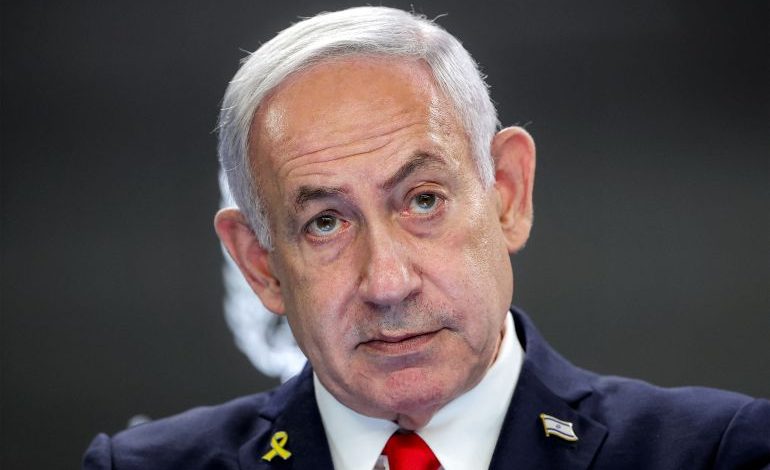
There is a prevailing view that the upcoming Israeli Knesset elections, scheduled for October, are of exceptional importance because their outcome could determine whether Israel continues the policy approach pursued by the current government headed by Benjamin Netanyahu, or whether they pave the way for a shift in Israeli policy, particularly toward the conflict with the Palestinian people, should the results allow opposition parties to form the next governing coalition.
Since all recurring public opinion polls predict that opposition parties will outperform the forces that make up the governing coalition—meaning that the opposition theoretically represents an alternative government in Israel—it is necessary to examine the Israeli opposition’s positions on the Palestinian issue, particularly the future of the Gaza Strip and Israel’s ongoing genocidal war there, as well as the West Bank and the accelerating annexation and settlement project. The aim is to test the validity of the assumption that a government without Netanyahu and the far right would bring about a change in Israel’s policies on these issues.
Accordingly, this paper examines the positions of the most prominent leaders of the Israeli opposition, particularly those with differing political orientations, in order to provide an overarching picture of the opposition’s various approaches.
Israeli Opposition Positions on the Palestinian Issue
A number of figures in Israeli politics lead opposition parties. This section of the paper focuses on the positions of Gadi Eisenkot, leader of the “Yashar” party; Naftali Bennett, leader of the “Together” list, under which both the “Bennett 2026” party and Yair Lapid’s “Yesh Atid” are contesting the elections; and Yair Golan, leader of “The Democrats.” Their positions carry particular representative and political significance in assessing the possible directions of the Israeli opposition.
Opinion polls predict that “Yashar” will win the largest number of seats in the next Knesset, while a majority of the Israeli public considers Eisenkot the most suitable candidate for prime minister. Bennett, meanwhile, is regarded as holding the most “right-wing” positions among opposition leaders, while Golan heads the only Israeli party that presents itself as representing the Zionist left. Examining the positions of these three figures therefore provides a broad picture of the opposition’s views, from its furthest left to its furthest right.
Eisenkot, Bennett and Golan have all expressed positions on the key issues currently dominating debate over the conflict with the Palestinian people. These fall into three main areas: the framework for resolving the conflict, Israeli policy in the West Bank, and the future approach toward the Gaza Strip.
Gadi Eisenkot
Eisenkot rejects focusing on reaching a permanent solution to the conflict because of the repercussions of the October 7 events. Instead, he proposes interim solutions intended to prevent the emergence of a “binational state,” without specifying what form those solutions would take. Eisenkot rejects the establishment of a Palestinian state. At the same time, he opposes current Finance Minister Bezalel Smotrich’s plan to dismantle the Palestinian Authority and calls for preserving it so that Israel does not have to bear responsibility for nearly three million Palestinians in the West Bank. He has also stressed the importance of the PA maintaining security coordination.
Regarding Jewish settlement in the West Bank, Eisenkot said in an interview that he strongly supports the settlement project in the West Bank and favors retaining settlement communities and continuing construction within them, but opposes construction “outside the framework of [Israeli] law and when it conflicts with Israel’s security interests.” Seeking to underscore his commitment to supporting the settlement project in the West Bank, Eisenkot toured several settlements in the northern West Bank in early April to assess their “basic needs,” and praised settlers’ contribution to the war effort during the genocidal war in the Gaza Strip. In this context, some Israeli media outlets highlighted the fact that Eisenkot’s family was among those that established the “Yakir” settlement, built on land belonging to the village of Qarawat Bani Hassan in Salfit Governorate in the northwestern West Bank.
Matan Kahana,[1] who is regarded as the second-ranking figure in “Yashar,” stated: “Eisenkot is to Netanyahu’s right on all matters relating to the conflict and would be more committed than Netanyahu to retaining the settlements.”
Eisenkot also strongly rejects the establishment of a Palestinian state, but has not presented his party’s vision for the ultimate resolution of the conflict with the Palestinian people. Yoram Cohen, the former head of the Shin Bet internal security service and a senior figure in “Yashar,” has stated unequivocally that the party believes that “the most the Palestinians can obtain in a permanent settlement is autonomy.”
Regarding the Gaza Strip, Eisenkot calls for ensuring the elimination of Hamas both as a military force and as a governing authority, but prefers to achieve this objective through diplomatic means in cooperation with the United States and Arab countries. Eisenkot criticizes the current government’s reliance on a military approach in dealing with Gaza and argues that “wars must be ended with a political move.” He also believes that, after being “reformed,” the Palestinian Authority should have a role in the future administration of Gaza, provided that the future administration commits to “combating extremism and changing school curricula,” while Israel retains freedom of military action in the Strip.
Naftali Bennett
Bennett, who previously served as director-general of the settlers’ council in the West Bank and worked as an adviser to Netanyahu early in his political career, outlined his vision for resolving the conflict in an interview with Kan. He argued that Area C, which accounts for around 62% of the West Bank, should be annexed to Israel as part of a final settlement of the conflict.
He rejects the establishment of a Palestinian state and instead proposes creating a Palestinian autonomous authority in Areas A and B. He also supports continued settlement construction in Area C, provided that it is approved by the Israeli government and takes place on land classified as “state land.”
Bennett is essentially referring to a plan he proposed in 2014, known as the “Stability Plan” or the “Marshall Plan.” It envisioned resolving the conflict by annexing Area C and eliminating the Green Line, while maintaining Palestinian autonomy in Areas A and B and full Israeli control over borders, crossings and airspace. Given his background as a successful businessman in the high-tech sector, Bennett also incorporates a regional investment dimension into his vision aimed at improving economic conditions in the West Bank.
Notably, Bennett emphasized in that plan the importance of allowing Palestinians freedom of movement and called for removing checkpoints and barriers. In practice, however, his proposal effectively seeks to separate Areas A and B from Area C and from the surrounding settlement areas.
In principle, a Palestinian could travel, for example, from Ramallah to Bethlehem without passing through an Israeli checkpoint, but would do so along a road entirely under Israeli control. It is therefore unsurprising that Bennett, while serving as defense minister in 2020, initiated the “Fabric of Life” road project (“Mirkam Hayim”), intended to facilitate Palestinian travel from the central to the southern West Bank. In practice, however, it represents a step toward implementing the E1 project east of Jerusalem, which would separate the northern West Bank from the south.
Bennett’s proposal for Palestinian autonomy in Areas A and B of the West Bank reflects the maximum extent of what he is willing to offer: the Palestinian Authority would remain responsible for administering the affairs of the population, since most Palestinians in the West Bank live in Areas A and B, thereby preventing Israel from becoming responsible for this large population. In this respect, his proposal does not differ greatly from Eisenkot’s and, in its broader logic, overlaps with the “Decisive Plan” promoted by Finance Minister Bezalel Smotrich, one of the most extreme representatives of the religious right in Netanyahu’s government.
Regarding the future of the Gaza Strip, Bennett believes Israel should condition its withdrawal from the Yellow Line and its permission to begin Gaza’s reconstruction on the disarmament of Hamas. At the same time, he agrees with Eisenkot in criticizing the current government’s approach of “perpetual war.” He said: “Israel’s security doctrine has never called for waging a continuous war that drains Israeli society, exhausts reservists, depletes the economy and severely damages our international standing.”
Bennett clearly suggests that the Netanyahu government’s conduct in Gaza has damaged Israel’s international standing, particularly among American public opinion, and reduced the prospects of reaching “regional agreements” with “Sunni Arab” states.
While Bennett insists on ensuring the elimination of Hamas, he also believes this objective could be achieved through diplomatic action or by adopting what he calls a “new narrative” capable of mobilizing regional states to contribute to that goal. He argues that Israel should state clearly and explicitly that it will neither annex the Gaza Strip nor build settlements there. Bennett believes the Israeli leadership should approach the Egyptian and Emirati presidents, the king of Jordan and other regional leaders directly in an effort to persuade them to join this initiative.
Yair Golan
Yair Golan proposes “separation” between Jewish settlers and Palestinians in the West Bank as an interim solution. Initially, this would involve giving Palestinians the ability to manage their own civil affairs, based on the premise that “Israel’s survival cannot be guaranteed if it continues to control Palestinians in the West Bank and the Gaza Strip.” Golan rejects discussing the two-state solution at present. Although he describes it as the “optimal” formula, he argues that discussing it will require considerable time because of the changes in relations between the two sides, particularly since October 7.
Golan has pledged that an opposition-led government would remove “illegal” settlement outposts and put an end to Jewish terrorism against Palestinians in the West Bank. Regarding the future of the Gaza Strip after the genocidal war, Golan supports a vision based on backing President Donald Trump’s plan, ensuring the end of Hamas rule and the disarmament of the resistance, forming a technocratic government and recognizing it as the official authority responsible for administering the Strip. He also links Gaza’s reconstruction to Hamas relinquishing power, with reconstruction—financed internationally and by Gulf states—beginning in areas not controlled by Hamas.
Overall, most of what the opposition is proposing can be described as slogans rather than concrete political programs and, in many respects, does not differ from the positions of the governing coalition.
An Opposition That Is Right-Wing in Essence and Orientation
The events of October 7 pushed broad segments of Israel’s Jewish public toward adopting more hardline positions on the conflict, as demonstrated by the results of a survey conducted for the Institute for National Security Studies at Tel Aviv University. This reality has influenced the Israeli opposition’s positions on issues related to the conflict with the Palestinian people, making its leaders more cautious when discussing their visions for a settlement. Israeli researcher Dahlia Scheindlin has noted that opposition leaders are careful not to appear overly enthusiastic about achieving peace with the Palestinian people because they recognize the prevailing attitudes among the Jewish public.
However, this hardline tendency was not absent from the Israeli opposition before October 7. A comparison with the opposition’s previous experience in government—the so-called “Change Government” of 2021–2022—shows that the government displayed no inclination toward a political settlement or resolution of the Palestinian issue.
A study prepared by Israel’s Institute for National Security Studies found that, on all matters relating to the Palestinian issue, that government continued the policies of the Netanyahu government. It noted that the government sought to “buy time” by refusing to launch negotiations with the Palestinian Authority or discuss a two-state solution, while its leaders ignored Palestinian Authority President Mahmoud Abbas’s requests to meet with them. It did, however, seek to maintain conditions that would allow security coordination with the PA to continue.
Regarding settlement activity in the West Bank, a report issued by the Israeli Peace Now movement stated that the number of housing units built in the West Bank by the Bennett-Lapid government during its year in office was 26% higher than the number built by Netanyahu’s government in the preceding year.
In addition to these factors, the balance of power within the opposition favors right-wing parties that adopt the most hardline positions on the conflict with the Palestinian people. The opposition includes right-wing parties such as Avigdor Lieberman’s “Yisrael Beiteinu” and “Bennett 2026,” whose representatives will occupy most of the places on the “Together” list, which also includes “Yesh Atid.”
At the same time, “Yashar” has a strong presence of right-wing figures, particularly from the religious right. Alongside Matan Kahana and Yoram Cohen, the party has recruited secular figures known for their “hardline nationalist” views, such as former Shin Bet and Mossad official Deborah Sharfian-Bachar, as well as former senior military officers known for strongly advocating military options against Palestinians, including Tal Russo, the former commander of the Israeli military’s Southern Command.
The influence of these figures on “Yashar” is further reinforced by the perception that Eisenkot lacks personal charisma, making it easier for others to influence him. This suggests that the positions of Bennett, Lieberman and the “hawks” within “Yashar” are likely to prevail if the opposition forms the next government.
Conclusion
Based on the above, it is likely that the Israeli opposition parties, should they come to power, will continue the current government’s approach of determining the future of the West Bank through intensified settlement expansion and effectively closing the door on prospects for a political settlement to the conflict. Nevertheless, an opposition-led government is expected to put an end to the plan to dismantle the Palestinian Authority, openly advocated by some ministers in Netanyahu’s government, and instead work to support the PA and ensure its survival as a security and strategic asset.
Regarding the future of the Gaza Strip, the opposition remains committed to achieving the objectives set by the current government for the genocidal war: ending Hamas rule, eliminating its military capabilities, dismantling the military wings of Palestinian factions and disarming them. Nevertheless, while an opposition-led government would insist that Israel retain freedom of military action in the Gaza Strip, it would likely prefer to pursue the war’s objectives through political and diplomatic means. Its leaders recognize the extent of the damage the genocidal war has caused to Israel’s interests and international standing and are also betting that a “change” in Israeli policies under their leadership could revive the normalization process with Arab states.
[1] Matan Kahana’s political background provides an indication of the nature of “Yashar’s” positions. Kahana began his political career in early 2019 by joining the “New Right” party led by Naftali Bennett and Ayelet Shaked, which was considered one of the settlers’ parties. He later joined the Yamina alliance, which consisted of the New Right, the Jewish Home and the National Union, the latter being Smotrich’s party before it was renamed Religious Zionism.NOTE: This text is adapted from original Arabic article.