Religious Zionism has Become the Dominant Force in Israel

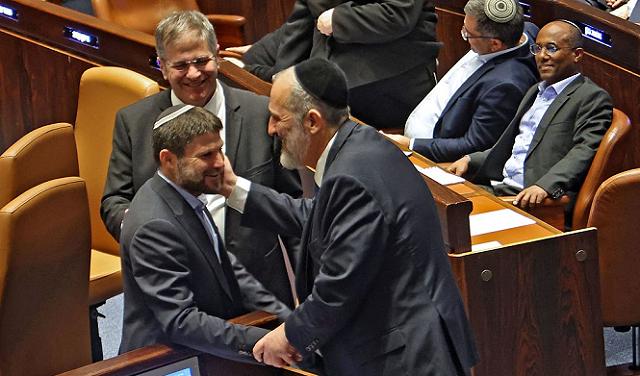
Public opinion polls conducted in Israel over the past two weeks indicate that the results of the general election to be held on 27 October will not produce a clear political outcome. None of these polls gave an absolute majority either to the parties representing the Zionist opposition or to those taking part in the government and supporting it.
Although the Likud has weakened, this decline has not benefited the opposition. It has benefited the small right-wing parties, above all those representing the Religious Zionism current. What is meant here is not the “Religious Zionism” party led by Bezalel Smotrich, since that party is only one part of the current. The reference is to the current itself, which is expressed by several parties: Smotrich’s party, the Otzma Yehudit party led by Ben-Gvir, and Ofer Winter’s new party “Your People Israel”, together with a number of small parties such as Noam and Zehut. It has also penetrated the Likud and even opposition parties, including Gadi Eisenkot’s “Yashar” and Naftali Bennett’s “B’Yachad” (Together).
This article examines the reasons for the Likud’s decline and what it signifies, and the growing support for the Religious Zionist forces. It focuses on their most prominent parties, above all “Religious Zionism”, “Otzma Yehudit” and “Your People Israel”, and analyses the various implications in the context of the coming election.
The Balance of Power in the Party Arena as Reflected in the Polls
The latest public opinion polls show a very close race between the Zionist opposition and the parties forming the ruling coalition or supporting it. Some polls show a slight opposition lead of no more than four seats, while others point to a tie between the two blocs. A poll by Channel 13 showed the coalition forces ahead by two seats. The same results, and the polls that followed, showed an unprecedented decline in Likud representation: it fell to 18 seats, compared with the 32 it holds in the current Knesset.
By contrast, the Religious Zionism current has strengthened its presence. It is represented by “Jewish Power” (Otzma Yehudit) under National Security Minister Itamar Ben-Gvir, “Religious Zionism” under Finance Minister Bezalel Smotrich, and “Your People Israel” under Ofer Winter, which is contesting an election for the first time. The polls indicated that the three parties together could win 18–22 seats, bearing in mind that the current holds 13 seats in the Knesset.
The fact that support for the ruling coalition parties has not been affected, despite the fall in support for the Likud, clearly indicates that a wide section of Israelis who have lost hope in the Likud now support the Religious Zionism current in its most extreme forms.
Several factors lie behind the decline in the popularity of the Likud and its leader Netanyahu, including:
First: In the eyes of a wide section of Likud supporters and of the right in general, Netanyahu bears a large share of responsibility for the events of 7 October. There is also his readiness to exempt followers of the Haredi current from military service, as well as these supporters’ unwillingness to accept Netanyahu’s personal patterns of behaviour.
A poll conducted in May 2026 among Israelis who voted for the Likud in the 2022 election showed that 42% of them said they were considering not voting for the party for these reasons. A poll by Channel 13 showed that 64% of hesitant Israelis believe Netanyahu bears the greatest share of responsibility for the events of 7 October.
Second: Something tempts Likud voters who have lost hope in Netanyahu to vote specifically for the Religious Zionism parties. According to the poll mentioned above, 86% of hesitant voters see the “Religious Zionism” party led by Smotrich as the “most right-wing” party in Israel. “Jewish Power” followed with 85% and “Your People Israel” with 75%, while 72% saw the Likud as the most right-wing.
Third: The collapse of ideological differences between the Likud and the parties of the national-religious current makes it easier for Likud voters to move to these parties. According to Limor Livnat, who previously held several important ministerial posts in the governments of Yitzhak Shamir and Netanyahu, the Likud has come to adopt the ideological premises of Itamar Ben-Gvir, as the “Kahanist tendencies” of a number of its ministers and MKs attest. The clearest example of the collapse of ideological differences between the Likud and the national-religious right in its most extreme form is Netanyahu’s recent agreement to the move of Likud MK Tali Gottlieb to second place on the “Jewish Power” list in the coming election.
Who Is the Audience of the Religious Zionism Current?
Despite the importance of the above, it is not enough to build an objective picture of the reasons for the growing support for the national-religious current in Israel. More deeply rooted structural factors, ethnic, social and demographic in character, have played a role in providing stable sources of mass support for this current. Let us now review the demographic, social, ethnic and ideological factors that affect the support enjoyed by each of the “Religious Zionism”, “Jewish Power” and “Your People Israel” parties.
“Religious Zionism”
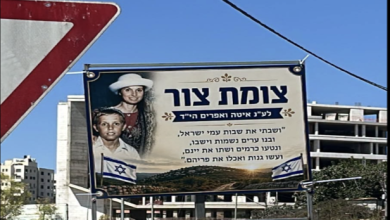
A number of research works indicate that the “Religious Zionism” party led by Smotrich is the main representative of the national-Haredi current, called in Hebrew “Hardalim”. This is pointed out, for example, by a study by Daniel Mahla and a report issued by the Jewish People Policy Institute, which also linked the “Religious Zionism” party to the formation of the Jewish terrorist “Hilltop Youth”. The Hardal current emerged in the 1980s within “Religious Zionism”.[1] It combines the jurisprudential strictness of the Haredi current with positions on the conflict with the Palestinian people that are more extreme than the traditional positions of Religious Zionism.
One reason for the support enjoyed by Smotrich’s party is the demographic dimension. While the latest statistics indicate that those who define themselves as belonging to Religious Zionism represent 17% of the total number of Jews, the number of Religious Zionism followers who now define themselves as “Hardalim” jumped from 12% in 2014 to 28% in 2024, an increase of more than 200% [translator’s note: 12% to 28% is an increase of about 133%]. This was shown by a survey conducted by the Begin-Sadat Center for Strategic Studies at Bar-Ilan University, whose results were published by the newspaper Haaretz.
The increase in the number of members of the Hardal current is attributed to the large rise in births among Hardal women. According to researcher Danny Bar-On, the average number of births among the Hardalim is 4.8 per woman, compared with 3.8 among the rest of the Religious Zionism’s followers and 3.2 among secular people. Although not all members of the Hardal current can be assumed to vote for the “Religious Zionism” party, there is no doubt that the “Hardalim” are the main source of support for this party.
However, Smotrich remained below the electoral threshold until he announced his alliance with Moshe Feiglin and his Zehut party. This points to the low proportion of Hardalim within Israeli society and within the Religious Zionism current. Through his alliance with Feiglin, Smotrich attracted a wider audience from the West Bank settlements and the 1948 territories, among those influenced by Feiglin’s discourse, which is the most extreme in Israel.
“Jewish Power”
Some research literature has argued that Mizrahi Jews and Haredim are the main source of support for the “Jewish Power” party. Much of the political-sociology literature in Israel has long been concerned with investigating why Jews, Mizrahi Jews in particular, support the right and adopt racist attitudes towards Arabs.
An in-depth study by researcher concluded that a wide sector of Mizrahi Jews, especially the young, support the “Jewish Power” party. She indicated that this suggests growing radicalisation among young Mizrahi Jews, for whom the slogan “Death to the Arabs” has become an identity component. Raimon-Or attributes the Mizrahim’s support for Ben-Gvir, and the fact that they are the most enthusiastic in chanting “Death to the Arabs”, to their feeling of inferiority towards the Western Jew. She says:
“When he meets the Ashkenazi, the Mizrahi Jew must distinguish between two components of his identity: the identity of the ‘Jew’, tied to his religious affiliation, and the identity of the ‘Arab’, because he emigrated from an Arab or Islamic country. The Mizrahi Jew will therefore try to erase the latter component of his belonging through a series of statements and actions, among them the slogan ‘Death to the Arabs’.“ The ethnic motive is one of the findings on which most of the literature explaining Mizrahi extremism agrees. But other economic and social factors, which cannot be enumerated here, cannot be ignored, above all the events of 7 October.
Hence the observation of the writer Ron Kahlili gains importance. He listed the signs of many young Mizrahim’s identification with Ben-Gvir’s orientations: they declare support for the idea of the “whole Land of Israel”, they make up a large proportion of the “Hilltop Youth”, and they take wide part in the desecration of al-Aqsa Mosque. He also noted that Mizrahim make up half of the settlers in the West Bank, even though they began moving there only in the mid-1980s.
In addition, young religious Haredim are an important sector of “Jewish Power” supporters. That does not necessarily mean they vote for it, since Haredi voting remains largely sectoral and confined to their traditional parties. Researcher Racheli Freifeld points out that these young people’s support for the extreme right-wing current stems from the Haredi current’s traditional adoption of the most extreme positions on the conflict with the Palestinian people, compared with any other mass sector in Israel. In addition, this growing support for Ben-Gvir can be explained by his enthusiasm for supporting bills and arrangements aimed at legitimising their continued evasion of military service.
However, the most prominent factors in Ben-Gvir’s rise, unlike Smotrich’s, lie in his excessive populism and his reliance on a discourse that tickles the emotions of the masses and touches on or stimulates their anxieties. He also boasts of extreme policies such as the “death penalty law”, relying on social media, especially TikTok, until he has come to be described as the “TikTok minister”.
“Your People Israel”
Because this party was founded so recently and is taking part in an election for the first time, there is no literature on the sources of its mass support. However, Winter intensified his activity on social media after 7 October, putting forward extreme policies and calls for expulsion and extermination, which enabled him to mobilise a wide audience. This later developed into direct meetings, seminars and public lectures, to which he drew his social media audience. He built his image and popularity through sharp criticism of how the war and the government are being managed, claiming to hold magic solutions by virtue of his security experience. Until late on, he remained reserved about announcing his political intentions so that people would not drift away from him, presenting himself as a man who seeks the public good, not positions. This also explains his insistence on challenging Netanyahu and his refusal to merge with any right-wing party or to withdraw from the race, since he built his entire reputation on attacking the government and presenting himself as an alternative with a different vision.
By shedding light on Winter’s personal background and ideological premises, one can form an accurate picture of the nature of his supporting audience. Winter graduated from the “Ben David” school in the settlement of “Eli”, built on Palestinian land near Ramallah, one of the religious schools that prepare followers of Religious Zionism for military service. During the 2014 war on Gaza, when he commanded the Givati Brigade and led ground operations in the Khan Younis and Rafah areas, he became famous for the contents of the command order he issued to his soldiers. Its opening read: “A great blessing has fallen upon us at this time, to lead and serve in the Givati Brigade. History has chosen us to be at the forefront of the fight against the terrorist ‘Gazan’ enemy who insults, blasphemes and curses the God of the armies of Israel.”
This was the first time a military commander had presented the war effort as part of a religious war in such a crude manner.
As for the political and ideological premises concerning the conflict with the Palestinian people, Winter, whom the writer Yossi Klein described as “Kahane in a military uniform“, offers a simple and clear conception: “In order to liquidate the Palestinian cause there must be no Palestinians here”. This is what puts the “voluntary emigration” of Palestinians from the Gaza Strip at the top of his party’s agenda.
Implications of the Growing Representation of the Religious Zionism Current
Most polls indicate that the chances of the forces representing the Zionist opposition, and of the parties in the ruling coalition, winning an absolute majority in the coming election are very low, if not impossible. This is due to the expected rise in turnout, which will give the Arab parties extra seats and prevent either Zionist bloc from securing an absolute majority. If these expectations materialise, Israel will face three scenarios:
First: The formation of an expanded “national unity” government in which the Zionist parties take part, including the Likud and the opposition parties, excluding Ben-Gvir and his “Jewish Power” party.
Second: A new round of elections, because both the current coalition camp and the opposition refuse to reach a national unity government, with Netanyahu’s government remaining as a caretaker government until the new round is held.
Third: The main Zionist opposition forces abandon their electoral pledges and rely on the support of the United List led by Mansour Abbas, and of the Joint List from outside the coalition, to form a stable government that removes Netanyahu’s government.
The national unity government scenario may seem the most likely. Yoram Cohen, the number two in the “Yashar” party, has not ruled out his party’s participation in a government alongside the Likud and “Religious Zionism”, on condition that Netanyahu does not lead it. At the same time, none of the opposition forces has objected to taking part in a government that includes Winter’s “Your People Israel”.
If this scenario materialises, it would mean that the Religious Zionism forces, with the exception of “Jewish Power”, continue to play a major role in influencing decision-making, especially on the Gaza Strip and the West Bank. It also means that Smotrich and Winter will each put the “voluntary emigration” of Palestinians from Gaza at the top of their agendas as ministers.
This is particularly so because Smotrich pledged last July to resume Jewish settlement across the entire Gaza Strip. It is also widely expected that such a government would continue the projects to Judaise the West Bank. Alongside Winter and Smotrich, those sitting around the next government’s table would include Likud representatives, Yashar leaders from Religious Zionism such as Yoram Cohen and Matan Kahana, and the leader of the “Together” list, Naftali Bennett. Bennett previously served as director general of the Council of Jewish Settlements in the West Bank, and he believes that Area C should be annexed to Israel, which makes up about 60% of the West Bank, in any political settlement of the conflict.
The penetration of the Religious Zionism current into the opposition parties, and the dominance of its extremist discourse over their agenda, politically at least, also indicates something further. Even if the opposition formed the government with the support of the Arab lists, its political positions on the Palestinian issue would not differ in essence from those of the right, in both its nationalist and religious wings.
Conclusion
The preceding data indicate that the Religious Zionism current has penetrated every joint of Israeli politics and become an integral part of the system of government in Israel, whether or not its official parties take part in the coalition. This is because of the extension of its influence into the opposition parties, particularly Yashar and B’Yachad.
Taking into account that degrees of extremism differ within this current, those differences narrow over time. The project of expulsion, annexation and settlement, whether in the Gaza Strip or the West Bank, has become a project enjoying near consensus within Israeli society as a whole, although the considerations and justifications differ. However, the aim of this article is not to portray the Religious Zionism current as the root of all evil in Israel. It is to highlight how fast this current is growing and how far its ideology has spread in Israeli society, until it has become a deeply rooted component of Israeli politics and discourse.
[1] Some academic literature currently suggests that the Haradli movement now also includes Haridi groups, such as the ‘Habad’ movement.