The Occupation’s Proxies in Gaza: A Race to Prove Their Worth and a Fate Hanging on the Second Phase

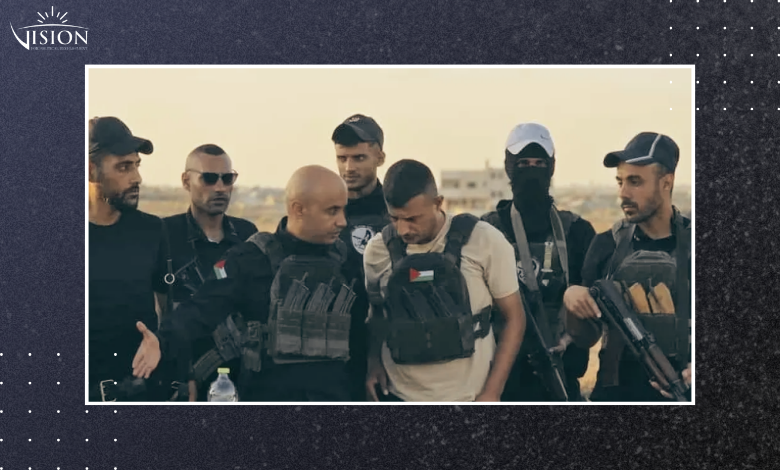
From the very first weeks of the genocide on the Gaza Strip, the question of “the day after” emerged as one of the most complex dilemmas confronting Benjamin Netanyahu’s government, which failed to identify a cooperative Palestinian party possessing even a minimum of legitimacy and capacity to assume administration of the Strip after the war. In the face of this inability, the Israeli occupation turned to investing in armed groups led by individuals with criminal and security records, providing them with weapons, protection, and freedom of movement within the areas under its control.
Despite these groups’ complete absence of any popular base, their activity since the beginning of 2026 witnessed a clear escalation in terms of organisation, expansion, and media presence, coinciding with the intensification of discussions around the arrangements for the second phase of the ceasefire agreement and the future governance of the Gaza Strip. This development reflects an Israeli effort to transform these formations from marginal security instruments into a political and security card that can be deployed to prevent any possibility of the Strip’s recovery and stabilisation.
Who Are the Militias? A Map of Deployment and Leadership in the Gaza Strip
The available data reveal a network of armed formations cooperating with the Israeli occupation that extends along the Gaza Strip from its south to its north, operating primarily in the areas located behind what is known as the “Yellow Line”, the security separation route along which occupation army forces are deployed, and through which it controls more than half of the Strip’s area.
Despite variations in the size of these groups and the differing backgrounds of their leaders, they converge on three principal characteristics: their dependence on Israeli protection, their deployment inside areas closed to Palestinians, and their complete absence of any popular base or national legitimacy.
In the far south of the Strip, the group of Yasser Abu Shabab emerged as the first and largest nucleus of these formations, beginning to appear following the Israeli invasion of Rafah city in May 2024 and establishing the al-Buyuk area east of the city as its main base of operations. Abu Shabab is a person with a criminal record, having been detained since 2015 on charges including drug trafficking, before escaping from prison during the chaos that accompanied the war. His group became associated with widespread accusations of looting humanitarian aid and direct cooperation with the Israeli occupation. Following his death in December 2025, leadership of the group passed to Ghassan al-Daheini.
In Khan Yunis, Hussam al-Astal leads a group based in the Qizan al-Najjar area south of the city. Al-Astal is a former Palestinian Authority security officer, sentenced to death in 2018 for involvement in the assassination of a Hamas member in Malaysia, before escaping prison when the war broke out.
In the central area, a group led by Shawqi Abu Nasira is active, operating primarily in the eastern areas of Deir al-Balah, particularly the Wadi al-Salqa area. In the Shujaiya neighbourhood east of Gaza City, Rami Adnan Halles leads an armed group whose name came to greater prominence following reports of its efforts to expand its sphere of influence toward other areas in eastern Gaza City.
In the far north of the Gaza Strip, the group of Ashraf al-Munsi conducts armed activity in Beit Lahiya and Beit Hanoun. Multiple reports indicate that this group was formed in September 2025 under the direct sponsorship of Yasser Abu Shabab, reflecting the existence of a coordination and cooperation network between these formations along the length of the Strip, and a gradual attempt to build an interconnected organisational structure that transcends the boundaries of each individual area.
The Armed Conflict Location and Event Data Project (ACLED) indicates documentation of dozens of incidents linked to these groups during 2026, reflecting their expansion in conducting disruptive operations within the Gaza Strip environment from their positions of deployment.
The Israeli Security Approach: Mercenaries at Low Cost
Israel’s support for armed militias in the Gaza Strip reveals a security approach based on deploying local proxies to carry out highly sensitive missions at the lowest possible human, intelligence, and political cost. To understand this logic, the special Khan Yunis operation of November 2018 serves as an illuminating example.
In that operation, the Israeli elite unit “Sayeret Matkal” infiltrated east Khan Yunis to plant a surveillance system on the resistance’s communications network, before the Qassam Brigades discovered it, resulting in the killing of the force’s commander and the wounding of others, and the unit’s hasty withdrawal, leaving behind equipment and intelligence materials that fell into the resistance’s hands. The operation served as a stark reminder of the risks inherent in special operations inside the Gaza Strip, both in terms of human losses and the possibility of sensitive intelligence capabilities being compromised.
In this context, local militias formed a practical solution to this dilemma. Occupation Prime Minister Benjamin Netanyahu summarised this thinking in his comment on his government’s support for these groups: “What is wrong with that? This saves Israeli soldiers’ lives.” This statement reflects the essence of the Israeli approach: substituting the regular soldier with local elements who carry out the same mission without Israel bearing the direct cost.
This equation rests on three interrelated considerations. The first is the human cost, the killing of a local militia member does not appear in the Israeli army’s casualty register and does not provoke political or social pressure within Israel. The second is the intelligence cost, the exposure of a local cell results in limited losses compared to what might follow from the uncovering of an Israeli special unit operating inside the Strip. The third is the political cost, the use of local proxies allows Israel to carry out sensitive security operations while maintaining a wide margin of official deniability.
This approach aligns with what Reserve Brigadier General Guy Hazout wrote in the journal Maarachot, where he affirmed that the true operational role of these militias is that they are “not a substitute force capable of governing, but an executive tool for achieving what the regular army was unable to accomplish: severing Hamas’s connection with its supporting environment, through controlling the keys to resources and supply, and carrying out targeted security operations in which Israel avoids appearing directly.”[1] This means these groups are used to control aid, disrupt the internal security system, and target resistance cadres and police apparatus, all aimed at weakening the relationship between the resistance and its societal base.
Haaretz revealed in September 2025 that the occupation army and the Shin Bet recruited elements from these groups to carry out “sensitive security operations” in exchange for money, weapons, and privileges, described in reports as a “mercenary force” operating on behalf of Israeli agencies. This characterisation confirms the functional nature of these formations, which rest on individual interests and material incentives more than on any other project.
Institutionalising Presence and Growing Audacity
The entry of the ceasefire agreement into effect in October 2025 marked a pivotal turning point in the trajectory of the militias cooperating with the Israeli occupation. Rather than the cessation of large-scale military operations leading to their retreat, the occupation exploited the truce to consolidate their presence and transform them from scattered groups into a more organised field structure, with fixed headquarters, distributed roles, and a geographical presence extending along the areas east of the “Yellow Line,” where the occupation army continues to impose its direct control over more than half of the Strip’s area.
These areas provided the militias with a safe environment for reorganisation, training, re-arming, and re-supplying, far from the reach of the security apparatus in the Gaza Strip, and became launch pads for conducting operations in adjacent areas.
Field data showed that these groups no longer operate randomly, but within an operational distribution governed by the Israeli army’s needs. Prominent in this context is the transfer of Shawqi Abu Nasira from the Khan Yunis environs to the central area to cover the Wadi al-Salqa and Deir al-Balah axis, a clear indicator that the occupation is redistributing these groups according to operational gaps rather than local affiliations or clan considerations.
With the reopening of the Rafah crossing, these groups were assigned a more sensitive role involving participation in sorting and screening operations for those returning to the Strip. Documented testimonies indicate that elements of Ghassan Al-Duhaini’s group took to detaining travellers and transferring them to Israeli checkpoints for interrogation, revealing these formations’ transition from operating in the security margins to direct integration into the Israeli security screening system. This role also afforded them an opportunity for direct contact with civilians at moments of vulnerability and need, opening the door to recruitment, extortion, and the building of intelligence networks serving Israeli agencies.
In the areas adjacent to the Yellow Line, these militias performed another highly dangerous function: preventing residents from re-establishing themselves in their destroyed areas. Whenever inhabitants attempted to return to areas near the Yellow Line, fresh attacks by these groups were launched to pressure residents into leaving, transforming them into a field instrument for entrenching a buffer zone emptied of Palestinian inhabitants.
This trajectory reveals a fixed pattern of expansion: the militias follow the vacuum that the occupation creates or deliberately leaves behind. When the occupation army reduces its presence in an area, it does not actually relinquish it, rather, it pushes these groups to fill the vacuum and perform its security functions on the ground.
The Second Phase and the Question of Fate
Recent months have witnessed a clear escalation in the media activity of the militias cooperating with the Israeli occupation, which have transitioned from operating in the shadows to attempting to project an image far exceeding their actual size on the ground.
These groups have intensified the publication of armed displays, documentation of claims of distributing aid, and announcements of the establishment of service and educational facilities in their areas of control, in an attempt to present themselves as an organised force possessing field presence and the capacity to manage civil affairs. Prominent in this context is Ghassan Al-Duhaini’s effort to establish himself as a collective reference for these formations and to present them as a more cohesive and organised entity.
This activity comes at a highly significant moment, coinciding with the intensification of discussions around the second phase of the ceasefire agreement, discussions that encompass arrangements liable to threaten the very foundations on which these groups rest. The success of a Gaza Strip governance formula through a national committee, the formation of a security force, the deployment of an international force in the eastern areas, and the withdrawal of the occupation army from its areas of control within the Strip, all these developments would strip these militias of their justification for existence and deprive them of the Israeli military umbrella that provides them protection and freedom of movement.
From this vantage point, the escalating media presence of these groups can be understood as a race against time to prove their worth before the political and security equation changes. The message they seek to convey is not directed at Palestinian society, which has demonstrated widespread rejection of them since their emergence, but rather at decision-makers in the Israeli occupation and the United States, to the effect that these formations can be of real and actual utility.
In contrast, the behaviour of Benjamin Netanyahu’s government shows no signs of haste to abandon these groups. The accumulated indicators since the beginning of the war suggest that the occupation views them as a tool capable of performing a sustainable function in the areas under its influence, by providing a Palestinian “human buffer” that reduces direct friction between the population and its forces, and by carrying out security tasks in the areas the occupation is keen to keep under control.
Conclusion
The escalation in the activity of the militias cooperating with the Israeli occupation, accompanied by armed displays and intensive media propaganda, is directly linked to the ongoing negotiations over the second phase of the ceasefire agreement. At this sensitive political moment, these groups seek to convert their fragile field presence into a fait accompli and to demonstrate that they remain a tool viable for investment in the “day after” arrangements in the Gaza Strip.
At the same time, the Israeli occupation deploys these militias as a pressure card aimed at obstructing or complicating the implementation of the second phase’s requirements, by entrenching a parallel security reality that confounds any attempt to build a Palestinian framework for governing the Strip.
Despite the media clamour surrounding them, these militias remain fragile entities lacking national legitimacy and popular base, and their survival is entirely contingent on Israeli support and protection. The occupation therefore deals with them in a purely instrumental logic: they are used as long as they are useful, and abandoned when the calculations change. Within this framework, these groups encapsulate a renewed Israeli attempt to deploy local instruments to reshape Palestinian reality from within, an attempt that may leave painful security and social consequences, but one that remains limited in its capacity to develop into a fundamental threat to the deep-rooted national structure of the Strip.
[1] Hazout, Guy (Reserve Brigadier General). “Guerrillas Cannot Be Defeated! Really?” Maarachot, Issue 508, 2025, pp. 10–17.