The Israeli Military Operation in Southern al-Khalil: Another Step Toward the Annexation of the West Bank

Suleiman Bisharat, Kerim Kurt
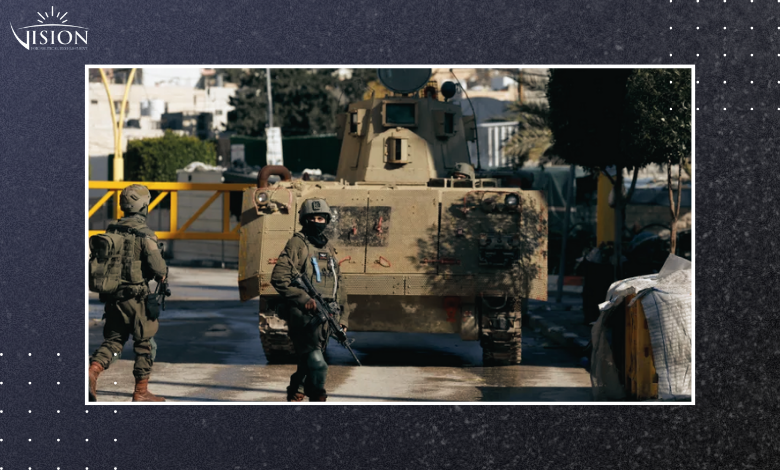
Unlike the military operations launched by the Israeli occupation army in many areas of the West Bank, most notably Operation “Iron Walls,” which began in January 2025 in the Jenin and Tulkarem refugee camps, followed by military operations in Tubas Governorate and the Jordan Valley, the Israeli military operation in the southern area of the city of al-Khalil /Hebron on January 19, 2026, raised numerous questions regarding its justifications and objectives. This is particularly so, given that the targeted area is already subject to a permanent Israeli military and security presence and blockade, with no genuine security concerns that could serve as an Israeli pretext for targeting it.
To understand what took place south of al-Khalil, the Israeli military operation was concentrated over four consecutive days in the Jabal Johar area, south of the city. In the early hours of the operation, the occupation authorities announced that its objective was to end lawlessness and collect weapons, against the backdrop of a tribal/clan dispute that had erupted in the area, accompanied by armed clashes, destruction of property, and casualties in December 2025. However, the occupation had not previously launched a military operation in al-Khalil for the purpose of ending clan disputes.
The questions that emerged after the conclusion of the military operation were: What were the real motives and objectives behind what occurred south of al-Khalil (Hebron)? How is this connected to the ongoing military operations in the refugee camps of the northern West Bank? And what is the political context of the Israeli occupation army’s conduct in the West Bank?
Political Administrative Engineering
According to the al-Khalil Agreement between the Palestine Liberation Organization and the Israeli occupation in 1997, al-Khalil /Hebron was divided into two areas: H1 (K1), which is under the control of the Palestinian Authority and constitutes about 80% of the city, and H2 (K2), which is under full Israeli control and includes the Old City, the Ibrahimi Mosque, and a number of neighbourhoods in the southern part of the city. The area targeted in the military occupation, specifically Jabal Juhar, is actually located within the second section according to the Al-Khalil Agreement and is therefore under direct Israeli security control. This indicates that the chaos and proliferation of weapons in that area was in the area under the security control of the occupation, especially since al-Khalil in general, and the southern region in particular, where the Palestinian Authority has no authority, periodically witnesses tribal/clan conflicts involving violent clashes, resulting in casualties and targeting property, cars, and other items. However, the occupation has never launched a military operation in al-Khalil with the aim of controlling tribal conflicts, preventing security chaos, and confiscating weapons.
The context of the military occupation in southern al-Khalil /Hebron can be traced back to a series of Israeli policies and measures that intensified following the outbreak of the genocide on the Gaza Strip. On July 16, 2025, the Hebrew newspaper Yisrael Hayom reported that the occupation authorities had stripped the Palestinian municipality of al-Khalil of its authority over the Ibrahimi Mosque and transferred it to the religious council of the Israeli settlement of Kiryat Arba, in what was considered the first “fundamental change” in the Ibrahimi Mosque since 1994.
In September 2025, the occupation arrested the mayor of al-Khalil, Tayseer Abu Sneineh. This was seen as a move with deep political implications that go beyond the individual to the nature of the current situation in al-Khalil and the future of the relationship between the official authorities, the occupation, and the clans, amid growing talk of a “tribal emirate plan” being engineered away from the authority of the Palestine Liberation Organization (PLO) and the Palestinian Authority (PA).
In December, the Israeli Civil Administration decided to impose sanctions on a number of Palestinian factories and workshops in the industrial zone known as Al-Fahs, which is also located south of al-Khalil and constitutes the economic backbone of the entire West Bank, not just al-Khalil. The Civil Administration’s decisions were based on the claim that Palestinian factories are damaging the environment with their waste and wastewater, which affects Beersheba and the Al-Naqab (Negev) settlements.
These Israeli measures indicate a systematic policy targeting al-Khalil in particular, as part of the ongoing escalation in the West Bank. In this context, the military operation in southern al-Khalil, according to the Israeli narrative, came against the backdrop of the aforementioned tribal conflict. With the outbreak of that conflict, the occupation began promoting a narrative that settlers living in the heart of al-Khalil were feeling fear and anxiety, fearing that the tribes would turn their weapons against them.
Based on lessons learned from Tufan al-Aqsa, the Israeli army and security services assessed that although the weapons in the hands of the tribes were not currently being used against Israeli soldiers and settlers, they could be used against them in the future in any way possible. Therefore, the occupation army’s rule was that they must act “against the capabilities of the clans and not just against their intentions.”
This rule seems to be consistent with Israel’s current behaviour in various arenas. However, just as the occupation entity has goals that go beyond security in all arenas, the same is true of the military occupation in southern al-Khalil. Coinciding with the outbreak of the tribal conflict in southern al-Khalil, the occupation was monitoring the Palestinian Authority’s behaviour in dealing with it and its ability to control it. It should be noted that there is a constant Israeli analysis linking the tribal conflicts in al-Khalil to the weakness of the Palestinian Authority and its inability to control security and order in “its areas.” With the outbreak of the current conflict, the governor of al-Khalil, Khaled Dudin, took the initiative to hold a tribal reconciliation between the elders and leaders of the tribes in the southern region, but it was not long before the truce collapsed and armed clashes returned to their peak. According to the Israeli account, the occupation authorities decided at that point to intervene to impose security and order following the failure of the Palestinian Authority to fulfil its role.
However, the occupation’s intervention was not limited to the military operation, which involved the use of large forces accompanied by bulldozers and excavators, but went beyond that to include the involvement of the occupation’s civil administration in dealing directly with the clans as the de facto ruling authority. On January 19, Israeli civil administration and intelligence officers summoned about 25 reformers and tribal leaders in the southern al-Khalil area, demanding that they hand over wanted persons, arms dealers, and the weapons used in the tribal conflict. Although tribal leaders did not respond to the occupation’s demands, the Civil Administration forced southern al-Khalil leaders to sign a “family peace” agreement to end the fighting that had prevailed in the area.
The Objectives of the Operation in the Palestinian Interpretation
It is clear from the context of the occupation in al-Khalil that this is not a separate step, but rather an extension of a process aimed at imposing full Israeli sovereignty through de facto annexation and control over all aspects of Palestinian daily life, similar to Israel’s control of the Old City of Jerusalem over the past ten years, which has resulted in thousands of Palestinians leaving the city or its outskirts. In this context, the occupation seeks to redefine Palestinian sovereignty in relation to its own control by presenting the process as aimed at collecting weapons and ending tribal conflict, thereby consolidating its role as a police force that intervenes in Palestinian internal affairs and presents itself as an alternative to any manifestation of Palestinian authority. The danger of this lies in its intersection with Israeli proposals for alternatives to the Palestinian Authority based on regional authorities, such as the model previously proposed and dubbed the “Emirate of al-Khalil,” with the perception that al-Khalil could be the first model for this formula given the effectiveness of its tribal structure.
It is clear that this process appears to be a political maneuver designed to sever this region from its Palestinian extension in political, geographical, and demographic terms, thereby creating a Palestinian administrative vacuum and reconnecting it to an administrative model that follows the occupation itself, allowing the occupation to control its future course. This goal provides the Israeli occupation with an effective means of besieging Palestinian communities stretching from al-Khalil eastward toward the Dead Sea and southward toward the Al-Naqab. In other words, it creates a geographical and demographic belt under Israeli control linking al-Khalil to the Al-Naqab region.
On the other hand, there is another goal related to the occupation’s efforts to displace Palestinians. According to Muhannad al-Ja’bari, head of the al-Khalil Reconstruction Committee, the occupation of Jabal Juhar is an attempt to empty the area of its inhabitants and expand the closed area within the Old City and around the Ibrahimi Mosque, and to make the area stretching from the Kiryat Arba settlement east of the city to the Tel Rumeida settlement outpost at the southeastern edge of the city center accessible to settlers and free of Palestinians, thereby drawing a new demographic map with an integrated Jewish settler character.
The Central Objective of Annexation
If we link what is happening in the camps in the northern West Bank (Jenin and Tulkarem) with what happened in al-Khalil (Hebron) and what may happen in other areas of the West Bank, it appears to intersect with a central objective that the occupation has been working on in recent years, which consists of a set of determinants:
First: Consolidating Settlements and Reshaping the Geography of the West Bank
The occupation is strengthening its settlement control in the West Bank by legalizing and expanding settlements, particularly through the E1 project, which isolates occupied Jerusalem from its Palestinian surroundings and separates the northern West Bank from the southern West Bank, creating a settlement belt extending to the Jordan Valley and serving to change the demographic and geographic balance in favour of settlement.
Second: Reengineering the Camps in the Northern West Bank and Imposing Control in Exchange for Stability
The occupation’s interventions go beyond security to affect the camps in the northern West Bank, through demolition, urban reorganization, and imposing conditions on the return of residents, thereby redefining the nature of the Palestinian presence and its relationship to the place and the authority, and imposing an equation based on acceptance of control in exchange for promises of calm and stability.
Third: Completing the Annexation Project and Undermining the Possibility of a Palestinian State
The overall policies of the occupation in the West Bank are part of an integrated approach aimed at effectively annexing the West Bank and preventing the establishment of a Palestinian state, through accelerated official and unofficial settlement activity, weakening the Palestinian Authority in favour of the Civil Administration, alongside economic blockade and tightening restrictions on the ground, to the point of imposing annexation as a fait accompli, whether officially declared or imposed in practice.
Conclusion
In short, the occupation’s policies in the West Bank can no longer be explained by security objectives, but rather reflect a fundamental shift in the management of the conflict, from a national liberation struggle to an administrative struggle through which Palestinian daily life is controlled. This shift targets Palestinian political consciousness and identity by emptying the Authority of its political substance and transforming it into an administrative framework with no obligations vis-à-vis the occupation, thereby paving the way for the consolidation of a broader Israeli vision based on a Jewish state vis-à-vis a Palestinian minority administered through fragmented administrative entities.
NOTE: This text is adapted from original Arabic article.