‘Safe Humanitarian Zones’ in Gaza: Mass Detention Camps for Civilians
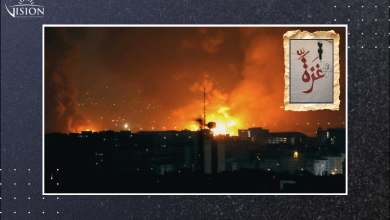
As soon as the genocide erupted on October 7, 2023, the so-called “humanitarian zones,” also referred to as “safe zones,” started to appear. The Israeli occupation claims that these zones protect Palestinian civilians from military strikes and provide them with a dignified humanitarian life. In the first week of the war, the occupation army urged the residents of Gaza City and the northern Gaza Strip to leave the city and move south of Gaza Valley through what was called a “safe corridor,” claiming that this would preserve their safety and that of their families. However, the situation on ground and the actual practices of the occupation forces expose the falsity of these claims, which reveal the targeting of civilians and their confinement within extremely overcrowded areas that lack infrastructure and basic services, and are devoid of the minimum requirements for decent living conditions; zones that resemble open mass detention camps.
Despite the announcement of a ceasefire, the areas designated west of the “yellow line” are very similar to the “humanitarian zones” imposed during the genocide on the Gaza Strip. The Israeli occupation continues to control the borders and crossings, preventing the entry of any basic necessities, as well as providing no protection or means of living in safety and peace.
This report seeks to inform the reader about the nature of these so-called safe zones and their compliance with international law, as well as to shed light on the humanitarian reality experienced by their inhabitants, which closely resembles that of open mass detention camps for civilians.
First: Conceptual and Legal Background
At the beginning of the against the Gaza Strip, which has been going on for more than two years, what are known as “humanitarian safe zones” appeared, announced by the Israeli occupation forces with the claim of neutralizing civilians from military combat zones and sparing them from hostilities in order to preserve their safety and lives. Human Rights Watch defines “safe zones” as areas designated by agreement between parties to an armed conflict not to deploy military forces or carry out attacks, and established by UN Security Council resolutions.
International law, particularly the Fourth Geneva Convention of August 12, 1949, urges the protection of civilians in times of war. Article 14 states that “the High Contracting Parties may, in time of peace, and the parties to the conflict, after the outbreak of hostilities, may establish in their own territory or in occupied territory, if necessary, organized zones and places of refuge and safety, in such a manner as to protect the wounded, sick, disabled, elderly, children under 15, pregnant women, and mothers of children under 7.”
Article 15 also states that “any party to the conflict may propose to the opposing party, either directly or through a neutral State or a humanitarian organization, the establishment of neutral zones in the territories where fighting is taking place, with the aim of protecting the persons mentioned below from the dangers of combat without any discrimination:
- Wounded and sick combatants and non-combatants.
- Civilians who do not take part in hostilities and do not perform any military duties while staying in these areas.
Once the parties to the conflict agree on the geographical location of the proposed neutral zone, its administration, supply, and control, a written agreement shall be concluded and signed by the representatives of the parties to the conflict. The agreement shall specify the start and duration of the neutralization of the zone.
In the case of Gaza, these areas were not established on the basis of an international agreement, but were imposed unilaterally by the Israeli occupation, without any international guarantees.
Therefore, the areas declared by the Israeli occupation army in the Gaza Strip as “safe humanitarian zones” do not meet any of the legal conditions imposed by international humanitarian law. These areas were established by a unilateral declaration by the occupying forces, without any guarantees or effective protection for civilians, which means that they have no legal status as safe areas.
According to Maha Al-Hussein, media officer at the Euro-Mediterranean Human Rights Observatory[1], the occupying forces directed Palestinian civilians towards areas it designated as “humanitarian”, but the facts on the ground showed that these areas were not protected. Many victims fell within or in the immediate vicinity of these areas as a result of Israeli shelling, which constitutes a flagrant violation of the principle of distinction between civilians and combatants, the principle of proportionality, and the prohibition on using areas to which civilians are transferred and then targeted. Directing civilians to these areas and then targeting them is also considered dangerous deception and deprives civilians of the protection that “safe areas” are supposed to provide, thereby negating their humanitarian purpose and effectively turning them into environments of forced detention rather than areas of protection.
Second: The Continuous Shrinkage of the Area of “Humanitarian” Zones
During the genocide on the Gaza Strip, the so-called “humanitarian zones” or “safe zones” went through several phases in which their area was gradually reduced, eventually shrinking to just 9.5% of the total area of the Gaza Strip, which is home to approximately 2.4 million people. Despite the announcement of a ceasefire agreement on 10 October 2025 under which the Israeli occupation withdrew from 46% of Gaza’s territory, the actual livable space remains only 9% of the Strip.
At the outset of the genocidal onslaught launched by the Israeli occupation after 7 October 2023, residents of Gaza City and the northern Gaza Strip were ordered to move south of Gaza Valley. These areas were declared “safe zones” for civilians and initially covered approximately 63% of Gaza’s total area of 365 square km. They included agricultural lands as well as commercial, economic, and service facilities totalling about 120 square km. Subsequently, as the Israeli ground offensive expanded in mid-2024, the occupation gradually reduced the size of these zones.
According to the Civil Defense Directorate, when Israeli forces invaded Khan Younis Governorate in southern Gaza in early December 2023, the occupation reduced the area of these zones to 140 square km, or 38.3% of the total area of the Strip. This was followed by another reduction in May 2024 after the invasion of Rafah Governorate in the south, bringing the so-called humanitarian zone down to 79 square km, or 20% of Gaza’s area.
A month and a half later, in mid-June 2024, the Israeli occupation army once again reduced the area it claimed to be humanitarian and safe to 60 square km, representing 16.4% of Gaza’s total area. These zones included roads, streets, agricultural lands, cemeteries, and other areas unsuitable for safe civilian shelter.
Subsequently, in mid-July 2024, the area was further reduced to 48 square km, or 13.15% of the Gaza Strip. This was followed by a sharp reduction in August 2024 to just 35 square km, equivalent to 9.5% of the total area, of which 3.5% consisted of agricultural, service, and commercial lands.
Later, in September 2025, the Israeli occupation army issued a new evacuation order for Gaza’s residents, directing them toward Al-Mawasi in Khan Younis after gaining control over nearly 87% of the city.
On 10 October 2025, the occupation announced a partial withdrawal, placing approximately 53% of the Gaza Strip under military control. Some residents were permitted to return to their homes, while others were denied this right.
According to a report by Al-Araby Television, the total area in which Gaza’s population is effectively living amounts to 132 square km, representing 36% of the Strip. However, United Nations reports indicate that more than 75% of this area is covered by destruction and the rubble of demolished homes. This means that people are effectively living within just 33 square km, only 9% of the total area of the Gaza Strip.
Third: “Safe” Areas… No Security, No Basic Necessities
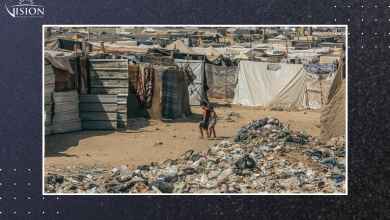
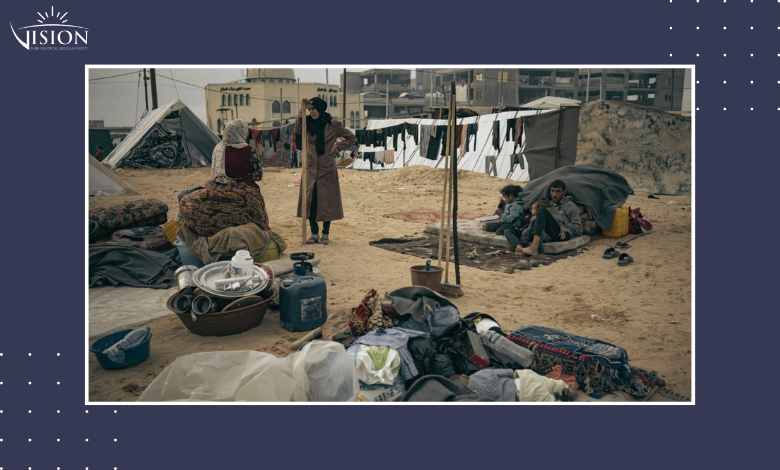
Since the beginning of the genocide, the Israeli occupation has declared the Al-Mawasi and western Khan Yunis areas “safe humanitarian zones.” These areas stretch along a narrow coastal strip from the outskirts of Khan Yunis in the north to the southwest of the city. They are open land lacking basic infrastructure, with no sewage, electricity, or communications networks. Most of the land consists of greenhouses and sandy soil, but today it is filled with tents for displaced persons living in difficult humanitarian and living conditions.
In these harsh conditions, residents live in primitive tents made of nylon and torn fabric, without the basic necessities of life, amid a severe shortage of water, food, healthcare, sanitation, and even the security that the occupation has described these areas as having.
Lack of Protection
Despite the Israeli occupation declaring the Mawasi Khan Yunis area a safe humanitarian zone, the reality belies this claim. The camps located there have been bombed and targeted multiple times, leaving hundreds dead and thousands injured.
An analysis by BBC Verify revealed that the so-called “humanitarian zone” was bombed nearly 100 times between May 2024 and mid-January 2025. Between March 18 and June 16, 2025, the Office of the recorded 112 attacks on Al-Mawasi, resulting in the deaths of 380 people, including at least 158 women and children.
These attacks have stripped the area, which the Israeli occupation army claims is “humanitarian and safe,” of its security and protection for civilians, with the United Nations describing it as “places of death.” UNICEF spokesperson James Elder said, “The idea of a safe zone in the south is a farce. Bombs are dropped from the sky in a predictable manner that instills terror in people’s hearts, and schools designated as temporary shelters are regularly reduced to rubble, and tents are systematically burned by air strikes.” Palestinians find themselves targeted wherever they seek refuge, whether in the north or south of the Gaza Strip, as a result of continuous bombardment by air, sea, and land.
Lack of Basic Necessities
The areas referred to as “humanitarian and safe” lack the basic necessities of life, such as water, food, medical and health care, as well as adequate infrastructure, shelter, and private and public sanitation services. Human dignity is violated due to the lack of privacy, the spread of disease, and the absence of personal security.
Mervat Mushtaha[2], who was displaced from Gaza City to Mawasi Khan Yunis, says “Every day, my 13-year-old daughter and I carry gallons of water and walk 2 km to fetch water.” We are forced to wait in a long line to use the bathroom, which is several meters away from our tent, exacerbating our suffering.
Unprecedented Overcrowding
In a simulation of mass detention conditions, hundreds of thousands of civilians are crammed into extremely confined spaces covering no more than 10% of the Gaza Strip, which the Israeli occupation army has classified as ‘safe’. One million seven hundred thousand residents of the Strip live in this area, while the rest are scattered across northern Gaza and areas classified by the occupation as combat zones, according to the Government Media Office.
A report by the Office of the in the Occupied Palestinian Territory stated that the population of Al-Mawasi, which covers an area of approximately 9 square km, more than tripled during May, June, and July 2025, from approximately 115,000 to more than 425,000, due to the continued issuance of displacement orders and intensive military operations in Rafah and Khan Yunis. The population density at that time was estimated at approximately 48,000 people per square km, almost all of whom were living in temporary tents assembled with very primitive materials.
Areas West of the Yellow Line
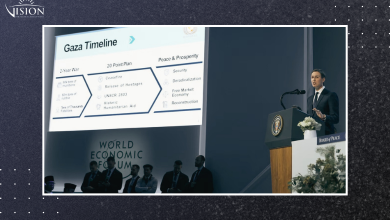
On October 10, 2025, the Israeli occupation army withdrew from the depths of the Gaza Strip governorates to what is known as the “Yellow Line,” as stipulated in the first phase of the ceasefire agreement signed between Hamas and the Israeli occupation government, with Qatari, Egyptian, Turkish, and American mediation, under which the Israeli occupation army controls 53% of the Gaza Strip.
According to the facts on the ground, the areas west of the Yellow Line are considered an extension of the same concept known as “humanitarian zones,” where civilians are forced to live without the necessary protection. Despite the ceasefire, civilians within these areas remain trapped in a limited area of no more than 40% of the Gaza Strip, with security incidents and targeting of citizens in the Strip continuing, resulting in the death of 357 civilians and the injury of 903 others, in addition to the arrest of 38 others as of November 30, 2025. The occupation also continues to prevent the entry of any of the essentials of a dignified human life, especially food and medical aid, tents, and plastic sheeting[3].
Conclusion
The facts on the ground confirm that the so-called “humanitarian safe zones” in the Gaza Strip are nothing more than a false legal cover for a systematic policy of mass detention and organized terrorism against Palestinian civilians, which is essentially similar to Nazi concentration camps, where Gazans are detained in very limited areas, contributing to the deepening humanitarian catastrophe in the Strip and controlling their fate by determining what medical, food, and humanitarian aid is allowed to enter, most of which is blocked, in addition to repeatedly targeting them, which poses a threat to their lives and constitutes a flagrant violation of the principles of international humanitarian law.
[1] Interview conducted by the researcher with the media officer at the Euro-Mediterranean Human Rights Observatory on November 15, 2025.
[2] Interview conducted by the researcher with a woman who was displaced from the Tel al-Hawa area to Mawasi Khan Yunis in southern Gaza Strip on October 25, 2025.
[3] Government Media Office, November 2025, Press Release No. (1021).
NOTE: This text is adapted from original Arabic article.