Israel’s Recognition of “Somaliland” as a Struggle for Influence in the Region

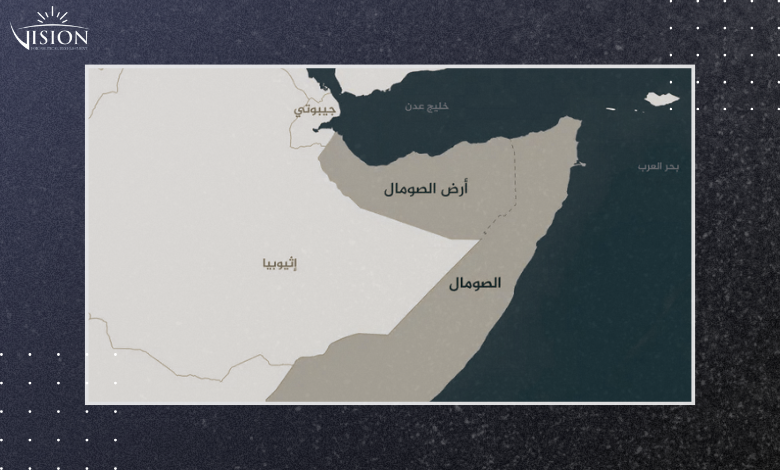
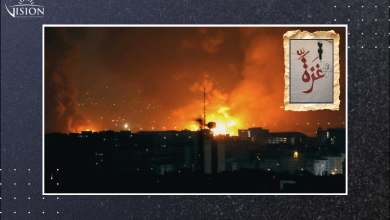
On December 26, 2025, Israel announced its recognition of the breakaway region of Somaliland as an independent state, in a move that goes beyond its immediate African context and comes in the wake of regional shifts following the ongoing Gaza genocide since October 2023. The recognition reflects Israel’s shift toward expanding its regional sphere of influence at a time when the region is witnessing a realignment of power and an increase in the importance of maritime corridors, with the decline of the traditional controls that governed conflict management in the region.
This article interprets this recognition as a political-strategic act that reflects how Israel is capitalizing on the shifts it imposed during the Gaza war to strengthen its influence and serve its long-term security and political interests. This raises the question: Why Somaliland? And why at this particular time?
Recognition of Somaliland: Context and Process
The recognition of Somaliland as an “independent state” was not a diplomatic event that occurred in isolation, but rather the culmination of a cumulative process of coordination involving undisclosed bilateral preparations. It should be noted that Israel was one of 35 countries that rushed to recognize Somaliland in June 1960 immediately after its independence from British colonial rule. However, that recognition quickly fell apart with the declaration of unity between British Somaliland (Somaliland) and Italian Somaliland (the Mogadishu government) on July 1, which also gained independence from Italian colonial rule at that time. This may have historical implications for Israel’s longstanding desire to penetrate the Horn of Africa, specifically off the coast of the Red Sea and the Bab al-Mandab Strait. This is especially true given that Israel was embroiled in conflict with Arab countries at the time, with the Red Sea serving as one of the battlegrounds that continues to fuel crises leading to wars, such as the 1956 Tripartite Aggression against Egypt and the 1967 Six-Day War, at least according to Israel’s narrative that closing the Strait of Tiran to it was tantamount to a declaration of war.
Later, with the decline of the Arab-Israeli conflict and the signing of the Camp David Accords with Egypt in 1979, securing Israeli freedom of navigation in the Red Sea, the importance of the Horn of Africa to Israel declined, exacerbated by Somalia’s descent into civil war and internal conflicts since the 1990s, which made it geographically unattractive, except to countries seeking a foothold and influence either by investing in strengthening Somalia’s stability or by investing in its political chaos and internal conflicts.
Nevertheless, there have been signs of Israeli interest in establishing some kind of relationship with Somaliland since it re-declared its independence in 1990. In 1995, the president of Somaliland, Mohamed Ibrahim Agaal, sent a letter to Israeli Prime Minister Yitzhak Rabin offering to establish diplomatic relations and mutual recognition, reminding him of the importance of the Red Sea and the Horn of Africa to Israel. and appending a list of requests, including military and humanitarian aid and political support for Somaliland’s secession. Although this letter is well known and referred to in various sources, there is no mention of an Israeli response to it. This perhaps reinforces our conclusion that the region’s importance to Israel had declined at that time.
However, with the start of the normalization process, the Abraham Accords, in 2020, Somalia’s name began to be mentioned in the context of statements by Israel’s then-Foreign Minister Eli Cohen about the possibility of seven Arab and Islamic countries normalizing relations with Israel, including Somalia. Somalia’s name was not mentioned arbitrarily, but rather against the backdrop of meetings between Israeli and Somali officials, including Somali President Mohamed Farmajo, who met with Netanyahu twice, once in 2017 in Kenya and again during a secret visit to Jerusalem in 2020, according to The Times of Israel. In this case, too, neither Israel nor the US seemed enthusiastic about Somalia joining, nor even the Somaliland region, which had sent messages to both expressing its desire to join the normalization process without response, due to the low value that the US and Israel placed on the interests that Somalia’s accession to the Abraham Accords might add.
Based on this, and given that the Federal Republic of Somalia itself did not attract Israeli interest, the Somaliland region was not considered important either, despite reports of security cooperation and military relations between Israel and Somaliland in recent years, which are, of course, unconfirmed and remain rumours until proven otherwise. This argument is reinforced by statements made by Somali President Hassan Sheikh Mohamud following Israel’s recognition of Somaliland, in which he said that Israel “had no interests or relations in the Horn of Africa, and we did not expect its recognition. We were surprised by its unnecessary intervention and jumping on the issue.” Although the Somali president is one of the most prominent promoters of information about historical Israeli relations with Somalia, his talk of Israel’s lack of interest in the Horn of Africa seems logical if we read it in light of previous reports that spoke of Israeli reluctance towards Somalia’s accession to the Abraham Accords.
Somalia and the Somaliland region returned to the spotlight in Israel with the 2023 outbreak of the genocidal onslaught on the Gaza Strip and accompanying Israeli reports of Israeli contacts with a number of countries, including Somalia, to resettle Palestinians from the Gaza Strip. While those countries opposed the idea of displacement to their territories, the Israeli Broadcasting Authority claimed in March 2025 that the Foreign Minister of the Somaliland region, Abdulrahman Dahir Adan, sent a letter to Israel expressing his region’s openness to cooperation on this issue. However, it should be noted that all the countries that were reportedly offered to receive Palestinians, including Somaliland, have publicly denied this.
With Israel’s recognition of Somaliland, it became the first country to recognize this separate entity, which declared its independence from Somalia in 1991. As part of the recognition, Israel announced its intention to establish full diplomatic relations, including cooperation in various fields such as agriculture, health, technology, and economics. This point is particularly significant because it places the recognition within the framework of a structured strategic effort, developed through multiple political and security channels, even if its full details have not been disclosed in open sources.
The acceleration of executive steps following the announcement, particularly Israeli Foreign Minister Gideon Sa’ar’s official visit to Hargeisa on January 6, and his meeting with the leadership of the breakaway region, confirms that agreements were in place to be activated immediately after the announcement of recognition. Sa’ar stated that the recognition was the result of long and ongoing talks that began in April 2024. The meeting coincided with Israeli reports about work on establishing an Israeli military base in the region. Subsequently, the Israeli press began publishing information about negotiations, efforts, and meetings in the months leading up to Israel’s recognition, led primarily on the Israeli side by Gideon Sa’ar, Mossad chief David Barnea, and former national security adviser Tzachi Hanegbi, with the support of Prime Minister Benjamin Netanyahu. As part of these negotiations, Abdirahman Mohamed Abdullahi, president of the Somaliland region, secretly visited Israel months before the recognition and met with Netanyahu, Sa’ar, Barnea, and Security Minister Yisrael Katz.
This context raises a big question about Israel’s preference for recognizing Somaliland and establishing relations with it, rather than moving towards establishing relations with the Federal Republic of Somalia, which had previously expressed its desire to join the Abraham Accords. Perhaps the explanation lies in the nature of Israel’s objectives behind recognizing the Somaliland region, as discussed below.
Israeli Interests: From Maritime Security to Strategic Expansion
Operation “Tufan al-Aqsa” was a test for Israel’s security apparatus, as its repercussions extended beyond the Palestinian geographical sphere to reach the southern maritime area linked to the Red Sea and the Bab al-Mandab Strait, directly affecting Israeli maritime trade. Since November 2023, Israel has treated the involvement of the Ansar Allah (Houthi) group as a supporting operational front, viewing it as an integral part of the ongoing conflict and its multiple theaters of war. Despite carrying out a series of strikes, it has been unable to deter the Houthis and stop their operations, indicating the protracted nature of the confrontation ahead. This has effectively brought the Red Sea into Israel’s security and strategic calculations, after it was previously seen as an international commercial area relatively far from the lines of direct confrontation.
Here, the Horn of Africa stands out as a region geographically adjacent to Bab al-Mandab Strait, which could be transformed into an additional security and strategic post for the occupation. This orientation is not limited to securing maritime navigation routes; rather, it is connected to Israel’s attempt to redefine its regional strategic space by expanding its sphere of influence, consolidating its capacity for initiative and engagement, and entrenching its centrality within the regional order. This also involves expanding points of leverage beyond the geography of the traditional Arab-Israeli conflict, in a manner that enables the continued neutralization of Iranian influence and the monitoring of any competing regional expansion, particularly from Türkiye, within this logic.
In this context, the Somaliland region takes on particular importance in Israeli calculations, given its geographical location on the Gulf of Aden at the southern exit of the Red Sea via the Bab al-Mandab Strait, one of the most important maritime chokepoints in the world, through which about 12% of global shipping and trade passes, as well as a large proportion of energy supplies between East and West. This gives the region strategic value for countries seeking to gain security and strategic depth in a sea where multiple economic and military interests overlap. From this perspective, Somaliland represents a location with potential intelligence and security benefits for occupation, as the region offers the possibility of indirect involvement in maritime security arrangements through intelligence monitoring and surveillance partnerships that allow the use of coasts and ports as strategic footholds, given the region’s openness to external powers in exchange for political and economic gains.
On the one hand, recognition takes on a clearer security dimension when linked to the Yemeni arena. The rise of the Houthis and their effective control of Yemen’s western coastline have introduced a new factor in the maritime security equation, as they are now capable of threatening navigation in the Red Sea and directly linking Israeli aggression to international trade routes. In this context, the recognition can be understood as part of Israel’s strategy of encirclement and search for “maritime depth” that allows for surveillance, monitoring, and intelligence coordination close to the direct Yemeni theater of confrontation, giving Israel greater room for maneuver in dealing with a highly complex non-state actor that has proven difficult to deter during the war. The possibility of launching precision strikes against the Houthis using Somaliland as a military platform also remains conceivable within this framework.
This dimension is reinforced when Iran’s role is included in the analysis. Iran, as the main supporter of the Houthis, is the most important indirect actor in the Red Sea equation. Therefore, the recognition of Somaliland is not only directed at Sana’a, but can also be read as a signal to Tehran about Israel’s ability to expand its maritime presence and build a flexible deterrence capability through unconventional means. The recognition gains its operational significance from its potential role in the “pre-strike” phase, in terms of monitoring, early warning, and logistical and intelligence positioning, allowing for the surveillance of ships and drones and the tracking of supply lines linked to the Houthis, whether coming from Iran or heading towards the Red Sea.
On the other hand, recognition of Somaliland has implications for Türkiye’s growing presence in the region. Since 2011, Ankara has accumulated political and military influence in Mogadishu, establishing a military base in 2017 and contributing directly to the rebuilding of the Somali army, as well as expanding its presence in western Libya through maritime and security agreements since 2019. In this context, Israel’s recognition of Somalia can be seen as a way to circumvent Turkey’s existing sphere of influence, as it allows the occupation to enter the Horn of Africa through a gateway that does not pass through Mogadishu and is not subject to direct Turkish influence. This path also complements parallel Israeli alliances, most notably cooperation with Greece and Cyprus, to contain Turkish influence in areas such as Syria and the eastern Mediterranean. Therefore, the Israeli presence in Somaliland sends a message to Ankara that Türkiye’s influence in the region is not immune and that there are political and geographical tools to contain it or reduce its symbolic impact, such as working in geographical margins instead of direct confrontation.
Israeli Recognition and Competition for Influence in the Horn of Africa
It could be argued that Israel could achieve the interests it seeks to gain from recognizing Somaliland through its relations with Eritrea, for example, or through mutual recognition with the Federal Republic of Somalia. However, Israeli recognition of “Somaliland” outside the geopolitical structure of the Horn of Africa, as a region of strategic fluidity, where the fragility of states overlaps with the multiplicity of local and regional actors, and where competition for vital sea routes and strategic ports intersects, directly affecting the balance of power in the Red Sea and the Gulf of Aden. In this context, Israel’s recognition does not come as a product of immediate alliances, but rather as a calculated move within an already existing arena of competition. With this move, Israel is entering an area where its interests and influence intersect with those of other regional powers, meaning that there are competitors who will limit Israeli influence in Somalia itself, which is concerned with expanding its network of relations with regional powers that contribute to its stability and unity, in light of the presence of other regional powers seeking to threaten its already fragile political unity.
As the largest landlocked country on the continent, Ethiopia has been seeking for years to secure a sea outlet that would reduce its almost complete dependence on Djibouti. This desire was embodied in a memorandum of understanding with Somaliland, which created regional tension with the Somali government in Mogadishu, but at the same time shows how political vacuums and fragile local conditions can intersect with regional rivalries, opening the door to external powers that exploit them as tools of influence. Within this framework, Israel’s presence in the region can be seen as functionally intersecting with Ethiopia’s quest to break its geographical isolation, and may be reflected in the formation of direct coordination or a tripartite alliance, governed by equations of interest.
At the same time, Israeli recognition enters an environment in which a clear Emirati network of influence has already been established through investment in Somaliland’s ports and related logistics infrastructure, strengthening its direct influence in a strategic arena that affects trade and maritime policy. This allows Israel to position itself within a space that has already been secured in terms of relative stability and infrastructure, reducing the cost of entry and allowing for greater maneuverability, and opening the door to potential security and maritime partnerships that serve mutual interests.
On the other hand, Israeli recognition is seen as a disruptive factor for key regional actors, particularly Egypt and Türkiye. For Egypt, any Israeli presence in the Red Sea region intersects with considerations of maritime security and the Suez Canal, which is a cornerstone of Egyptian national security, not only as a global economic corridor, but also as a strategic element linked to the balance of Egypt’s regional standing and power. This sensitivity is compounded by the ongoing dispute with Ethiopia over the Grand Ethiopian Renaissance Dam, where the issue of Nile water overlaps with maritime security in the Red Sea, making any Israeli move in the Horn of Africa have direct repercussions on Cairo.
As for Türkiye, it has worked over the past decade to consolidate its political, military, and economic influence in the Horn of Africa, especially through Somalia, in the context of its indirect competition with the UAE and other parties over maritime corridors and investment areas. From this perspective, Israel’s recognition can be seen as an incursion into an area that Ankara considers part of its sphere of influence. The situation is further complicated by Iran’s indirect role through the Houthis in Yemen and its interactions with the jihadist Al-Shabaab movement in Somalia, according to some reports, which puts pressure on maritime security and deepens the fragility of the existing balances.
Within this complex situation, Israel’s recognition of Somaliland introduces a new factor that rearranges regional alignments in a way that goes beyond the bilateral dimension to influence existing power balances, as reflected in the condemnatory reactions of Arab, Islamic, and African countries. While recognition may open the door to enhanced unofficial coordination between Israel and countries such as the UAE and Ethiopia, complementing its interests in Berbera and Bab al-Mandab, it also complicates the calculations of Egypt and Türkiye by undermining their traditional centers of influence. It also increases direct confrontation with Iran and Yemen by expanding Israel’s ability to operate in the Red Sea and the Gulf of Aden, with the consequent readjustment of regional security balances.
Why Somalia Specifically?
Within regional calculations, Israeli recognition represents a political and diplomatic opportunity of particular significance for Somaliland in the course of its long pursuit of international recognition. It may serve as an entry point for breaking the state of legal isolation that Somaliland has faced since its unilateral secession, and as a diplomatic precedent that can be leveraged in subsequent efforts to secure additional recognitions, especially given that it comes from a state with active political and diplomatic influence within the international system. Thus, the importance of this recognition does not stem solely from its being the first, but from its symbolic value as a form of recognition upon which further diplomatic gains may be built.
Looking back, Somaliland’s pursuit of recognition from Israel in particular is justified from its point of view. Abdulrahman Tawer, the first president of Somaliland, said that Mohamed Ibrahim Aqal’s communication with Israel through the Israeli ambassador to Eritrea was based on his belief that relations with Israel were a gateway to building relations with the United States, which could later open the door to international recognition of Somaliland.
On the other hand, referring to the alleged letter sent by the Foreign Minister of Somaliland to Israel regarding his country’s openness to the idea of resettling Gazans, he responds: “What is important for us is to gain recognition… then we can talk about other things.” Furthermore, in an article published by a writer from Somaliland named F. Hussein in the Israeli newspaper The Jerusalem Post, he explains that Israel’s recognition of his region is the shortest route to international recognition, especially among Western countries. He says: “Russia’s alleged interest in establishing a military base in Somaliland, while potentially a positive development, threatens Somaliland’s close relationship with Washington and the European Union, and thus Israel represents a key missing piece in the Somaliland puzzle.”
Therefore, Somaliland’s unbridled desire to obtain Israeli recognition in particular, is driven by its desire to gain Western and American approval as a prelude to secession and effective independence. This is not out of the question, as there have been reports of US negotiations with Somaliland in March 2025 regarding US recognition in exchange for the establishment of a US military base in the port of Berbera. Following Israel’s recognition, US Senator Ted Cruz stated that “recognizing Somaliland is consistent with US security interests.”
Conclusion
Israel’s recognition of Somaliland cannot be understood as an isolated step or a circumstantial response to the fallout from the Gaza genocide. Rather, it should be seen as part of a well-established pattern of Israeli activity in the region, based on engaging with non-central actors in fragile environments and exploiting areas of political and security fluidity as spaces for repositioning and generating influence, and building tools of influence without direct confrontation with central states, by moving in the gaps and turning crises into long-term strategic opportunities.
The historical and current experience of Israeli policy, as in Syria, for example, shows that the occupation is an entity that feeds on disputed areas of turmoil and reproduces its influence by investing in minorities, sects, incomplete entities, separatist movements, and sovereign vacuums. This is an extension of what has been known since the 1950s as the “periphery doctrine,” which aimed to build alliance networks outside the immediate Arab sphere to encircle adversaries and build strategic gains. Despite changes in the international context, this strategy has not disappeared, but has been reproduced to include unrecognized entities. Within this logic, Somaliland represents a contemporary extension of the doctrine of the periphery, as it is an entity outside the Arab and regional consensus, far from the center of the Palestinian conflict, but closely linked to trade routes and maritime and intelligence security in the Red Sea and the Gulf of Aden.
Here, recognition becomes a structural aggravating factor in the region, even if it does not immediately translate into visible crises, as the introduction of Israel into the Horn of Africa equation rearranges existing sensitivities and adds a new element of concern for key regional powers. The impact of this pattern of engagement is not limited to Israel’s traditional adversaries, but extends even to countries with which it has peace or normalization relations, as these partnerships do not provide guarantees to neutralize risks, given that Israel retains margins of independent movement and a permanent ability to redirect its policies to serve its own interests.
Recognition also has broader implications at the African level, as it sets a dangerous precedent on a continent with a number of separatist movements, threatening the relative border stability on which the African system has been based since independence. The repercussions of recognition are not measured solely by its immediate results, but also by the possibilities it opens up for subsequent investment in other African contexts.
Regionally, recognition serves as a complex political message addressed to Egypt via the Red Sea, Türkiye via Somalia, and Iran via indirect encirclement and greater freedom of surveillance and access. This reveals recognition as a tool for reshaping the regional landscape and balance of power in the post-October 7 phase by circumventing existing spheres of influence. It also illustrates how Israeli power operates in the region, as a force that is not content with neutralizing existing threats, but works to prevent the formation of future threats or competing regional powers. Therefore, the recognition can be seen as part of a broader process of reengineering regional balances, exacerbating the region’s fragility, redrawing its maps of influence, and keeping the possibility of escalation open, even in the absence of direct confrontation or immediate visible results.
NOTE: This text is adapted from original Arabic article.