Manufacturing the ‘Zionist Arab’: What Kind of Arab Does the Israeli Right Want?

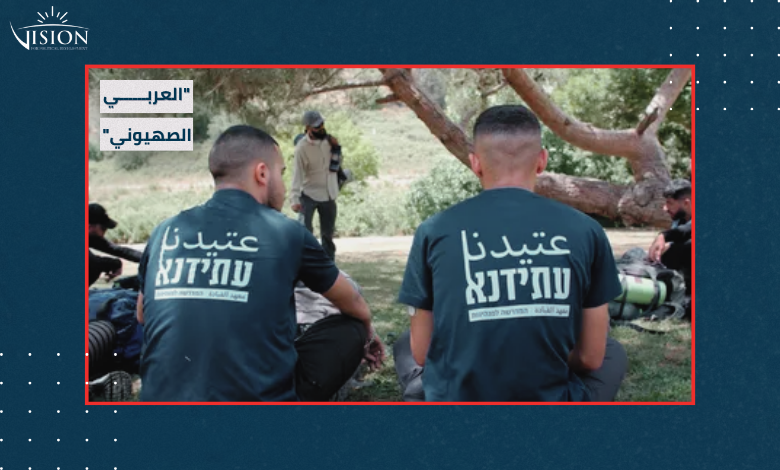
“Arab Israelis either have the Palestinian narrative or they have a void, and the void is a recipe for a meaningless life. We invest in building the Arab-Israeli narrative. Not the victim story, but a story of belonging, pride and distinctiveness.” With these words, Dalia Fadila, one of the founders of the “Atidna” movement and its former co-director, summarised her vision of the problem facing Arab youth in Israel, in an interview published in a Jerusalem Post article in mid-2023.
This vision expresses a project that several Israeli associations, affiliated with the Zionist right, seek to promote among Palestinians in the territories of 1948. Unlike the initiatives and projects led by some leftist movements and associations, which aspire to integrate Arab citizens on the basis of citizenship (taking into account the debate and discussion around the nature, limits and conditions of those ideas), the Zionist right has invented the concept of the “good Arab.” This is a substitute for the traditional expression “the only good Arab is a dead Arab,” and it now takes the form of the “Zionist Arab”: an Arab who renounces his Palestinian identity and replaces it with an Israeli identity based on adopting the Zionist narrative in its entirety, accepting the reality that Israel is a Jewish state, and that Palestine is the “Land of Israel” — an exclusive right of the Jewish people. This requires him to engage in civilian and military service to the state, and to rally behind its complete narrative, all as a condition for his acceptance as an Arab in the Jewish state.
Within this framework, the organisation “Atidna” emerges as a model of that right-wing project. This paper examines the organisation’s goals and activities in the context of producing the “Zionist Arab.” It traces the contours of this model primarily through Atidna’s own discourse, supplemented by two other Arab leadership preparation tracks offered by the organisations “Stars of the Desert” (Nujoom al-Sahra) and “Ma’ase,” along four interconnected dimensions: the right-wing background of the concept of integration; the reshaping of memory and belonging; the link between citizenship and service; and the political and media role expected of the new Arab leadership.
The Israeli Right and the Acceptable Arab: From Equality to Recognition of the State’s Identity
“Atidna” is a Hebrew word with an Arabic suffix meaning “our future.” The organisation defines itself on its official website as a coalition of Arab educators and community leaders, alongside Jewish partners from the national Zionist camp. It states its mission as building “young leadership of Arabs and Jews, equal in rights and duties, proud of their identity and culture, and committed to achieving the full integration of Arab society,” through establishing an Arab-Jewish partnership based on civil equality within Israel, which it describes as “a Jewish and democratic state.”
However, the true nature of these grand slogans becomes clear upon visiting the “why-atidna” page, which presents this vision in a more explicit political context. There, the organisation argues that Israeli society faces a deep crisis of confidence due to the failure to achieve full Arab integration, calling for the emergence of Arab leadership that abandons what it terms “separatist tendencies” and engages in building and strengthening the Israeli state and society. “Atidna’s Arab leadership” is presented as an alternative to the current Arab political leadership, which the organisation considers to “encourage separation.”
For further clarity, Amit Deri, the co-director of Atidna, explains the political slogan on which the movement is founded, stating that its basis is agreement on “the national identity of Israel as a Jewish and democratic state.” He considers this vision different from the Arab political leadership’s line, which he describes as “isolationist and nationalist,” and argues it forms the foundation for achieving equality in rights and duties between Arabs and Jews.
The significance of this statement lies in the fact that it does not place integration within the demand for equality alone, nor simultaneously with it. Instead, it precedes it with Arab agreement on the definition of the state and its national “Jewish” identity. By this logic, the disagreement with the Arab leadership shifts from the tools of participation or means of securing rights, to the political framework the Arab citizen is expected to accept in order to become a partner in the project the movement espouses.
This political framework intersects with the right-wing ideological background governing Atidna’s founding. An investigation published by the Arab48 website in 2020 revealed the participation of figures linked to the Zionist right in establishing the movement, including Erez Eshel, Amit Deri, and Amichai Shikli — who later became a minister in Benjamin Netanyahu’s government. These figures shared backgrounds in educational, military, and political work, particularly in institutions preparing youth and leadership before military service, known as “mechinot.”
The investigation quotes a participant in a founding meeting of Atidna in Haifa in late 2019, citing a statement attributed to Erez Eshel about establishing a Zionist Arab youth movement that encourages Arab youth to integrate into elite units of the Israeli army. Although Atidna later denied that its mission is to recruit youth to join the army or even national service — insisting its activities focus on leadership preparation and strengthening Arab identity and equal integration — another investigation published by Haaretz in July 2023 confirmed the political backgrounds of Atidna’s founders and the right-wing vision behind them, along with their pursuit of a deep transformation in Arab society that could lead to the emergence of a Zionist right-wing Arab current.
Although the connection of some founders to military preparation institutes or right-wing institutions is important in confirming their goals, the nature of the project targeting Arab youth feeds into increasing the numbers of Arab-Israeli youth willing to ally with the Jewish people — something Eshel described as “important in building and strengthening Israel.”
This reinforces the fundamental distinction between integration as one dimension of Arab demands for equality, and integration as a right-wing project that re-frames belonging. The movement does not merely encourage Arab youth to enter universities, the labour market, and state institutions; it seeks to cultivate leadership that sees acceptance of the Jewish national identity of Israel as the foundation for its partnership with the Jewish majority.
This perspective takes on its broadest significance when compared to the positions of the Israeli right on the Palestinian issue. In the “Decisive Plan” presented by Bezalel Smotrich in 2017, ending the conflict is linked to the abandonment of Palestinian national demands, acceptance of full Israeli sovereignty, and pledging allegiance to the state and its institutions—through military or national service at a later stage—which could lead to an expansion of the civic status of Palestinians in the West Bank in the future within the framework of such allegiance. Here, Smotrich is not calling for the abandonment of Arab identity at the individual or tribal level, but rather of Palestinian identity—that is, the concept of the Palestinian people and the nationalist movement.
It cannot be said that Atida is implementing Smotrich’s plan, or that the portion of his plan devoted to Palestinians in the West Bank corresponds to the circumstances and context of Palestinians in the occupied interior, However, this comparison reveals a convergence that extends beyond ideology to practical application in the right-wing worldview, where both share the potential to expand individual Palestinian participation within state institutions—in exchange for acceptance of the Jewish nationalist framework and the expansionist settlement policy defined by Israel.
However, in our case, the implementation differs from Smotrich’s ideas, as it takes the form of a long-term educational approach that targets generations of Palestinian children and youth at successive stages of their education, with the aim of preparing a generation of Arab leaders capable of integrating into Israeli society and participating in its institutions, and building social and leadership networks that embody the movement’s vision of citizenship and belonging and pass it on to future generations.
The New Memory: An Arab Who Sings “Hatikva” and Celebrates the Israeli Narrative
Because Palestinian identity is not shaped only through political positions, but through the memory absorbed from one’s surroundings, the symbols adopted in one’s discourse, and the history presented in schools and institutions as part of one’s national formation — Atidna engages in presenting memory, symbols and history through special programmes. Through these, it organises visits to Holocaust museums and historical sites in Germany and Europe, and actively sustains an Arab presence through its channels in commemorating Jewish memorial occasions, magnifying their value in ways that parallel the psychological and historical significance they hold for Israeli and Western audiences.
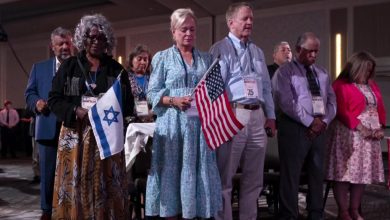
In April 2022, approximately one hundred Arab young men and women participated in the March of the Living between Auschwitz and Birkenau in Poland. During the event, Ali Soufi, one of the movement’s guides, told the Israeli newspaper Yedioth Ahronoth: “I will carry the Israeli flag and sing Hatikva… We are Israelis in every sense of the word!” He added that he sees no problem with the words of the Israeli national anthem, which refer to the longing of the Jewish soul, and called on Arab youth to visit Holocaust sites to learn about what Jews suffered in Europe.
Such statements cannot be taken merely as commentary on participation in an educational activity to learn about Holocaust history. They go further — to the adoption of the Israeli flag and anthem as symbols of national belonging. This also appears in the statements of Suleiman Suleiman, Atidna’s co-director, during his participation in the March of the Living in 2024. Speaking with the newspaper Israel Hayom, he said: “We chose to bind our fate to the State of Israel and to the Jewish people,” affirming that October 7 constituted a test of this partnership, and that movement members chose to remain part of Israeli society in times of crisis just as in times of stability. Suleiman also linked this position to the importance of teaching future generations the history of the Jewish people and understanding the connection between the Jewish past and the events of October 7, moving toward building a shared future for Arabs and Jews. What this means is that the Arab is required to express loyalty to memory and future alike — which intersects with Dalia Fadila’s earlier remarks about the Arab-Israeli narrative, and its role as an alternative that gives Arab youth a sense of belonging, pride and distinctiveness.
From this point, the confrontation between two histories grows more intense: the Holocaust as a history that explains the founding of the state, its identity and the Arab’s place within it — versus the Nakba as another history of the state’s founding, its identity and the Arab’s place within it. Atidna chooses to reinforce the Holocaust and marginalise the Nakba, because the latter undermines the legitimacy of the Zionist project and integration into it. Yet it does not erase Arab identity; rather, it deploys that identity within its youth programme as “active citizenship values,” in which pride consists of the Arabic language, heritage, volunteerism, love of the homeland and integration — a love story, Israeli-style.
From Citizenship to Service: The Arab Who Bears the State’s Burdens
Alongside memory and belonging, civil, national and military service represent another domain in which visions of integration intersect with the needs of the state and its institutions. While education, leadership and vocational training programmes are presented as tools for reducing gaps, some initiatives adopt a broader framework that links equality to participation in national duties, including military service.
This linkage appears in the statements of Atidna’s leadership and some of its members. In an article published by Suleiman Suleiman, the movement’s director, in Yedioth Ahronoth, he defended the expansion of Arab youth participation in civil national service, arguing that meaningful service is one of the most important tools for developing youth and strengthening personal and social responsibility — and a path toward integration in “Israel as a Jewish and democratic state.” He also linked it to a shift from a victim consciousness to a consciousness of responsibility, influence and initiative, noting the existence of dozens of young men and women performing national service within Atidna’s branches.
These statements are particularly significant because they reveal the relationship between service and Arab citizenship in its new model, according to Atidna’s director. The model goes beyond demanding rights to participation in the responsibilities defined by the state. Nor are such statements limited to the director; they include volunteers and participants in Atidna. Ali Nujidat stated earlier in 2023, in the Jerusalem Post, that he “participated in activities that encouraged young Bedouins in northern Israel to join the army,” saying: “When duties are equal, rights are equal,” indicating his conviction that obtaining rights requires shouldering the same responsibilities.
The same article includes a statement by a young Arab woman who participated in Atidna, named Safaa Ka’abiya, who spoke about her experience in national service, considering it important for acquiring skills, assuming responsibility and participating in change — suggesting that the institution’s discourse has been reflected in the concepts, perceptions and activities of its participants, even if this is not generalised to all.
From another angle, Suleiman’s statements and those of Arab youth participating in the movement contradict its denial of “working to recruit youth for the army” — a denial it gave in a press response to the Arab48 investigations in 2020. Yet in 2024, in material published in Haaretz with its cooperation, the organisation returned to boasting that some of its graduates had chosen national service or military enlistment, alongside others who went into academic study and technical work.
While this reveals Atidna’s perspective on the relationship between integration and service, the organisation “Ma’ase” presents a more explicit model that directly targets the preparation of youth to join military and security institutions. Ma’ase was founded in 2004 as a framework working with youth in what it calls the “social and geographic peripheries of Israel,” using tools such as volunteering, education, leadership, vocational training and service programmes, and targeting multiple social groups including Jews, Arabs, Bedouins and Druze. It openly offers programmes directly linked to the Israeli military institution, without equivocation or embellishment.
Among its most prominent programmes is the Ma’oz Ha’Aretz Academy, dedicated to Jewish and Druze youth between the ages of 18 and 19, aimed at preparing them for service in Israeli military intelligence units, with particular focus on Unit 8200. The organisation makes no attempt to conceal that the academy operates in partnership with the IDF’s Manpower Directorate, Military Intelligence, Unit 8200, the Ministry of Education, and the security and social department of the Ministry of Defence. Its programmes include developing Hebrew language skills, leadership and academic skills, and military service readiness. Those running the programmes present this academic track as a means of achieving equal opportunity and removing barriers for Druze youth to access positions not otherwise accessible to them without this preparation.
By contrast, the organisation Stars of the Desert (Nujoom al-Sahra), founded in 2013 to develop young Bedouin leadership in the Negev, presents a different track for preparing Bedouin leadership and linking it to Israeli society — through education, leadership and network-building programmes that cut across tribal affiliations, with the goal of developing Bedouin society and strengthening its participation in broader Israeli society.
The relationship between this organisation and the right-wing drive to push Arabs into service tracks can be understood by examining the political activity of its founder, Matan Yafe, who participated in founding the “El Hadegel” movement, which advocates making military, national or civil service universal across all segments of Israeli society. The movement presents service as an essential part of national responsibility, while Yafe participates in drafting a Basic Law bill that would generalise service across all communities, representing another ideological and networked convergence between preparing integrated Bedouin leadership within Israeli society and political initiatives that view service as one of the foundations of citizenship.
The Arab Who Defends the Israeli Narrative
October 7, 2023 and the genocide that followed in Gaza constitute the first real test of the “Zionist Arab” model — a test that Atidna had prepared for through its vision demanding that the Arab citizen participate in defending the state and its positions, and presenting a different image of Arab-Israeli relations to Israeli society and the external world.
Accordingly, the organisation’s announcement of a supportive stance toward “Israeli society” — through launching a series of civil and relief activities including collecting aid, donating blood, preparing shelters and supporting residents of affected towns, served as its particular answer to questions about the position of Palestinians inside Israel toward the war.
These activities and forms of assistance were thus accompanied by political discourse, expressed by Suleiman Suleiman in February 2024 with the statement that “movement members adopted a clear moral position toward Israeli society”, namely “standing with the Jews until Israel’s victory.” This position becomes even more explicit in the activity of a delegation sent by Atidna to Germany three months after the outbreak of the war, with the aim of presenting an Arab-Israeli position against the October 7 attacks and Hamas to a German audience.
Suleiman stated that “the delegation participated in a demonstration at the Brandenburg Gate in Berlin, declaring its opposition to Hamas,” affirming that participants “stand behind Israel and are proud to be Israelis.” The delegation included Arab young men and women — Muslim and Christian, among them Ali Nujidat, who stated that he “had travelled to participate in the demonstration directly from his military reserve service in the field,” and that he had come to introduce Atidna’s project to his colleagues, and Arab integration into Israeli society.
Nor is the matter limited to addressing the outside world — it extends to attempts to influence the positions of Arab political leadership inside Israel. In a statement at the start of 2025, Atidna condemned the killing of Shiri Bibas and her children, and demanded that Arab political leaders clearly condemn the actions of Hamas, arguing that “silence is not an option at this decisive moment.” It also called on representatives of Arab society to participate in expressing solidarity with the Bibas family, affirming its rejection of Hamas and its demand for the release of the detainees.
This came through a series of statements in which the movement’s leadership attacked Arab political leadership. Amit Deri criticised the Arab leadership, describing it as isolationist and nationalist, and comparing it with Atidna’s vision, based on recognition of the Jewish national identity of the state and equality in rights and duties. This draws attention to the fact that Atidna’s trajectory goes beyond integrating Arab youth into public institutions to building Arab leadership that adopts a different conception of belonging, interests and representation, and presents itself as an alternative to the “isolationist and nationalist Arab leadership.”
This extends to the external networking of Atidna’s leadership. Amit Deri participated in founding the “Partnership” organisation concerned with promoting relations between Israel and Arab states, alongside other initiatives linked to defending Israeli positions in the public sphere, leading him to say that he sees Atidna’s project as a strategic challenge inside Israel that parallels building ties with the Arab world “seeking peace with Israel.” This reveals the political environment surrounding some of its leaders, and a vision that sees the Arab-Israeli partnership as a track that can extend from reshaping relations within the state to building relations with the Arab surrounding.
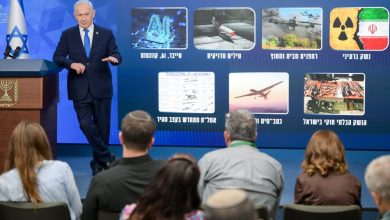
Tracking the positions of Arab members of the organisation on social media further indicates that they adopt the entire Israeli discourse and stand as soldiers defending it in “hasbara” activities. Several posts contained support for the Israeli war against Iran and the genocide against Gaza. Some stated that the only danger facing the region is “Iran, which has shed the blood of Sunni Muslims in Syria, Lebanon, Palestine and Yemen, and was never a protector of the causes of the [Muslim] nation — rather it always has been and remains a sectarian expansionist project camouflaged behind slogans of false resistance”, this, as it appears verbatim in one of the organisation’s statements. Normalisation with Israel, according to the organisation’s posts, will bring prosperity and progress to the peoples of the region.
Conclusion
Israel has managed to produce numbers of the “Zionist Arab,” some of whom have become media faces promoting its discourse to Arabs and the world. But Zionism, in its right, left and centre, leaves no room for predicting the fate of the Zionist Arab. Perhaps Yosef Haddad, who may be the most prominent example of what these right-wing organisations seek to produce, is the clearest illustration of that fate.
Haddad had decided to engage in Israeli politics after rendering great services to the Zionist project in polishing its image, particularly in the shadow of the genocide in Gaza, in addition to his military service in the Golani Brigade and his serious injury in the 2006 war. So devoted was he to the Zionist project that he aspired to head a “hasbara” ministry, joining General Ofer Winter’s party “Your People Israel,” and raising the slogan of “being a proud Arab” and “replacing Arab leadership with a new young leadership that integrates Arabs into Zionist society”, all things that Atidna and similar organisations also seek.
Yet Haddad forgot he was an Arab. A relentless right-wing onslaught descended on him, triggered merely by a passing, earlier speech in which he had expressed support for a two-state solution, culminating in his political assassination alongside the party “Your People Israel.” He was told: “Yosef, you are an Arab — so what does the People of Israel have to do with you?”
NOTE: This text is adapted from original Arabic article.