Inciting Against Palestinian Doctors at ‘Rambam’: Is Arab-Israeli Coexistence Possible?
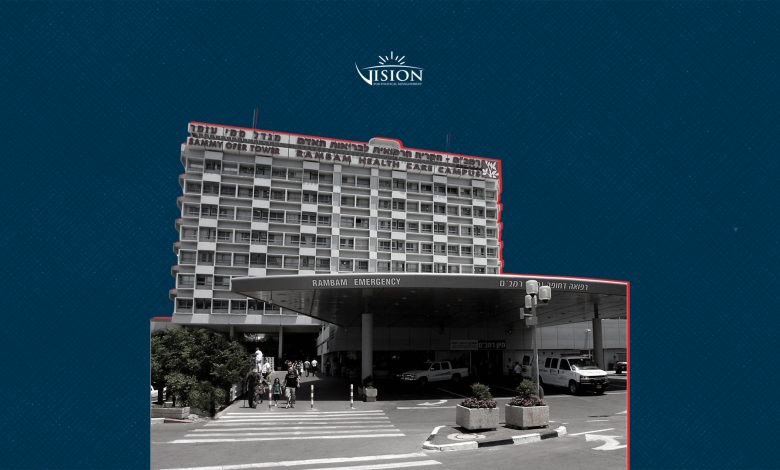
The case began in early August 2026, after four Israeli soldiers who had been seriously wounded in Lebanon were transferred to Rambam Hospital in Haifa. A few days later, David Schechterman, the brother of one of the soldiers, shared a post on social media in which he levelled harsh accusations at the staff working in the intensive care unit, claiming that family members were barred from entering the unit, that his brother and the other soldiers did not receive food and water as quickly as required, and that his brother was treated roughly whilst being moved in his bed. However, the complaint was not limited to the staff’s performance or their treatment of the injured; Schechterman emphasised that the shift included ‘Arabic-speaking’ staff, meaning that the identity and language of the staff became central to the narrative that subsequently spread across the media and social media.
The case quickly moved from a family complaint to the political arena, with Security Minister Yisrael Katz calling on the army to investigate the allegations, whilst National Security Minister Itamar Ben-Gvir joined the debate, coinciding with a widespread incitement campaign on social media platforms that placed Arab medical staff under scrutiny. In response, following an investigation into the incident, Rambam Hospital’s management denied the allegations of inappropriate treatment of the soldiers. The hospital’s director, Dr Michal Makel, explained that the shift was mixed and included both Arab and Jewish doctors and nurses, and that one of the Arab nurses who was attacked serves in the reserve forces himself, emphasising that the national identity of staff is not a criterion in the hospital’s operations.
The campaign sparked reactions within the Israeli medical community. The described the portrayal of a medical incident as a confrontation between Jews and Arabs, and the use of doctors’ and nurses’ identities as a tool for political and public attacks, as “dangerous and racist”. The president of the Israeli Medical Association also declared his support for the Arab doctors and staff, noting that an investigation by Rambam’s management had found no basis for the accusations levelled against them; similar statements were issued by other medical associations and hospital directors.
The significance of the incident lies in the shift of the complaint from a professional context to one in which the staff’s national identity is brought into the sphere of suspicion. Whilst the patient or their relatives are entitled to raise objections regarding the standard of care and demand an investigation into any negligence, the fact that the Arab identity and language of the staff are used as a basis for interpreting what happened shifts the issue onto a different track.
From this perspective, the ‘Rambam’ incident provides a starting point for understanding a broader issue relating to the extent of Palestinian doctors’ presence within the health system, their status within it, and the changes affecting them. This article examines the incident to explore the reality of these doctors and the developments in their situation, alongside the incitement and obstacles they face. It reviews the ongoing debate regarding the link between their presence and the processes of integration and Israelisation, and goes on to examine the limits of the ‘coexistence’ model, of which the health system has long been held up as an example.
A Significant Arab Presence in the Israeli Health Service
To understand the significance of the incitement that followed the ‘Rambam’ incident, it is essential to consider the scale of the Palestinian presence within the Israeli healthcare system. Recent decades have seen a marked increase in the number of Arab doctors, nurses, pharmacists and dentists, to the point where they have become an integral part of the workforce in hospitals, health funds, clinics and pharmacies.
Data from the Israeli Ministry of Health illustrates the scale of this shift. Whilst Arab doctors accounted for no more than 7 per cent of those under the age of 67 in 1990, this proportion rose to around 16 per cent in 2020.
Confirming this upward trend, a recent study based on 2023 data showed an increase in the representation of Arabs in the health professions, with Arabs accounting for around 25 per cent of doctors, 27 per cent of nursing staff and dentists, and around 49 per cent of pharmacists. The proportion of Arabs amongst new licence holders to practise medicine has also risen significantly over the past decade. According to the latest statistics presented by the Ministry of Health to the Knesset Health Committee in March 2026, the number of Arab and Druze doctors (under the age of 60) working in the health system stood at around 11,000, compared with around 20,000 Jewish doctors.
This growing presence is linked to widespread interest within the Arab community in studying medicine and health professions, including studying outside ‘Israel’. This phenomenon is not unique to Arabs, as the Israeli health system relies heavily on graduates from abroad. The noted that 58 per cent of doctors practising in Israel in 2020 had received their medical education abroad, with the majority of this figure comprising Israelis who had travelled abroad to study due to limited places and high admission requirements at Israeli medical schools. As for Arab students, data from the Israeli Medical Association indicates that they accounted for only of medical students at Israeli universities in the 2023–2024 academic year, a proportion far lower than their share of the population.
The scale of this presence has led the health service to be held up in Israeli discourse as a model of collaboration and ‘coexistence’. Following the events of the ‘Dignity Uprising’ in May 2021, Arab and Jewish doctors and officials within the health system issued a joint statement emphasising that collaboration within hospitals and clinics is a daily reality, and calling for this model to be extended to wider Israeli society. In the same vein, the president of the Israeli Medical Association, Professor Tzion Hagai, spoke of the health sector as a model of equality and coexistence, noting that Arab doctors do not merely work in marginalised positions, but also head medical units, departments and institutions.
on Arab representation in the health professions indicates that these professions have become an important pathway for the social and economic mobility of Arabs, providing opportunities for professional advancement and the expansion of the middle class. From this perspective, an important aspect of the Palestinian presence within the health system can be understood in the context of education, employment and career progression, without assuming that working within an Israeli institution necessarily implies political or identity-based integration.
A Long-standing Phenomenon that Escalated After 7 October
The incitement and mistrust towards Arab doctors did not begin on 7 October. In April 2016, Revital Smotrich, the wife of Bezalel Smotrich, sparked widespread controversy when she said she would prefer not to have an Arab doctor oversee her delivery, and that she wanted only Jewish hands around her baby at the moment of birth. The significance of the statement lay not only in the personal stance of a patient, but also in the fact that it was made in the context of a broader political debate at the time regarding the segregation of Arabs and Jews in maternity wards, and in demonstrating that a doctor’s national identity could become a criterion for accepting or rejecting their treatment. Smotrich himself had joined in supporting his wife’s position and emphasising the need to separate Arabs from Jews in hospitals and delivery rooms.
Years later, the incident took on a striking irony; Smotrich’s son, Benjamin Hebron, was transferred, after being wounded whilst serving in the war on Lebanon, to the ‘Galilee Medical Centre’ in Nahariya for treatment, a state hospital that had for years been run by the Arab doctor Dr Mus’ad Barhoum. Contrary to his stated positions, Smotrich and his family raised no objection to the doctors’ ethnic background, nor did they demand a Jewish alternative; on the contrary, Smotrich expressed his gratitude to the centre and its Arab director. This behaviour was not interpreted as a shift in his racist views, but was seen as evidence of his double standards when faced with necessity and personal interest.
Another case, more closely linked to professional persecution, emerged in late 2022, when a doctor from Umm al-Fahm who specialised in cardiac and thoracic surgery at Hadassah Ein Karem Hospital, was subjected to a media and political campaign after being accused of offering food and sweets to a detained Palestinian boy who was receiving treatment at the hospital, and of showing sympathy towards him. The hospital management initially moved to dismiss him, whilst Mahajna denied the allegations and the Israeli Medical Association objected to the measures taken against him, before the hospital subsequently withdrew the allegations and the doctor returned to work.
These examples are significant in that they confirm that manifestations of Jewish nationalist suspicion and attacks on Arab doctors on the basis of their identity or positions attributed to them are not a recent phenomenon, but predate the current war. However, the events following 7 October marked a shift in the scale and intensity of the phenomenon. This occurred within a broader Israeli climate of persecution for expressing views on the war in Gaza, which extended to universities, workplaces and public spaces. In one instance, it went as far as Israelis gathering outside the accommodation of amidst racist chants.
This atmosphere quickly spread to the health service. In the first weeks of the war, the Follow-up Committee for Health Affairs in the Arab Community stated that around or subjected to various sanctions and measures on the basis of views or posts attributed to them. There were also cases of patients refusing treatment from Arab doctors or nurses, or instances in which Arab staff were accused of supporting ‘Hamas’. In this context, a study by researcher Ghada Majadala, ‘Silenced Voices and Militarised Spaces: Palestinian Doctors in Israeli Hospitals after 7 October’, published by Mada al-Karmel in February 2025, provides a broader analysis of this period. Through interviews with Palestinian doctors, the study documents instances of persecution, disciplinary measures and silencing, alongside the impact of the general climate in driving staff towards self-censorship and caution regarding the expression of their views within the workplace. The study also argues that the health system does not operate in isolation from the broader political and military context, and that the events following 7 October demonstrated more clearly how this context intersects with the medical working environment.
This picture is reinforced by the findings of a report published by in April 2026, based on around a year of research, interviews and testimonies. The report documented dozens of hearings and inquiries in at least 15 hospitals and across the four health funds, prompted by war-related expressions, including cases involving sharing a post, liking a post or changing a profile picture. It also addressed the fear, self-censorship and pressures faced by Palestinian staff within the workplace.
From Censoring Free Speech to Questioning Arab Doctors
The escalation that followed 7 October was not limited to casting doubt on whatever Palestinian doctors might say or publish; it went further, with voices growing louder to question their professional competence and whether they could be trusted within hospitals. One of the most prominent such cases involved in December 2023, who posted a video entitled ‘Let’s not employ enemies in the hospital’, in which he accused Arab doctors and staff of deliberately harming Jewish patients and soldiers. Following the widespread condemnation sparked by these allegations, the Public Prosecutor’s Office agreed to open an investigation into him on suspicion of incitement to racism, whilst the head of the warned that such rhetoric disparages an entire group of staff and undermines public confidence in the health system. In July 2026, Shmueli backtracked and apologised for his remarks, stating that Arab doctors work every day to save people’s lives.
A more direct line of rhetoric emerged in comments by Rabbi Yitzhak Hay Zagha, who called for Arab doctors, pharmacists and nurses to be subject to ‘security vetting’, claiming that an Arab doctor might ‘wage war from his medical post’, even through practices relating to sterilisation and the safety of treatment. He went so far as to suggest that the supposed threat posed by an Arab doctor is greater than that of an Iranian missile, because the patient is in their hands. The significance of this rhetoric lies in the fact that it does not link suspicion to a specific action by a particular doctor, but rather extends it to Arab healthcare workers as a whole, casting doubt on their professional integrity a priori on the basis of their identity.
This rhetoric was not confined to religious or populist voices. In March 2026, a representative of the Ministry of Health stated during a debate in the that there were a number of good medical schools in Jordan and the Palestinian Authority, and that their graduates should be retained within the health system. Knesset Member Moshe Sa’ada of the Likud Party responded by describing Al-Najah and Al-Quds Universities as “Hamas-affiliated” institutions, and pledged to take legislative action to revoke the licences of their graduates and to refuse to recognise the degrees they award in future.
However, it is important to distinguish between this rhetoric and the professional debate that is actually taking place regarding graduates from certain universities abroad. There are issues relating to the standard of some medical education programmes, the number of practical training hours, medical terminology, and licensing criteria, alongside professional and structural barriers that may affect graduates’ opportunities to begin their specialisation. A points to factors linked to the place of study, the training pathway and integration into the health system. However, the problem arises when the debate shifts from applying uniform professional standards to graduates to casting suspicion on them because of the university they attended or its presumed political identity. Shmueli returned and apologised for his remarks,
Professional and Institutional Barriers
In addition to campaigns of incitement and scepticism, certain groups of Arab doctors and healthcare workers face professional barriers that limit their opportunities to enter the health sector or progress within it. These obstacles are more complex than instances of direct incitement, as they relate to structural imbalances involving a combination of planning policies, a shortage of jobs, training, places of study and licensing criteria, alongside questions regarding the extent to which equal opportunities are realised between Arabs and Jews.
This crisis is felt most acutely among young Arab doctors seeking opportunities to specialise; whilst the health sector suffers from an acute shortage of medical staff, particularly in peripheral areas, Ministry of Health data for 2024 revealed that there were 9,558 doctors who were not specialists and were not enrolled in specialisation programmes, with members of the Arab community accounting for around half of them. An investigation published by the ‘Ynet’ website in May 2026 revealed that Arab doctors who had obtained licences to practise and completed their internship year were unable to find places to specialise; some were forced to work in other fields, whilst others began to consider emigration. Conversely, the Ministry of Health attributes part of the problem to a shortage of specialisation places and to obstacles faced by some graduates of universities abroad, including medical Hebrew and limited familiarity with the Israeli healthcare system.
A , commissioned by the Ministry of Health, indicates a clear disparity in the speed at which doctors enter specialisation. According to the study, more than 90 per cent of Jewish doctors who studied abroad begin their specialisation within five years of obtaining their licence, whilst the figure for Arab doctors who studied abroad is around 71 per cent.
Although this gap does not in itself prove the existence of direct discrimination – as the research points to a range of factors influencing the chances of commencing specialisation, it nevertheless reveals a disparity worthy of consideration, particularly given the large number of Arab doctors awaiting entry into specialisation programmes.
Another issue arises in the case of Arab medical imaging technicians. Following the full implementation of the new regulations governing the profession, a number of workers who studied at Palestinian universities lost their ability to continue working, including individuals who had spent years within the health system. According to an investigation published by “Ha’aretz,” a group representing those affected by the new regulations comprises around 500 technicians, whilst one of their representatives spoke of the dismissal of at least 120 workers from public hospitals, in addition to others who lost their jobs in imaging centres.
The dispute here does not concern the principle of regulating the profession and setting qualification standards, something even some of those affected by the law support, but rather the manner in which these standards are applied to people who have worked for years within the organisation. Some graduates of institutions no longer recognised by Israel have not even been offered an examination route through which to demonstrate their competence, whilst professionals within the system have pointed out that the regulation has also harmed experienced staff. A “Haaretz” investigation quoted a Ministry of Health official as acknowledging that the implementation had, in some respects, gone “a step too far”, and that the ministry was considering amendments that would grant greater flexibility to certain staff members.
The Limits of the ‘Coexistence’ Model in the Health System
The cases described above put the Israeli health system’s narrative, which presents a model of collaboration and ‘coexistence’ between Arabs and Jews, to a more complex test. The widespread professional presence of Palestinians and their daily collaboration within hospitals and clinics have not prevented the atmosphere of conflict, mistrust and incitement from spilling over into healthcare institutions, particularly since 7 October. At the same time, this does not mean that talk of collaboration is merely propaganda; it is a reality, as evidenced by the size of the Arab presence and the fact that Arab doctors hold senior professional and administrative positions.
The problem, then, lies not in the existence of this collaboration, but in the extent to which it can transcend political considerations when the conflict intensifies. A indicates that healthcare institutions are not immune to Arab–Jewish tensions during periods of escalation, and that the war following 7 October also had an impact on workplace relations. The cases we have presented, involving persecution, self-censorship and scepticism towards Arab doctors, illustrate how national identity can come to the fore, even within a field whose day-to-day work relies on a high degree of professional cooperation.
From a Palestinian perspective, this reality also helps to contextualise the debate on integration and Israelisation. As previously noted, the health professions have become an important pathway for the professional, social and economic mobility of Palestinians in Israel, a point confirmed by the . Therefore, working within the Israeli health system, even if it is extensive and professionally advanced, is not sufficient to claim that political or identity-based integration exists. Integration into the labour market and professional institutions is one thing; political stance, identity and national affiliation are quite another.
Indeed, the experience of recent years reveals another aspect of this issue. If professional integration necessarily meant the dissolution of national differences, the doctor’s Arab identity, language or the Palestinian university at which they studied would not have resurfaced so quickly as elements of suspicion in times of war. This does not mean that every Palestinian doctor experiences their professional life in the same way, or that every healthcare institution treats Arab staff in the same manner; however, it does indicate that professional success and integration into the labour market do not necessarily negate the Palestinian doctor’s position within a broader political and national context.
Ultimately, this issue embodies the crux of the healthcare sector’s experience, as the challenge does not lie in choosing between two contradictory visions: one that reduces the system to an idealised model of ‘coexistence’, and the other that reduces it to a structure based entirely on racism and discrimination.
The reality is far more complex, combining a significant Palestinian presence and shared professional practice on the one hand, with the persistence of political and national boundaries that become more apparent in times of crisis on the other. From this perspective, the ‘Rambam’ incident and other cases we have examined serve as a test of the limits of the ‘coexistence’ model, rather than being merely isolated incidents unrelated to it.