Sound of War: When Gaza Heard Death

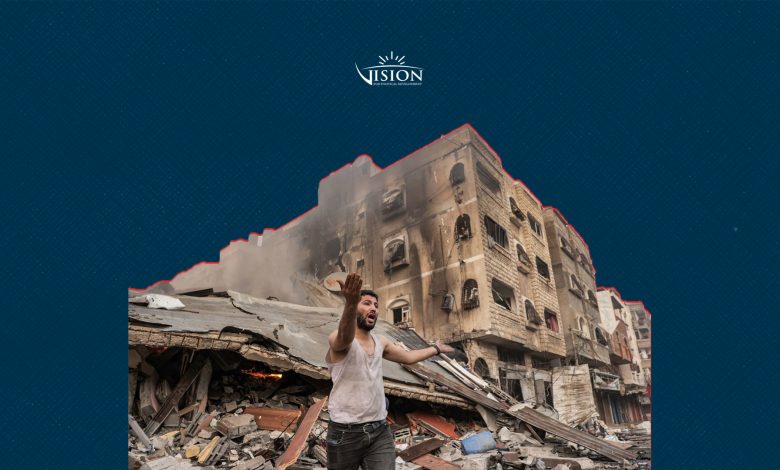
A person may see death with their own eyes and may live through moments when they are on the verge of perishing. But the genocide in Gaza has made people hear the sound of death. For more than 1,000 days, residents of the Gaza Strip have been exposed to the many sounds of war, whose echoes often travel more than 80 kilometers. The Israeli Walla website reported testimonies from residents in central and southern Israel who heard the roar of massive explosions, while Israel’s Channel 13 confirmed that the echoes of demolition operations in the northern Gaza Strip could be heard clearly in Tel Aviv and the surrounding area.
In Gaza, however, the scene was entirely different. Residents lived through the reality of fire belts, explosive-laden vehicles, the sonic barrier broken by attacking aircraft, and many other sounds the world only heard about but Gaza heard and lived. Missiles fell over civilians’ heads and pursued them wherever they fled, exploding in their homes and neighborhoods as though an earthquake had struck. Some described the scenes as “the horrors of Judgment Day,” while others said they were enough to “turn children’s hair gray,” leaving enduring terror in people’s hearts. And so the specter of sound threatening death continues to accompany them constantly, after the horrors they have endured throughout three years of ongoing genocide.
And the Hearts Reached the Throats
On October 8, 2023, the Israeli occupation army began its war on the Gaza Strip with fire belts involving swarms of fighter jets ranging from 30 to 100 aircraft. According to The Times of Israel, by February 20, 2024, the Israeli air force had carried out more than 33,000 strikes, including 26,000 by fighter jets, 3,800 by attack helicopters, and 3,800 by drones—most of them over a territory of no more than 350 square kilometers, with a population of no more than 2.3 million.
In testimony, Gaza resident Abu Mohammed[1] recalls one of the most terrifying nights of the genocide. After he and his family left their home in search of safety, they were forced to sleep on the ground in a street in Gaza City because transportation was unavailable and darkness had fallen. He says: “We looked up at the sky and saw a large formation of aircraft. It was followed by a violent, relentless succession of sounds. The ground shook powerfully, and the noise grew so loud it nearly deafened us, while the flashes of explosions turned night into day. At that moment, everything around us collapsed at once. Children were crying, women were screaming, and stones were falling from every direction like meteors. There was no escape and nowhere to take shelter, while dust clogged our noses and blinded our eyes, and buildings collapsed before us under the force of the successive explosions.”
He adds: “At that moment, as death drew closer and closer, I tried to hold my children even though my body was trembling and my chest felt tight. I could barely control myself, but I feared my children would sense my condition and become even more afraid.
So I chose to raise my voice as though mocking the bombardment: Missiles cannot kill us; if the occupation wants to kill us, it will have to find something stronger. The bombardment continued for nearly a full hour before stopping, only for the same scene to recur again and again until the final days of the war. The only luck available to us was for the fire belts and explosive-laden vehicles to be directed somewhere away from us.”
Maisara Shaaban says in her testimony that her ears can no longer distinguish between the sounds of ordinary life and the sounds of death. Every time she hears a rickety truck, fear grips her because she thinks it is the sound of a missile falling nearby. If a door slams shut, panic sweeps over her because she believes it is the roar of an explosion. “We reached the point where we could no longer tell the sound of a closing door from a missile,” she says. She recounts that when the occupation struck a park a few days earlier, for a moment she thought the explosion was merely the sound of her neighbors’ door closing.
Suha Sukkar says in her testimony: “Any screaming I hear anywhere makes me immediately flee the entire area, because it takes me straight back to our screams and those of the women around us as we were displaced under a barrage of shells and missiles, and to the moments of terror I was living through then. That is why I cannot bear it at all.”
The fear and terror triggered by the sound of explosions do not stop at the psychological level. In many cases, they have led to miscarriages among pregnant women, as happened to 38-year-old Iman Abu Fsifsa. She says: “On the day I miscarried, there was an extremely powerful explosion. I was very frightened, and that morning I woke up to find that I had lost the baby.”
Then, When the Deafening Blast Comes
The effects of pressure waves generated by explosions are not limited to terrorizing people. They also cause extensive structural damage to the nervous and auditory systems of children and adults alike. Thirty-five thousand people—children and adults—have lost their hearing, some partially or temporarily and others permanently. This rate is three times the level recorded before the war, according to a field survey conducted by Atfaluna Society for Deaf Children in the Gaza Strip during the genocide between 2023 and 2025[2].
The Israeli occupation uses a diverse arsenal of weapons that generate shock waves exceeding human tolerance. Physically, these are classified by sound-pressure intensity in decibels. Noise from F-16 and F-35 airstrikes ranges between 140 and 153 decibels, while 155 mm howitzer artillery shells produce 160–175 decibels.
This is in addition to conventional guided bombs known as MK and GBU bombs in their various types, as well as the intense ground-borne acoustic energy produced by rigging military armored vehicles and buildings with tons of high explosives such as C4. Their echoes and vibrations can extend geographically for more than 150 kilometers, turning an explosion into a localized ground tremor, with a single blast equivalent to an earthquake measuring 3.7 on the Richter scale.
Professor Khitam Al-Wasifi, a physics professor at the Islamic University of Gaza[3], says the scientific distinction between “noise” and a “weapon of destruction” cannot be measured by decibel levels alone, but rather by the peak overpressure generated by an explosion and the body’s proximity to it, which determine its capacity to cause direct injuries beyond hearing damage. She stresses that the 140-decibel threshold identified by the World Health Organization as a limit for blast-related hearing damage is not an international legal threshold permitting bombs to be used near civilians; it is merely a partial medical indicator related to hearing.
The cases of the two children Ismail, 8, and his brother Elias, 5, embody this painful reality after their family’s displacement tent was directly struck. Their mother recounts the details of the double tragedy[4]: “A piece of shrapnel pierced my son Ismail’s eye, causing him to lose one eye and movement in the limbs on the right side of his body. A month and a half after the injury, I noticed that he was not reacting or responding when I called him. Medical examinations showed that he had 50% hearing loss in his right ear and 71% in his left. His younger brother Elias fell into a coma that lasted 18 days. He emerged from it having lost awareness, movement, and all his senses. Although he underwent complex brain surgery and subsequently regained part of his awareness, he suffered complete hearing loss in one ear, while the other requires specialized treatment that is unavailable in the Gaza Strip so that he can hear me again.”
The cases of the brothers Elias and Ismail highlight the depth of the compounded tragedy facing Gaza’s children, as neurological damage from brain injuries intersects with direct acoustic trauma amid a collapsed health system that lacks even the most basic specialized surgical care and hearing rehabilitation services.
The case of Umm al-Mutasim[5] likewise illustrates the direct impact of fire belts and explosive-laden vehicles on civilians’ bodies. She now suffers severe hearing impairment after being exposed to intense bombardment during her displacement.
According to Yusra Basal, an audiologist with the Palestinian Ministry of Health[6], four out of every ten people injured during the war suffer hearing impairment or hearing loss as a result of acute acoustic trauma. Sudden pressure waves can rupture the eardrum, damage the hair cells inside the cochlea, or injure the three ossicles of the middle ear.
They Hear Its Sound
In a field clinic amid the rubble, Dr. Nawal Asqoul, a specialist in psychosomatic medicine[7], sits across from Youssef, a child no older than ten whose leg was amputated after a direct strike. Pointing to his head rather than his wound, he asks her: “Can you get the sounds out of my head?” When she asks which sounds, he replies: “The sounds of the missiles and the drone, the sounds of the house collapsing.” He was not complaining about the physical pain that had exhausted his small body, but about a sound that no longer left him. Asqoul says the scene captures what statistics cannot: a child’s body may heal from a wound, but the sound that accompanied the moment of injury settles into memory and prevents any genuine recovery.
Asqoul describes the state of “hypervigilance” she observes every day in terms rooted in lived reality: a door opening, an insect near the tent, a child crying out in sleep, even the sound of a generator in the street. These are all “simple” sounds in ordinary life, but here they are enough to trigger a full panic attack—racing heartbeat, shortness of breath, trembling limbs, and a suffocating sense that death is near.
Asqoul explains how this constant state of alert leaves its mark on children’s bodies before their minds, and on adults’ bodies as well: persistent migraines, dizziness, involuntary spasms that doctors may confuse with actual epileptic seizures and therefore treat with unnecessary medication, as well as sleep disorders, insomnia, waking in terror, digestive problems, and even some children losing the ability to hold a pen because of continuous trembling. “The body is always on alert—flight or fight. There is no calm or stillness in a child’s body.”
Asqoul notes that the impact is reflected even in children’s artistic expression: “Their drawings are all tanks, all fire, sounds, all missiles and planes. Even if they draw rain, they depict its sound. Even the sky, in these children’s imagination, is no longer innocent.”
Asqoul cites figures that reveal the scale of the collective catastrophe. A field study of 405 adults conducted between November 2024 and January 2025 found that about 84% met the criteria for probable post-traumatic stress disorder, 73% suffered moderate to severe depression, and 54% experienced both conditions alongside anxiety.
In a more recent study conducted in January 2026 among 788 survivors, the proportion suffering moderate to severe depression rose to 82%, including more than 20% who experienced suicidal thoughts almost daily. Among children, Asqoul says that between 70% and 90% of those she has worked with meet the criteria for severe post-traumatic stress disorder. “People are living in a state of collective mourning and continuous trauma,” she says. “This is the collective trauma of an entire society, not just individuals.”
During psychological counseling sessions in the tents, psychosocial specialist Sabreen Al-Shaer[8] meets dozens of children and women every day. She observes striking differences in their responses to trauma: one child expresses fear by crying, another through aggression, a third through complete silence and withdrawal, while a fourth appears extremely calm outwardly while experiencing the highest levels of fear inside.
Al-Shaer explains that what Gaza’s residents are experiencing after nearly three years of war cannot be reduced to the terms “anxiety” or “depression.” It is closer to what she calls “continuous traumatic stress”—a condition in which the frightening event is never allowed to end so that recovery can begin.
Instead, traumatic experiences recur without pause, from bombardment and displacement to the loss of loved ones and the destruction of homes and sources of safety. More dangerously, she says, a person does not feel that they survived a traumatic incident that has ended; rather, they live in constant anticipation of the next event, while their nervous system remains in an unrelenting state of alert, as though danger were present at every moment.
Al-Shaer stresses that the brain does not process the sound of an explosion as a passing noise, but as a trigger that summons the entire traumatic memory. A person may hear a blast months or years after an earlier incident, and the body responds as though it were happening now. That is why, she says, a child who hides upon hearing an explosion “is not exaggerating, and an adult who trembles is not necessarily weak. Through forced repetition, the nervous system has learned that this sound means real danger.”
The psychologist says she has also observed a deceptive phenomenon that repeatedly appears before her: the child who no longer feels anything. People expect a traumatized child to remain constantly tearful, yet sometimes the opposite happens. The child becomes unusually calm, does not cry even when speaking about the most painful moments, and says: “I’m not afraid anymore.” This calm is neither strength nor evidence that the trauma has been overcome. Rather, it is emotional numbness through which the brain tries to cope with an amount of pain that exceeds the child’s capacity to bear.
Conclusion
After more than 1,000 days, Gaza’s residents no longer fear only the explosion itself, but also the silence that precedes it, the echo that follows it, and every passing sound that reopens the wound. While the roar of bombardment could reach people dozens of kilometers away as a passing piece of news to be recounted, for those living through it up close it became part of their bodies and memories, inhabiting their ears, nerves, and nightmares even after the sound itself fades.
The sound documented in this report was never merely a physical phenomenon measured in decibels. It became a silent weapon that slowly kills those who survived the shrapnel and keeps all of Gaza in a permanent state of listening for a danger that has not yet ended.
References
[1] Abu Mohammed, a Gaza resident who has lived through the genocide for three years; interview conducted by the researcher on August 22, 2026.
[2] Fadi Abed, director of Atfaluna Society for Deaf Children; interview conducted by the researcher on August 16, 2026.
[3] Prof. Khitam Al-Wasifi, professor in the Department of Physics at the Islamic University of Gaza; interview conducted by the researcher on August 15, 2026.
[4] Mother of the two children Ismail and Elias, who suffered complete and partial hearing loss during the genocidal war; interview conducted by the researcher.
[5] Umm al-Mutasim, a Gaza resident who has lived through the genocide for three years; interview conducted by the researcher on August 15, 2026.
[6] Yusra Basal, audiologist at the Palestinian Ministry of Health in Gaza; interview conducted by the researcher on August 15, 2026.
[7] Dr. Nawal Asqoul, specialist in psychosomatic medicine; interview conducted by the researcher on August 20, 2026.
[8] Sabreen Al-Shaer, psychosocial specialist; interview conducted by the researcher on August 21, 2026.
NOTE: This text is adapted from original Arabic article.