Genocide and Settlement Expansion: A Summary of Israeli Violations in July 2026

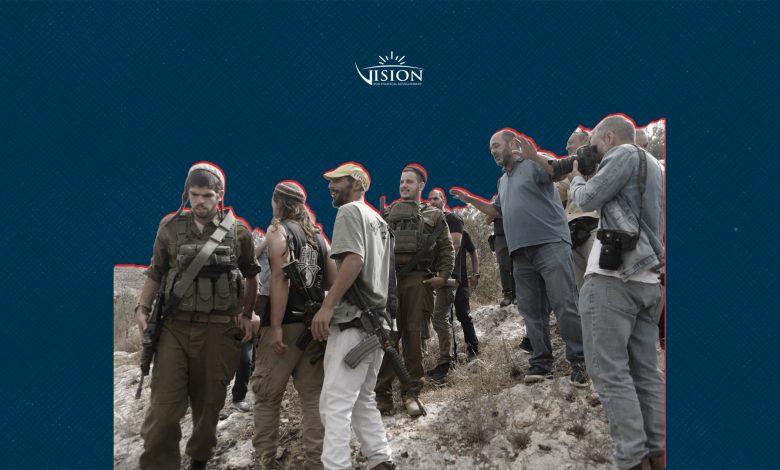
July 2026 reveals a simultaneous escalation in patterns of Israeli control over Palestinian land and people, extending from the Gaza Strip to the West Bank and Jerusalem. In Gaza, the repercussions of the war continue to affect the population through killings, injuries, displacement and the deterioration of health services, while violations in the West Bank take interconnected forms, including killings, arrests, demolitions, the displacement of communities, land seizures and the destruction of agricultural property. At the same time, colonial expansion is accelerating through the establishment of outposts and settlements, road construction, the advancement of plans, and the provision of government funding and the infrastructure needed to entrench them. Taken together, these developments show that control is imposed not only through military force, but through an integrated system of field, military, administrative, planning and financial measures that reshape Palestinian geography, restrict residents’ movement and access to resources, and push them toward displacement, reinforcing the process of de facto annexation and undermining the possibility of a contiguous and viable Palestinian territory.
The report examines violations recorded during July 2026 and draws on information from the United Nations Office for the Coordination of Humanitarian Affairs (OCHA), the Colonization and Wall Resistance Commission, Peace Now, and the Negotiations Affairs Department of the Palestine Liberation Organization.
Genocidal War on the Gaza Strip
The number of Palestinians killed in the Gaza Strip since the ceasefire took effect on October 11, 2025, has reached approximately 1,258, while another 4,145 have been injured. Since the start of the Israeli offensive on October 7, 2023, the cumulative death toll has reached 73,386, while the number of injuries has risen to 174,256.
Displacement continues from areas near the “Yellow Line” amid ongoing military operations and the expansion of areas subject to access restrictions, further reducing the space available to civilians. With most of the population displaced, civilians across Gaza remain confined to an area covering no more than half of the Strip and face persistent protection risks from airstrikes and other military activities, in addition to new and prolonged displacement and worsening living conditions.
These conditions are also affecting public health. Acute respiratory infections and skin diseases remain the leading causes of illness, while waterborne diseases continue to rise, including acute watery diarrhea, bloody diarrhea and acute jaundice syndrome, particularly in Khan Younis. As of July 6, partner organizations in the Health Cluster had recorded more than 18,000 cases of chickenpox, ectoparasitic infestations and impetigo.
At the same time, shortages of medicines, diagnostic tools and specialized equipment continue to limit the health system’s ability to provide treatment for patients with hypertension, diabetes, kidney disease, cancer and cardiovascular disease. Around 700 patients requiring dialysis remain at risk because of shortages of essential supplies.
Pregnant women face additional risks amid the deterioration of sexual and reproductive health services. In the first half of 2026, nearly 4,000 miscarriages were recorded, while the severe maternal morbidity rate reached 82 cases per 1,000 births, and more than 57% of pregnant women suffer from anemia.
Key Statistics on Israeli Occupation Violations in the West Bank and Jerusalem
In the West Bank, increasing restrictions on Palestinian movement, alongside operations carried out by Israeli forces, demolitions, settlement expansion and settler violence, have restricted residents’ access to essential services and livelihoods, displaced Palestinian communities and isolated them from one another. These restrictions have also affected access to medical care; a four-month-old Palestinian infant was delayed at Israeli military gates while being transported to hospital and was later pronounced dead at the hospital.
As of July 20, 2026, 18 Palestinians had been killed in the context of settler attacks, exceeding the total number of Palestinians killed in such incidents throughout 2025, which stood at 17. Of those killed in 2026, 12 were killed by Israeli settlers and three by Israeli forces, while responsibility for the deaths of three others remains disputed. Ten of the 18 deaths were recorded in Ramallah Governorate, accounting for more than half of the cases recorded during the same period.
In 2026, more than 3,200 Palestinians across the West Bank were displaced as a result of settler attacks and demolitions carried out on the grounds that buildings lacked permits issued by the Israeli authorities. This amounted to an average of 17 people displaced per day, twice the daily average recorded over the previous three years.
Between January 2023 and July 6, 2026, 121 Palestinian communities experienced full or partial displacement, including 46 communities whose residents were completely displaced, 10 of them since the beginning of 2026. Overall, around 6,200 Palestinians, including more than 3,000 children, have been displaced in this context since the beginning of 2023, including more than 2,300 people since the start of 2026. The displacement of more than 33,000 Palestinian refugees from the Tulkarm and Nur Shams refugee camps also continues to generate substantial shelter needs.
Alongside displacement, around 880 Palestinians were injured in the context of settler attacks between the beginning of 2026 and July 20. Of these, 720 injuries were attributed to Israeli settlers, while the remaining injuries were attributed to Israeli forces. These cases account for 56% of all Palestinian injuries recorded in the West Bank during the same period.
The average number of injuries associated with settler attacks has risen steadily in recent years, from approximately one Palestinian injured every three days in 2020 to two per day in 2025 and more than three per day in 2026. Sixty percent of these attacks were concentrated in the Ramallah and Nablus governorates.
The effects of displacement and movement restrictions have not been limited to housing and livelihoods but have also affected access to education. Six UNRWA schools in the Jenin and Nur Shams refugee camps remain inaccessible, while another six UNRWA schools in East Jerusalem remain closed. In Area C, 10 schools ceased operating after the communities they served were completely displaced following repeated settler attacks. After these communities were displaced, eight schools were vandalized by Israeli settlers, while Israeli forces demolished two of them as of July 6.
The threat is not limited to schools that have already closed or been damaged. Another 84 schools face the threat of demolition or are subject to stop-work orders, jeopardizing access to education for approximately 13,000 students.
Palestinians Killed and Injured
During July, 15 Palestinians, including four children, were killed in raids and shootings carried out by Israeli forces in various parts of the West Bank. Nablus Governorate recorded the highest death toll, with six Palestinians killed.
Another 112 Palestinians, including 12 children, were injured across the West Bank as a result of shootings and assaults accompanying raids. Since the beginning of 2026, 76 Palestinians have been killed by Israeli forces or Israeli settlers, while more than 1,600 Palestinians have been injured. Settlers were responsible for 46% of these injuries, while the remainder were attributed to Israeli forces.
Arrests
During June, 879 Palestinians were arrested in the West Bank, including 19 children and eight women, amid an escalation in arrest campaigns carried out by Israeli occupation forces during the month.
Nablus Governorate recorded the highest number of arrests, with 185 cases, followed by Hebron with 141. The remaining arrests were recorded across the governorates of Jerusalem, Bethlehem, Jericho, Salfit, Qalqilya, Tulkarm, Tubas and Jenin.
Demolition of Homes and Structures
During the period covered by the report, Israeli occupation authorities carried out 80 demolition operations across the West Bank, targeting 165 structures, including 80 inhabited homes, eight uninhabited homes, 63 agricultural structures and 11 other commercial structures. Demolitions were particularly concentrated in the governorates of Qalqilya, Hebron, Ramallah and Al-Bireh, and Bethlehem.
Israeli authorities also issued 34 demolition notices against Palestinian structures, concentrated in the governorates of Bethlehem, Hebron and Jenin, as part of restrictions imposed on Palestinian construction and urban expansion and the resulting pressures that push residents to leave targeted areas.
Land Seizure and Bulldozing
During the period covered by the report, Israeli occupation authorities issued 33 military orders, including 31 new land seizure orders targeting a total of 830.917 dunams. They also issued two orders amending the boundaries of previous military orders, covering a final area of 59.290 dunams, which is not included in the total area covered by the new orders.
Tubas Governorate topped the list of targeted areas, with 497.862 dunams, followed by Jenin Governorate with 199.824 dunams and the Ramallah and Al-Bireh governorates with 114.350 dunams, reflecting the concentration of land seizure orders in strategic areas of the West Bank.
The nature of these orders shows that the vast majority are related to road infrastructure. Twenty-eight orders were allocated to constructing, widening or upgrading roads, targeting around 792 dunams, or more than 95% of the total area covered by the new land seizure orders. This points to a systematic effort to establish and expand a network of roads with military and security functions, serving settlements and colonial outposts, reshaping Palestinian movement and territorial contiguity, and reinforcing the system of control over the land.
In a related development, Israeli occupation authorities issued three orders under the pretext of implementing what they describe as “security measures,” targeting land in the towns of Salem, Burin and Madama in Nablus Governorate, covering a total area of 76.049 dunams. The orders included measures allowing the removal of wild vegetation and the uprooting and relocation of olive trees, threatening vegetation cover and undermining residents’ ties to their land and sources of livelihood.
One of these orders alone targeted 61.400 dunams along a 5,567-meter route, accounting for approximately 81% of the total land targeted under the three security orders. This demonstrates the use of security justifications as a means of stripping large areas of tree cover and imposing greater control over land surrounding roads and colonial sites, creating new realities on the ground at the expense of Palestinian land ownership and use.
The attacks were not limited to land seizure orders and road-related measures but directly targeted Palestinian trees and crops. A total of 5,027 trees were uprooted, vandalized or poisoned, including 3,241 olive trees, directly affecting agricultural land and the livelihoods of landowners, in addition to the environmental damage caused by the destruction of vegetation.
Hebron Governorate recorded the highest number of damaged trees, with 1,558, followed by Jenin with 1,051, Qalqilya with 862, Tubas with 600 and Nablus with 564. These figures demonstrate the scale of attacks on trees across several governorates, particularly olive trees, which constitute an essential economic resource and are closely tied to Palestinians’ ownership and use of their land.
Settlement Activity
During the month, settlers attempted to establish 29 new colonial outposts, most of them agricultural or pastoral, across nine governorates. Nablus Governorate recorded the largest number, with eight attempts, followed by Ramallah and Al-Bireh with five, Hebron with four, and Salfit and Jerusalem with three each. These attempts form part of efforts to expand control over Palestinian land and create new realities on the ground, particularly in rural and Bedouin areas.
Agricultural and pastoral outposts are particularly significant because their impact extends beyond the direct seizure of land. They contribute to tightening control over areas surrounding Palestinian communities, water sources, grazing land and access routes to agricultural land. The continuation of this form of expansion could place increasing pressure on rural and Bedouin communities and push them to leave their areas, allowing land from which residents have been displaced or to which access has been restricted to be repurposed for colonial expansion and de facto annexation.
Alongside the creation of facts on the ground, colonial planning measures continued. Detailed data indicate that 14 settlement plans in the West Bank and eight plans within the boundaries of the Israeli-controlled Jerusalem municipality were under consideration. The West Bank plans sought to establish 1,128 settlement units over an area of approximately 1,172 dunams, reflecting the continued transformation of colonial expansion from scattered developments on the ground into planned and implementable projects.
More than 90% of the targeted units and land area are concentrated in three major plans to expand or formalize the settlements of “Mevo Dotan,” “Asael” and “Beit Hagai.” This indicates that planning activity is concentrated in large-scale projects capable of producing lasting geographic and demographic changes in targeted areas and strengthening links between settlement blocs at the expense of Palestinian territorial contiguity.
The figures for July show that colonial attacks, military orders, demolitions, the establishment of outposts and settlement plans do not operate as separate developments but rather form part of an integrated system for reshaping and controlling the land. While settlers create new realities on the ground, occupation forces provide protection and assert control over land and roads, while government and planning institutions work to transform these realities into more entrenched legal and planning arrangements.
This integrated system expands the de facto annexation of Palestinian land, fragments Palestinian areas and communities, restricts movement and access to resources, and creates a coercive environment that pressures residents to leave their areas, simultaneously targeting people, land, resources and livelihoods.
A report issued by Peace Now and Kerem Navot concluded that the current Israeli government has advanced the de facto annexation of the West Bank at an unprecedented pace through an integrated package of administrative, planning, financial and on-the-ground measures. The report stresses that these measures do not represent separate developments but constitute a systematic government policy aimed at permanently deepening Israeli control over the land.
The report documents a broad range of measures, including settlement expansion, the legalization of colonial outposts, the establishment of new outposts, land seizures, the displacement of Palestinian communities, the expansion of road networks and infrastructure, and the transfer of civilian powers from the Civil Administration and military command to the political level. It also points to fundamental changes in the West Bank’s land regime.
During the period covered by the report, from 2023 through 2025, 185 new colonial outposts were established, while 118 Palestinian pastoral and herding communities were displaced. A further 102 new settlements were established through the legalization of existing outposts or by granting settlement neighborhoods independent status, alongside the advancement of plans for 40,046 new housing units. At the same time, agricultural outposts have come to effectively control more than 1.1 million dunams, including around 750,000 dunams seized since the current government took office.
Control has also expanded to infrastructure and land use. At least 223 kilometers of new roads have been opened in the West Bank, while settlers have seized at least 11,520 dunams through agricultural activity, and Israeli occupation authorities have declared 25,959 dunams as state land.
According to the report, this process rests on four interconnected tracks: restructuring the system of governance and transferring powers to the political level; accelerating colonial expansion; seizing land through outposts, grazing, agriculture and the displacement of Palestinian communities; and fundamentally transforming the land regime in the West Bank. In this sense, annexation is not taking place through a single legal declaration but through an accumulation of decisions and measures that gradually reproduce Israeli control over the land.
As part of efforts to accelerate colonial expansion, the Israeli government signed a comprehensive agreement in July 2026 with the “Samaria Settlements Council,” under which it pledged 8.5 billion shekels to finance infrastructure for approximately 12,000 new housing units in the northern West Bank. Such agreements provide advance funding for roads, sewage networks, public institutions and other infrastructure, while accelerating planning procedures and the issuance of building permits, paving the way for the faster implementation of large-scale colonial projects.
The agreement is part of an accelerating trend toward using government funding to entrench colonial expansion. Over the past year, the government signed similar agreements with the settlements of “Karnei Shomron” and “Ma’ale Adumim,” with total commitments of 13.5 billion shekels to develop infrastructure and support approximately 25,000 settlement units. The data also indicate preparations for additional agreements with the settlements of “Givat Ze’ev” and “Ariel,” reflecting a shift in government support for settlements from financing individual projects to long-term financial commitments that link infrastructure projects to colonial expansion and make them more difficult to reverse in the future.
In the same context, the Israeli government approved the establishment of a new settlement south of Jenin in July 2026, named “Shanur East,” at the site of a former military base adjacent to the village of Sanur. This brings the number of new settlements approved by the current government since 2023 to 104. These include neighborhoods separated from existing settlements and granted independent status, unauthorized colonial outposts advanced toward legalization, and entirely new settlements.
This expansion has been accompanied by substantial financial allocations to accelerate the establishment of new settlements. A total of 1.3 billion shekels was allocated to establishing caravan sites, 112.2 million shekels to preparing plans, and an additional 1.075 billion shekels to constructing access roads, in addition to billions previously allocated to roads serving existing settlements.
The Israeli government has continued to accelerate planning and construction procedures in West Bank settlements. In July 2026, the Higher Planning Council was scheduled to consider plans for 1,261 housing units in four settlements, bringing the total number of units approved by the council during 2026 to 8,056. This comes amid a shift toward holding weekly council meetings since November 2024, accelerating the pace of colonial expansion and normalizing planning and construction procedures in the occupied territories.
This pace intensified after the Netanyahu-Smotrich government abolished, in June 2023, the requirement to obtain the defense minister’s approval at various stages of advancing settlement plans. In 2025, the council advanced plans for 27,941 housing units, the highest annual figure since the beginning of the settlement project in the West Bank.
NOTE: This text is adapted from original Arabic article.