Why Does Israel Want to Dominate the Pentagon?


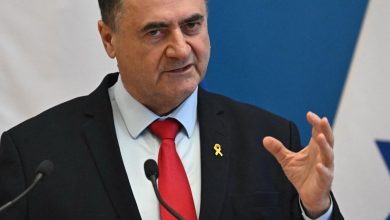
In a June 18, 2026 meeting with reserve officers in the “Migdal Oz” settlement in the occupied West Bank, Israeli Prime Minister Benjamin Netanyahu called for greater weapons independence, saying: “I want weapons independence… I deeply appreciate the support we have received… We must produce our own weapons.” This position did not emerge in isolation. In September 2025, Netanyahu had already spoken of the possibility that Israel could face “a kind of isolation” lasting for years, calling for the development of a defense industrial base that would turn Israel into “Athens and Super-Sparta combined.”
This course is consistent with the vision put forward by former Israeli Defense Minister Yoav Gallant, who called for redefining U.S. aid to Israel as a joint investment rather than a grant, as part of a vision extending to 2048, the centennial of Israel’s establishment. The U.S.–Israeli military relationship thus appears to be moving along two parallel tracks: a political discourse centered on “independence” in weapons production, and an institutional track that deepens industrial and technological integration between the two sides. This raises questions about the actual direction of this partnership and whether the surge in Israeli defense exports—which reached $19.2 billion in 2025—is sufficient to explain this dual discourse, or whether it reflects broader strategic calculations related to restructuring the foundations of the defense relationship between Washington and Tel Aviv as the 2028 expiration of the military memorandum of understanding approaches.
Against this backdrop, this paper seeks to unpack the structural transformations in the U.S.–Israeli military partnership, beginning with the financial history and structural privileges of military aid, moving to an analysis of Israel’s motivations for pursuing weapons independence, then examining the legislative architecture of Section 219/224 in Congress and the risks of federal integration, and finally assessing Israel’s ability to reduce its dependence on U.S. aid and the limits of such a shift in light of changes in the international security environment and the second precision revolution.
The Financial Course of U.S. Aid and Its Structural Privileges for Israel
Throughout the history of relations between Washington and Tel Aviv, U.S. military aid has constituted a fundamental pillar of Israeli national security. It evolved from relatively limited forms of economic and humanitarian support in the 1950s into massive strategic military and financial packages. This aid underwent successive historic increases, rising by 450% in the aftermath of the 1967 war and then by 800% following the October 1973 war, before culminating in multiyear strategic memoranda of understanding. This funding reached a new level with the ten-year aid package for 2019–2028, worth $38 billion, in addition to the exceptional emergency assistance provided after the events of October 7, 2023, to reinforce defense systems and supply Israel with thousands of tons of critical munitions.
This assistance has not been limited to its financial dimension; it has also been accompanied by unique structural privileges unavailable to any other country. Most notably, the Offshore Procurement mechanism allowed Israel to use part of U.S. aid funds to purchase weapons and develop technologies within Israeli defense companies themselves. Other privileges included direct cash transfers to the treasury without project-level oversight and cash-flow financing for long-term procurement contracts.
These privileges played a pivotal role in the growth of Israel’s technology-driven economy, with technology becoming its primary economic engine. The high-tech sector accounts for approximately 19.7% of GDP—equivalent to 340 billion shekels—and 53% of total Israeli exports, or around $73.5 billion. This success rests on a three-way integrated network linking the military establishment, academia and Israel’s high-tech sector. Technological intelligence units, particularly Unit 8200, are used to train personnel and develop cyber talent that transfers direct military expertise into the civilian market and globally deployed applications.
This dynamic is based on a “dual-use” model that enables technology to flow between military laboratories and operational squadrons on the one hand, and technology startups on the other, supported by joint Israeli and U.S. government funding through programs such as the BIRD Foundation and venture-capital funds whose investments exceed $3 billion annually. Because of these privileges, U.S. military aid is no longer merely a mechanism for financing arms imports; it has evolved into indirect support for the growth of Israel’s defense and technology industrial complex. Offshore Procurement and direct cash transfers have enabled Israel to allocate billions from its public budget to domestic research and development. This accumulated self-investment has resulted in the innovation and development of highly advanced weapons, protection systems and radars—including the Trophy tank protection system, F-35 helmet-mounted systems, laser systems such as Iron Beam, and battlefield artificial intelligence—which are tested in the field before becoming market-ready products that the U.S. military can then purchase without bearing their initial research costs.
It is worth noting that Offshore Procurement is approaching its end. The memorandum of understanding signed in 2016 explicitly stipulated that the share of such procurement would be gradually reduced from approximately 26.3% of the annual grant—about $815 million in fiscal year 2019—to zero by fiscal year 2028. This was not a minor accounting adjustment, but a political decision taken by the Barack Obama administration based on two arguments: that Israel’s defense industry had matured to the point that it no longer required direct support, and that Foreign Military Financing dollars should be spent inside the United States rather than in competition with U.S. companies.
Independence as an Operational Necessity: Why Has the Push for Weapons Independence Emerged Now?
The discourse surrounding “weapons independence” did not emerge from a political vacuum. Rather, it culminated from the convergence of two interconnected factors: an internal review that exposed the vulnerability of Israel’s production infrastructure under the pressure of prolonged war, and profound shifts in U.S. public opinion and the partisan environment regarding continued unconditional military support. These shifts, which have reached levels unseen in decades, provided the principal political impetus for the emergence of this discourse at this particular moment and with such intensity.
With the military memorandum of understanding set to expire in 2028, and opposition growing within both parties—from the progressive left on the one hand and the America First current within the MAGA movement, led by Vice President JD Vance, on the other—decision-makers in Tel Aviv have recognized the difficulty of securing a new aid package under the same terms as before. Netanyahu therefore sought to take a preemptive step, announcing his desire to gradually reduce aid and shift from a grant-based model to joint projects, in line with the U.S. national security doctrine that holds that the United States should first and foremost do what serves its own interests.
Moreover, the political discourse was preceded by an oversight assessment that identified dependence as an operational risk rather than merely an economic burden. State Comptroller Matanyahu Englman explained that the loss of independence in weapons production over the past two decades had constrained the Israeli military’s freedom of action and had even “posed a risk to the lives of soldiers.” The preference for purchasing raw materials at the lowest prices had created dependence on foreign suppliers, some of whom later imposed export restrictions, while the process of mapping the capabilities required for production independence was not completed until January 2025.
Against this backdrop, the proposal moved from an oversight assessment to a funded national project. On December 24, 2025, at Hatzerim Airbase, Netanyahu announced a 350-billion-shekel plan (approximately $110 billion) over a decade to build an independent arms industry, drawing on the recommendations of the “Nagel Committee,” which recommended a hybrid capability comprising roughly 70% offensive and 30% defensive capacity. Its chairman, Yaakov Nagel, stressed that Israel should not remain dependent on the United States for armored vehicles and drones, while acknowledging that dependence on fighter aircraft would continue.
Implementation of this approach accelerated on the ground. On March 25, 2026, the director-general of the Israeli Defense Ministry met with the CEOs of Israel’s leading defense companies—Rafael Advanced Defense Systems, Israel Aerospace Industries (IAI), Elbit Systems and the state-owned Tomer—and stated that achieving “munitions independence” was a strategic priority. By that point, Defense Ministry purchases from domestic industries had exceeded $3 billion since the beginning of the year, while the war on Iran had consumed enormous quantities of aerial munitions and interceptor missiles—four times the amount used during the June 2025 war.
This approach did not remain confined to broad declarations but developed into a series of contracts that mapped out the three principal areas of the desired independence. In the ground domain, the Defense Ministry signed a deal worth more than 150 million shekels with Elbit Systems on March 30, 2026, to establish a domestic production line for 155mm artillery shells, alongside the military’s receipt of its first Ro’em self-propelled howitzer systems. In the air domain, two aerial-munitions deals were signed with the same company: one worth 570 million shekels on January 27, 2026, and another worth 600 million shekels on April 22, 2026, following the second war on Iran.
In interception systems, these deals were preceded by a multiyear contract with Rafael on November 20, 2025, to expand Iron Dome production. On April 6, 2026, Israel announced an increase in the production rate of Arrow missiles, led by Israel Aerospace Industries, alongside investment of around two billion shekels in the Iron Beam laser system. According to monitoring by the Alma Research and Education Center, domestic procurement exceeded nine billion shekels in the first quarter of 2026 alone.
Taken together, these indicators show that what Israel describes as weapons independence is not aimed at building an entirely self-sufficient military capability. Rather, it seeks to address the operational bottlenecks exposed by recent wars, particularly in munitions, interception systems and supply chains. Since October 7, 2023, the principal problem has not been access to technology or financing, but ensuring the uninterrupted flow of munitions and raw materials amid fluctuations in the international political environment and previous export restrictions.
Accordingly, the security establishment views the concept of weapons independence with caution. Experts such as Major General (res.) Ilan Biran and Amikam Norkin argue that complete independence in heavy platforms, such as fighter aircraft and submarines, is economically unfeasible, and that Israel’s real advantages lie in advanced technologies, missiles and software rather than in attempting to manufacture everything domestically. Norkin warns that reaching a situation in which Israel produces everything itself would drag it downward, diverting state resources toward bomb production at the expense of health, education and civilian infrastructure. He explained: “The United States is part of Israel’s strategic depth. Without it, Israel could not have sustained three years of war.” He added: “We must not, even for a moment, underestimate the importance of American aid.”
This has prompted the security establishment to redefine independence as the ability to continue fighting even if foreign supplies are disrupted, while maintaining a gradual transition toward joint projects. In this sense, independence appears to be a means of strengthening operational freedom of decision-making and reducing the relationship’s vulnerability to political review in Washington, rather than a project to fundamentally restructure Israel’s strategic alliances.
The Legislative Architecture of Section 219/224 and the Risks of Federal Integration
The U.S. House of Representatives’ passage on July 23, 2026, of its version of the National Defense Authorization Act for Fiscal Year 2027—which included Section 219, formerly known as Section 224, and passed by a narrow 216–212 vote—was not an isolated event. Rather, it marked the culmination of a legislative process that began in February 2026, when Senators Ted Budd and Kirsten Gillibrand introduced the United States–Israel Future of Advanced Technology, Unified Research, and Enhanced Security Act (FUTURES Act) in the Senate, followed by a parallel House version introduced by Representatives Don Davis and Ronny Jackson.
Although the bill stalled in congressional committees, pro-Israel lobbying groups, most notably the American Israel Public Affairs Committee (AIPAC) and the Foundation for Defense of Democracies (FDD), succeeded in incorporating most of its legislative framework into Section 224 of the National Defense Authorization Act (NDAA). According to an analysis published by The Guardian, this legislative track represents an attempt to institutionalize U.S.–Israeli defense cooperation within the Pentagon’s structure by gradually shifting the relationship from an aid-and-financing framework toward long-term industrial and technological integration.
The significance of the section is also reflected in the creation of an “Executive Agent” position within the U.S. Department of War. According to the legislative text itself, this official is tasked with synchronizing U.S.–Israeli cooperative efforts to expand and accelerate research, development, testing, evaluation, integration and industrial cooperation in defense technology.
The responsibilities include identifying shared or Israeli-origin technologies with operational value for potential integration into U.S. weapons systems and programs; ensuring joint research initiatives involving government, the private sector and academia; facilitating the transition of technologies from research into procurement and acquisition pathways; and establishing frameworks for joint partnerships, licensing agreements, co-production or manufacturing in the United States with Israeli companies. The initiative also covers a broad range of fields, including counter-drone systems, subterranean threats, missile and air defense, artificial intelligence, quantum computing, autonomous systems, directed energy, cyber and electronic warfare, biotechnology and defense manufacturing.
A study by the Quincy Institute argues that this position, given its authorities extending across other Pentagon departments, could reduce the usual levels of bureaucratic oversight governing the transfer of sensitive defense technology. In this sense, the provision represents a practical manifestation of Netanyahu’s desired course: shifting the relationship from a grant-based model to an industrial and technological partnership embedded within the Pentagon’s structure, making cooperation more deeply entrenched and less vulnerable to annual political review.
Furthermore, an analysis argues that such integration could create a strategic trap for the U.S. military through what is described as “reverse dependence.” If Israeli software and components become embedded in future U.S. weapons, Tel Aviv could gain the ability to threaten to withhold updates or components as leverage against Washington if the latter attempts to exert political pressure. Experts also warn that reversing this integration later could be extremely costly, citing Turkey’s removal from the F-35 program in 2019, which delayed aircraft deliveries and cost U.S. taxpayers tens of billions of dollars to restructure supply chains.
These risks prompted members of Congress including Thomas Massie, Ro Khanna and Alexandria Ocasio-Cortez to fight against the provision, arguing, according to Newsweek, that integrating parts of the U.S. military with the Israeli military poses a direct threat to American sovereignty and democracy.
Conclusion
The discourse of weapons independence does not reflect an Israeli move toward disengagement from the United States so much as an attempt to reorganize that relationship on new foundations. Conversely, the legislative initiatives in Congress do not merely represent an extension of aid in its traditional form; rather, they lay the groundwork for a gradual transition from a relationship based on grants and purchases of U.S. weapons to a more complex partnership centered on integrating Israel into the United States’ defense industrial and technological base.
Likewise, 2028 may not mark the end of U.S. military support so much as a turning point in how the defense partnership between the two countries is managed. As political and public pressure on foreign aid grows, Israel is seeking to make the relationship less vulnerable to political review by deepening industrial and institutional integration through joint projects, interconnected supply chains and legislation that makes cooperation with Israel part of the U.S. defense architecture rather than merely a recurring financial commitment.
In this context, the limits of Israel’s ability to reduce its dependence on U.S. military aid become clear. Despite the growing political rhetoric surrounding the construction of an independent arms industry and the 350-billion-shekel defense budget plan over a decade, the nature of Israel’s defense and economic system makes full independence unattainable. Its technology and military-industrial sectors, which have become structural pillars of GDP and exports, have historically benefited from an interconnected system of domestic defense spending, integration among the military establishment, academia and the high-tech sector, and U.S. aid and cooperation. Any radical attempt at disengagement would therefore risk disruptions to supply chains, financing and operational capacity, particularly given Israel’s continuing reliance on U.S. heavy platforms.
Accordingly, the discourse of weapons independence, “weaning” Israel off U.S. military aid, and shifting toward a partnership model that is deeper and more advantageous to Israel than aid appears to be a maneuver designed to preempt the moment when such aid may cease, while organically integrating Israel into the structure of the U.S. military and security complex in a way that shields it from political fluctuations and their anticipated consequences.
NOTE: This text is adapted from original Arabic article.