The War on Iran… An Israeli Pretext to Back Out of the Gaza Agreement

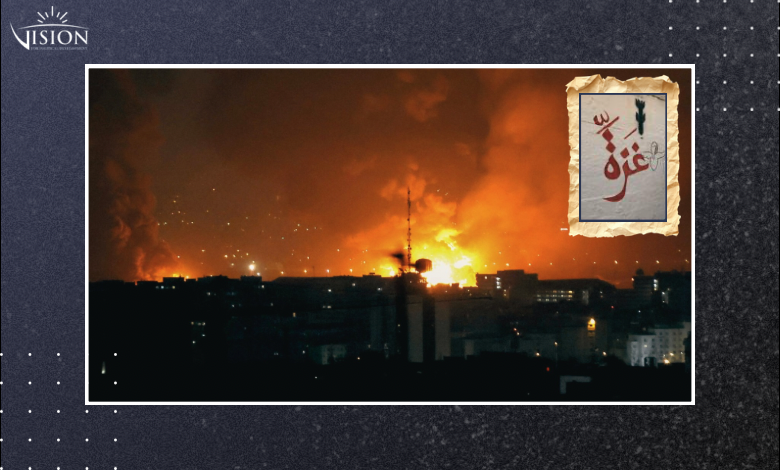
Since the ceasefire agreement in the Gaza Strip came into effect on October 9, 2025, the Israeli occupation has pursued a policy of gradually eroding the agreement’s substance by transforming it into a pattern of low-intensity aggression that allows for the continuation of military operations and humanitarian pressure without significant political or operational costs. In this context, the occupation has delayed the implementation of a number of the agreement’s key provisions, particularly those related to the humanitarian protocol and emergency relief requirements, in addition to turning the issue of border crossings, especially the Rafah Crossing, into a tool for political and security blackmail. This behaviour was based on reinterpreting the agreement’s provisions to ensure the continuation of instruments of war in forms that are less overt and more easily normalized in the international consciousness, despite the pressure exerted by mediators on the United States as the guarantor of the agreement. This pressure resulted only in superficial Israeli measures within complex arrangements that stripped those commitments of their practical value.
However, the outbreak of the U.S.-“Israeli” war with Iran, and the accompanying U.S. and international preoccupation with managing the regional confrontation, granted Israel a strategic window to renege on its obligations under the agreement and expand the scope of on-the-ground violations, while keeping the Gaza Strip trapped in a catastrophic humanitarian reality and reformulating the tools of aggression within a framework that allows the war to continue without an official declaration of the ceasefire’s collapse. In this context, this paper seeks to analyze how “Israel” exploits the regional war with Iran to entrench new facts on the ground in the Gaza Strip and work to strip the ceasefire agreement of its actual substance.
“Manipulation of Details” as a Core Strategy of the Occupation
Israel’s behaviour toward the ceasefire agreement in the Gaza Strip cannot be understood in isolation from the pattern that has governed its approach to the agreement since the moment it was adopted. Eversince it accepted the plan put forward by the administration of U.S. President Donald Trump, Israel has worked to exploit the ambiguity in some of the agreement’s provisions and reinterpret them in line with its vision of a “post-genocide Gaza”. This was manifested in its bypassing of traditional mediation channels through direct coordination with the U.S. administration, particularly with envoys Steve Witkov and Jared Kushner, with the aim of establishing new conditions not included in the original text of the agreement. This approach was clearly evident in the case of the Rafah Crossing, which was transformed from a humanitarian lifeline into a tool for political and security pressure, effectively leading to the closure of the crossing throughout the first phase, which lasted approximately 97 days (between October 9, 2025, and January 14, 2026). As for the mechanism for operating the crossing, based on the 2005 Crossings Agreement, which grants the right to manage it to the Palestinian Authority and Egypt under the supervision of a European monitoring mission, was reinterpreted by Israel in a manner that effectively rendered it toothless, through the imposition of strict restrictions on passenger movement, including prior approval, a cap on returnees not exceeding fifty people per day, and the establishment of a direct Israeli checkpoint. These obstacles were reflected in travel statistics, as the actual number of travellers reached 1,934 out of 5,600 who were expected to travel, or 34.5%.
Manipulation was also clearly evident in the implementation of the humanitarian protocol; while the agreement stipulates the entry of at least 600 aid trucks per day, actual implementation revealed a significant gap between the text and reality, as the average amount of aid entering did not exceed only about 43% of the agreed-upon number, in addition to the complete absence of temporary housing units (caravans) throughout the first phase.
In contrast, the Israeli narrative, backed by the U.S.-led Civil-Military Monitoring Center in the “Kiryat Gat” settlement promoted claims of increased aid volumes, a narrative echoed in official U.S. statements. These sought to present a distorted picture of the deteriorating humanitarian reality in the Gaza Strip, falsifying it in a manner that contradicts on-the-ground facts. In parallel, the Israeli occupation sought to expand the scope of this approach as the agreement moved into its second phase; Israel attempted to impose a condition requiring the disarmament of the resistance as a mandatory prerequisite for advancing to this phase, despite the original text containing no such reference. However, this attempt failed to secure official recognition, due to pressure from mediators and the U.S. administration’s desire to preserve the agreement’s sustainability as a stable path, particularly given its connection to the regional “Board of Peace” initiative proposed by the Trump administration.
The War with Iran as a Strategic Window for Reshaping the Reality in Gaza
The outbreak of the U.S.-Israeli war with Iran marked a regional turning point that reshuffled the priorities of the international order; the United States and Western countries became preoccupied with managing the escalation and its potential spread in the Middle East, securing military bases and international energy and shipping routes, and preventing the region from sliding into a full-scale regional conflict. This shift led to a significant decline in the prominence of the Gaza war on the international political and media agenda, after it had dominated international discussions for months, thereby providing Israel with greater room to manoeuvre in managing its aggression within the Strip.
Furthermore, the global media’s focus on developments in the regional confrontation has reduced the level of international scrutiny of the daily violations occurring in the Gaza Strip, thereby lowering the political cost of continuing low-intensity military operations within the Strip compared to previous phases of the war.
Throughout the duration of the agreement, Israel adopted a “policy of stalling” as a strategic approach to weather the period of intense international focus and U.S. preoccupation with the details of the situation inside the Strip, and to neutralize the vigilance of the mediators and their commitment to implementing the terms. This approach was based on waiting for a moment when international attention would shift toward another crisis in a different arena, allowing the occupation government to effectively renege on the fundamental obligations leading to a genuine resolution of the war’s consequences and the dismantling of its effects, a scenario that actually materialized with the outbreak of war with Iran.
Tools for Consolidating the Situation on the Ground in the Gaza Strip
Field data since the ceasefire agreement in the Gaza Strip came into effect, indicates that Israel has adopted an operational pattern based on carrying out low-intensity aggression, which allows for maintaining a continuous level of military and humanitarian pressure without crossing a threshold that might trigger broad international political intervention. Monitoring data[1] reveals more than 110 Israeli violations recorded since the outbreak of the war on Iran through March 8, 2026, including direct gunfire, artillery shelling, limited airstrikes, building demolitions, and localized incursions by military vehicles. These violations have resulted in the deaths of more than 14 Palestinians and the injury of 33 others, marking an escalation within the pattern of regular Israeli violations since the agreement began, which has exceeded a total of 1,900 violations.
At the same time, the occupying army is working to establish new geographical and security realities along what is known as the “Yellow Line” by digging a wide trench in the border area and consolidating fire control over additional areas outside the scope of the agreement, estimated at approximately 34 square kilometres. This comes despite the fact that the second phase of the agreement stipulates the army’s withdrawal to the “Red Line,” such that areas under Israeli control do not exceed 20% of the Gaza Strip’s total area. This activity reflects an Israeli strategy to reinforce buffer zones within the Strip and reduce the geographical space available to the Palestinian population, as part of a gradual policy to redraw the security landscape and consolidate long-term military control. In addition to military means, Israel uses control over crossings and humanitarian aid as a primary tool of pressure. Since the outbreak of the war with Iran, the Rafah Crossing and commercial crossings have been completely closed, halting the movement of travellers and preventing the entry of aid.
Although the Kerem Shalom crossing was partially reopened on March 3, 2026, tracking the numbers and types of trucks reveals ongoing manipulation of both volume and type, keeping them below the levels stipulated in the ceasefire agreement, (see the chart on the manipulation of the numbers and types of trucks entering the Strip)[2]. This behaviour reflects a clear exploitation of international preoccupation with regional war to reshape the tools of the blockade and mechanisms of starvation, as confirmed by the UN Special Rapporteur on the situation of human rights in Palestine, Francesca Albanese, who stated: “While the world is once again preoccupied with more wars and manufactured despair, Israel continues to deliberately starve Gaza.” In the same context, the United Nations Office for the Coordination of Humanitarian Affairs (OCHA) warned that regional escalation is directly exacerbating the humanitarian situation in Gaza, amid the continued closure of the crossings.
This approach is even more evident in the case of fuel, as the quantities that have entered the Gaza Strip since the agreement took effect have not exceeded 14–15% of the agreed-upon amounts, thereby exacerbating the energy crisis and disrupting the operations of hospitals, water treatment plants, and sewage systems. Furthermore, the occupation prevented any trucks carrying cooking gas from entering during the first week of the reopening of the crossings following the war with Iran, a move that deepens the humanitarian crisis and confirms that control over basic resources has become a tool for exerting pressure on the Gaza Strip.
Implications of Israeli Strategy for the Future of the Ceasefire
The primary source of concern lies in the fact that growing international preoccupation has placed many of the obligations of the second phase at risk. Despite the convening of the first meeting of the “Board of Peace” on February 19, which approved the allocation of approximately $17 billion for the Gaza Strip, these pledges have, in practice, remained confined to the meeting room, with no tangible indicators pointing toward the initiation of a genuine reconstruction process.
The most serious development lies in the suspension of efforts aimed at enabling the National Committee for the Administration of Gaza (NCAG) to assume responsibility for the governmental sector. At a time when the committee was expected to begin its operations on the ground, this file has effectively fallen off the agenda since the outbreak of the war on Iran. Media sources, citing a member of the committee, confirmed that arrangements related to its work have significantly regressed since the start of the Israeli–American attack on Iran, including those concerning the transfer of effective authority in the Gaza Strip, as well as the rapid relief projects pledged at the “Board of Peace” conference.
This development represents a continuation of earlier Israeli attempts to obstruct the committee’s work and hinder its assumption of responsibilities, alongside ongoing questions regarding its authority and funding mechanisms, particularly in light of the current preoccupation of the United States, which effectively monopolizes the management of the political process related to the Gaza Strip.
Within the same context, other tracks forming part of the second phase arrangements of the ceasefire agreement have also come into focus, including the international stabilization force that was expected to be deployed in the Gaza Strip in the near future. However, Indonesia’s announcement of the possibility of withdrawing from the currently held position of deputy commander of the force and from the “Board of Peace” if it does not meet Palestinian aspirations, reflects the extent of the setbacks facing these arrangements. Its Foreign Minister, Sugiono, confirmed that all discussions related to the Board, tasked with overseeing the establishment of the stabilization force, have been suspended following the outbreak of the war with Iran.
These indicators align with what Reuters reported, citing three informed sources, that talks aimed at advancing the plan of U.S. President Donald Trump to end the war in the Gaza Strip have been suspended since the United States and Israel launched a joint attack on Iran.
This obstruction, coupled with Israel’s ongoing actions on the ground, poses a serious threat to the ceasefire agreement, and an Israeli evasion of its obligations regarding withdrawal, relief, and reconstruction; thereby ensuring that the occupying army retains a free hand in its daily aggression against the Strip and undermining any opportunities for societal and on-the-ground recovery. The primary concern is that the occupation harbours latent intentions to resume its aggression against the Strip as soon as the war on Iran ends, as all measures that could serve as a political or on-the-ground barrier to this possibility are effectively being undermined.
However, the most dangerous aspect of the current Israeli strategy goes beyond the scale of field violations or the humanitarian restrictions imposed on the Gaza Strip; as the continuation of this course without effective international intervention to reimpose compliance with the terms of the agreement may transform the ceasefire from a tool to end the war into a mechanism for reproducing Israel’s long-term aggressive vision. This threatens to keep the Gaza Strip in a state of continuous military and humanitarian attrition, while cementing on-the-ground realities that may shape the next phase and keep the Strip hostage to the objectives of the Israeli war.
Conclusion
The evidence suggests that the Israeli occupation has exploited international preoccupation with the war on Iran, and the resulting decline in international attention to the Gaza issue, to deliberately undermine the intended roles of the parties involved in monitoring the implementation of the ceasefire agreement, whether the mediating states or the U.S. as the sponsor. This has led to a stalemate among the bodies supporting the political process, such as the Executive Council of the “Board of Peace” and the National Committee for the Administration of the Gaza Strip. This reality has allowed “Israel” to expand its room for manoeuvre with the aim of gradually emptying the agreement of its substance and reshaping the facts on the ground to allow for the continuation of aggression at low levels of escalation. This trajectory goes beyond direct military violations, extending to the re-formulation of policies of starvation and humanitarian pressure and the perpetuation of the catastrophic effects of the war, alongside the expansion of the tools of bombardment, killing, and destruction, thereby transforming the effects of the war in the Strip into a sustainable reality that will be difficult to dismantle later. If this trajectory continues without effective international intervention to reimpose compliance with the terms of the agreement, the ceasefire may effectively shift from a tool for ending the war to a mechanism for perpetuating its effects.
NOTE: This text is adapted from original Arabic article.
[1] According to daily monitoring reports received by the author of this paper from Palestinian sources involved in monitoring ceasefire violations.
[2] The author of this paper bases the figures on field violations and crossing traffic on daily monitoring reports prepared by Palestinian entities responsible for tracking ceasefire violations in the Gaza Strip, Copies of these reports are submitted to mediators and relevant parties for the period between February 28 and March 8, 2026.