The Systematic Destruction of the Agricultural Sector in the Gaza Strip During and After the Genocide

Since the beginning of the Israeli occupation in 1967, the agricultural sector in the Gaza Strip has remained a target of destructive occupation policies. Historical records and practices on the ground reveal a systematic Israeli policy aimed at Gaza’s agricultural sector as one of the pillars of economic and food resilience. This was carried out through the destruction of agricultural infrastructure, land-levelling, contamination of water sources, and preventing farmers from accessing their land, deliberately weakening the population’s productive capacity.
In this context, deliberations within Israeli governments immediately following the occupation of the Gaza Strip in 1967 show that targeting agriculture was not incidental, but rather part of a broader political vision for the future of the territory.
At the time, ideas were advanced to create suffocating living conditions that would push the population toward forced displacement, paving the way for depopulating the Strip and later annexing it under Israeli sovereignty. To achieve this goal, then-Israeli Prime Minister Levi Eshkol proposed drying up water sources and destroying what remained of the agricultural sector in order to manufacture a humanitarian and economic crisis that would compel segments of the population to seek alternatives outside Gaza.
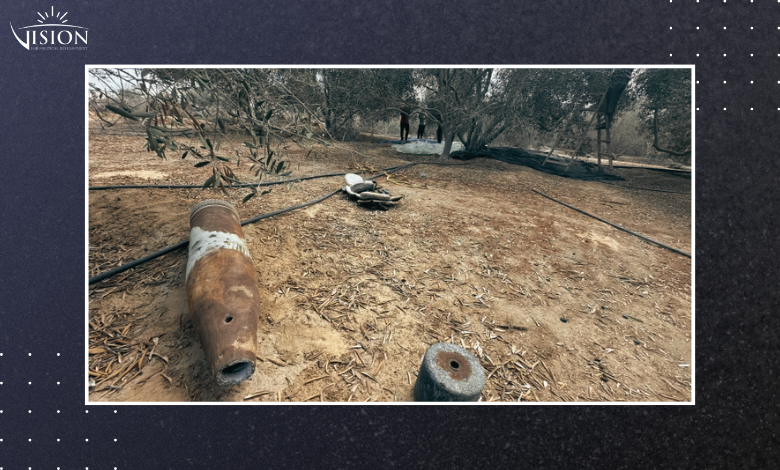
The genocidal war on the Gaza Strip since October 2023 has exposed a systematic Israeli policy targeting this vital sector through the destruction of agricultural infrastructure, contamination of farmland, and preventing farmers from accessing their land. Agricultural areas and infrastructure, such as irrigation networks, greenhouses, and water wells were targeted, in addition to the prohibition on the entry of agricultural inputs, forcing thousands of farmers to cease cultivating their lands.
Ultimately, the deliberate destruction of the agricultural sector, coupled with the tightening of the blockade, has caused severe damage to the Palestinian economy and food security in the Gaza Strip. There is no doubt that the destruction of agriculture forms part of a broader strategy aimed at undermining the foundations of social and economic resilience among Palestinians in Gaza. While thousands of families rely on agriculture as their sole source of income, the dismantling of this sector drives society toward greater dependence on humanitarian aid whose quantities, types, and timing of entry are controlled by the occupation, and weakens Palestinians’ ability to withstand prolonged war and siege.
Within this framework, this report seeks to deconstruct the dimensions of targeting Gaza’s agricultural sector as a fundamental pillar of food security and economic resilience. It does so by reviewing the sector’s importance prior to the assault, analyzing the systematic Israeli policies and practices that led to its destruction, and documenting the scale of losses inflicted on agricultural land, infrastructure, and supply chains. The report also addresses the resulting economic, social, and humanitarian consequences of the collapse of the food basket, including the deepening of food insecurity, loss of income, and rising unemployment rates.
The Importance of the Agricultural Sector in the Gaza Strip
According to a 2022 report by the Palestinian Central Bureau of Statistics, the agricultural sector’s contribution to Gaza’s gross domestic product amounted to approximately 11%, with an estimated added value of USD 343 million and a total production value of around USD 575 million. According to a report by the United Nations Food and Agriculture Organization (FAO) issued on 26 May 2025, more than 560,000 people depended wholly or partially on crop production, livestock grazing, and fishing for their livelihoods. The total area cultivated with horticultural trees, vegetables, and field crops in the Gaza Strip was estimated at around 117,000 dunums.
The agricultural sector was characterized by crop diversity, with cultivation concentrated primarily in vegetables such as tomatoes, cucumbers, potatoes, onions, peppers, and zucchini, which formed the backbone of the population’s food basket. Gaza also produced fruit tree crops such as citrus, olives, and stone fruits, in addition to export-oriented crops such as strawberries and flowers, which emerged in the mid-1990s under policies aimed at generating foreign exchange.[1]
Focusing on the vegetable sector as the most important agricultural subsector in Gaza, vegetables accounted, prior to the genocide, for approximately 77% of plant production[2], 42% of the total value of agricultural production[3], and 65.4% of total agricultural output by quantity, with crop diversity reaching 40 cultivated varieties[4].
Targeting the Agricultural Sector During the Genocide
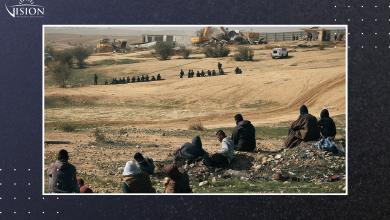
From the first days of the genocide, Israel carried out direct targeting of agricultural land through aerial and ground bombardment, followed by the levelling of thousands of dunums of cultivated land in border areas. Israeli aircrafts also deliberately sprayed hazardous chemical substances over vast areas, destroying soil quality and annihilating crops. Israeli targeting was not limited to farmland alone; it also included irrigation networks, greenhouses, and water wells, as well as the prevention of the entry of seeds and fertilizers. The destruction of road networks further disrupted internal distribution chains, contributing to sharp price increases for local agricultural products or their complete disappearance from markets, delivering a dual blow to both the economy and food security.
The Euro-Mediterranean Human Rights Monitor documented the deliberate destruction by Israeli forces of tens of thousands of dunums of agricultural land in northern Gaza as part of a systematic policy aimed at the collective annihilation of the population by imposing harsh living conditions leading to starvation and the destruction of basic resources for survival. In a statement published on 26 September 2024, it noted that approximately 80% of agricultural land had been rendered non-operational since October 2023 due to isolation and bulldozing associated with the illegal expansion of the buffer zone.
The Monitor reported that the area of agricultural land completely destroyed and levelled along the eastern and northern fence of the Strip reached approximately 96 km², in addition to 3 km² in the Netzarim buffer zone, representing about 27.5% of Gaza’s total area. These areas included hundreds of farms and agricultural and livestock production facilities that constituted the backbone of the local food basket.
It further explained that destruction also affected land outside the buffer zone due to bombardment and ground incursions, with at least an additional 34 km² damaged. This brought the total destroyed agricultural land to 36.9% of Gaza’s area, more than 75% of land designated for agriculture, indicating the near-total destruction of agricultural infrastructure and local food production capacity.
According to data documented by the Institute for Palestine Studies within the framework of a project documenting the targeting and destruction of Gaza’s agricultural sector up to November 2025, the genocidal war led to a near-total collapse of agricultural productive capacity in the Gaza Strip, with deep and long-term economic repercussions. The destruction of approximately 87% of crop-planted land resulted in widespread paralysis of local production capacity, while the rate of destruction in northern Gaza reached 94%, effectively removing the area from the agricultural cycle and depriving thousands of families of their primary source of income.
The economic impact is particularly evident in the destruction of 89% of orchards and fruit trees and 90% of olive groves, sectors dependent on long-term investment, meaning that losses extend beyond a single season and will persist for years due to the loss of productive assets that are difficult to rapidly replace.
Damage to 88% of field crops and 80% of vegetable production further reduced local food availability, increased import costs, and intensified inflationary pressures on food prices.
The destruction of 80% of agricultural greenhouses, and 100% in northern Gaza, eliminated one of the most intensive forms of agricultural production and employment, exacerbating rural unemployment and depriving the local market of a key year-round source of fresh vegetables.
In addition, the complete destruction of the fisheries sector, at a rate of 100%, deprived the economy of an important source of food and protein and halted the livelihoods of thousands of fishers connected to supply and marketing chains.
The destruction of 87 agricultural wells undermined irrigation capacity and land reclamation efforts, significantly increasing the cost of agricultural reconstruction. Meanwhile, the destruction of 689 cattle and sheep farms led to the collapse of the livestock sector, reduced meat and dairy production, raised prices, and widened the food security gap. These damages thus represent not merely agricultural losses, but a structural economic shock affecting income, employment, trade, and food stability across the entire Gaza Strip.
Economic Impacts of Targeting the Agricultural Sector
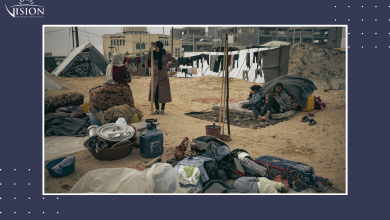
The large-scale destruction of Gaza’s food basket resulted in catastrophic economic consequences affecting all aspects of life and further exacerbating the fragility of the local economy, which heavily depends on agriculture and food production. As productive capacity contracted and supply chains collapsed, farming households and Gaza’s population at large faced direct exposure to hunger, shrinking employment opportunities, and rising living costs.
As cultivated vegetable areas declined from 85,000 dunums before the war to only 7,000 dunums, representing the loss of approximately 78,000 dunums of agricultural land, production volume fell from 405,192 tons to 48,623 tons, a loss exceeding 356,000 tons[5].
The reduction in the number of cultivated vegetable varieties from 40 to only 17 resulted in estimated financial losses of USD 236 million in local production and USD 66 million in exports, bringing total losses to USD 268 million[6].
Thousands of farmers lost their livelihoods due to systematic land-levelling and destruction, with the number of workers in the agricultural sector previously estimated at around 55,000. This coincided with the destruction and shutdown of local food-processing factories dependent on Gaza-produced crops and the collapse of agricultural exports to zero, particularly high-value crops such as strawberries and vegetables.
These developments contributed to rising unemployment rates and deeper dependence on humanitarian aid. According to the Palestinian Central Bureau of Statistics, unemployment in the Gaza Strip rose to approximately 68% in the fourth quarter of 2024, compared to about 45% in the third quarter of 2023 before the assault began on 7 October 2023.
The State of the Agricultural Sector After the Cessation of the War
The cessation of hostilities on 9 October 2025 did not lead to a tangible improvement in the condition of the agricultural sector. The effects of destruction inflicted by occupation forces continue to weigh heavily on Gaza’s land. At the same time, Israel has continued to violate the ceasefire agreement and prevent the entry of reconstruction materials, goods, and aid. The most dangerous factor affecting the agricultural sector, however, is the so-called “yellow line,” which estimates suggest extends between 2 and 7 kilometres into Gaza, placing vast civilian and agricultural areas under direct Israeli military control. More alarming is that the occupation has repeatedly shifted the markers of the yellow line westward, while continuing efforts to depopulate areas adjacent to it on the western side.
This yellow line has had a particularly profound impact on agriculture, as most agricultural land lies in the eastern areas of the Gaza Strip adjacent to the lands of 1948, extending several kilometres westward, precisely the area now under Israeli control behind the yellow line. A report by the Israeli legal organization Gisha indicates that the yellow line places approximately 57.8% of Gaza’s total area under direct Israeli control, leaving only about 42% of the land outside areas effectively controlled by Israel.
As a result, more than 50% of agricultural land now lies within or behind the yellow line, removing approximately 90,000 dunums from agricultural use due to access restrictions and military control. These affected lands are distributed as follows: around 30,000 dunums in the eastern central areas of the Strip, 35,000 dunums in the north, and 25,000 dunums in Rafah governorate in the south. The remaining agricultural land outside the yellow line produces enough to meet only about 5% of Gaza’s food needs.
Conclusion
Given the political and strategic dimensions of the destruction of Gaza’s food basket, it cannot be separated from its function as a tool within the genocidal machinery, but rather constitutes part of a systematic economic war aimed at undermining population resilience, forcing displacement from border agricultural areas, manufacturing food insecurity, and strengthening Israeli control over food resources, and weakening the population’s capacity to withstand livelihood pressures. It also serves as a precursor to imposing forced demographic or political changes through policies of starvation and agricultural destruction.
Accordingly, the recovery of Gaza’s agricultural sector requires a comprehensive approach that integrates physical rehabilitation with policies empowering farmers, providing sustained technical and financial support, ensuring freedom of access to agricultural resources, and strengthening legal protection for agriculture as a civilian component protected under international humanitarian law.
[1] Interview with Mohammed Abu Odeh, spokesperson for the Ministry of Agriculture in Gaza, on 23 February 2025.
[2] Plant production is limited to crops produced by the land, such as vegetables and fruits.
[3] It is a comprehensive concept that includes all outputs of agricultural activity, including crop production and animal production such as meat, dairy, poultry and fish.
[4] Previous source.
[5] Interview with Mohammed Abu Odeh, spokesperson for the Ministry of Agriculture in Gaza, on 23 February 2025.
[6] Previous source.
NOTE: This text is adapted from original Arabic article.