The Second Phase of the Agreement to End the Gaza Genocide: The Israeli Perspective and Options for the Resistance

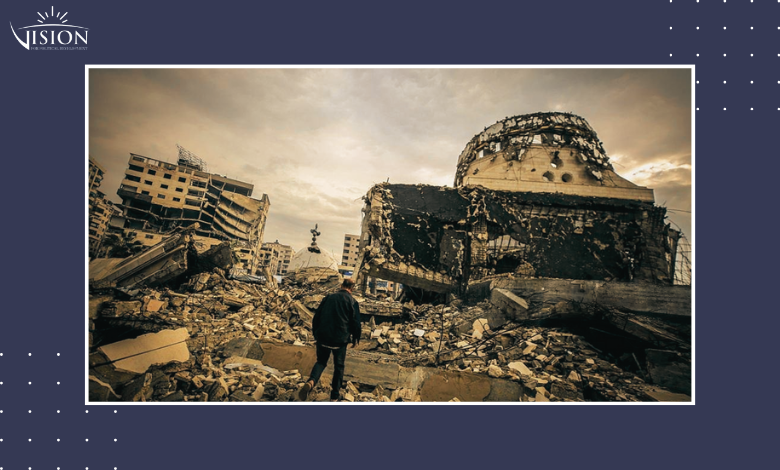
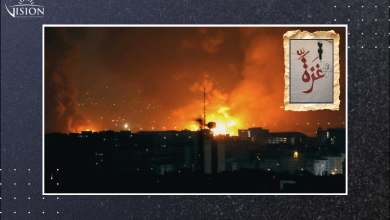
Israel is deliberately delaying the implementation of its commitments under the agreement to end the genocide on Gaza, based on US President Donald Trump’s plan. In addition to continuing its violations and expanding the yellow line controlled by the occupation army, Israel is working hard to obstruct the transition to the second phase. It is even attempting to impose a unilateral reality by announcing its intention to open the Rafah crossing in one direction for the residents of the Gaza Strip to leave, as well as setting conditions regarding the form, nature, and tasks of the planned international stabilization force.
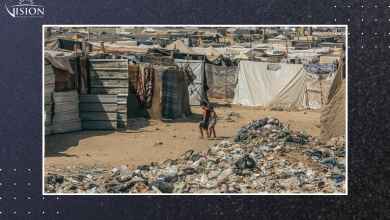
In return, the Palestinian resistance committed to everything required of it in the first phase, and handed over all Israeli prisoners, both living and dead, with the exception of the body of one Israeli policeman, despite the limited capabilities and poor field conditions associated with the search for the bodies of prisoners in the Gaza Strip.
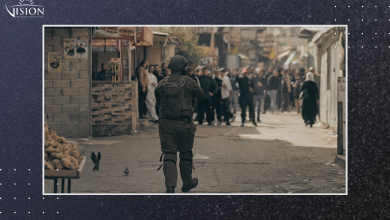
Israel’s procrastination comes amid US talk of ongoing preparations for the end of this year to announce the transition to the second phase of the agreement and the formation of a peace council headed by Trump, along with the formation of an International Peace Force. This raises serious questions about the fate of the agreement in the event of Israeli non-compliance and attempts to impose a reality on the Palestinian resistance that differs from what was agreed upon.
The Vision Center for Political Development in Istanbul elicited the opinions of a number of political experts in order to understand the Israeli perspective on the future of the agreement, specifically the transition to its second phase, the nature of the role that mediators can play in ensuring the implementation of the agreement, and the options available to the resistance in light of this complexity.
Opinions were reviewed through the following topics and questions:
- How can we understand Israel’s behaviour regarding the transition to the second phase of ending the genocide, and what are the scenarios for a future agreement?
- What role can mediators and guarantors play in the transition to the second phase? Can Egypt and the mediating countries succeed in activating the Gaza Management Committee?
- How realistic are Israel’s options on the ground with regard to creating two models in Gaza: a developed area under occupation and a deprived area under Hamas control?
- What options do Hamas and the resistance have to prevent a return to war or manipulation of the stages of the agreement?
The experts’ opinions can be summarized as follows:
- The Israeli perspective is based on three determinants: the first is the internal coalition of the government, represented by pressure from the extreme right and threats to its survival. The second is negotiation calculations, based on remaining within the yellow line and linking this to the withdrawal of resistance weapons. The third is structural colonial calculations, based on a new equation of preventing the existence of a viable Palestinian entity in exchange for long-term security and economic control.
- Israel fears that the transition to the second phase will lead to a complete commitment to ending the genocide, which contradicts its strategic vision based on the principle of evacuating the area through forced displacement.
- Israel continues to adhere to the military path in Gaza within a regional context that extends to the Lebanese front or escalation with Iran, which means that Israel is not yet ready to reach a comprehensive political settlement.
- The US desire to pacify the region is strong, and therefore the role of mediators is crucial in shaping Netanyahu’s future behaviour towards returning to war or committing to the terms of the agreement.
- The influence of mediators depends specifically on US political will. So far, there has been no US willingness to force Israel to fully commit to ending the genocide, as evidenced by the scale of Israeli violations and its failure to fulfil all the requirements of the first phase.
- Proposals for the geographical division of Gaza (green or red zones) are being used as a political card to keep the situation in limbo. This is because the implementation of these proposals faces complex challenges, most notably the social structure of the Gaza Strip’s population, Egyptian rejection, time constraints, and the need for huge funding to cover the financial costs.
- The scenario of a return to the form of war that prevailed over the past two years is no longer on the table. The resistance has decided not to respond to Israel’s provocations. However, attention must be paid to the motives of Netanyahu and the extreme right, who continue to seek justifications for prolonging the conflict.
- The best option for Hamas and the resistance at this stage is Palestinian consensus, achieved by striking a balance between forming a committee to administer Gaza, acquiring the tools to address the world in terms of interests and stability in the Middle East, and restoring international pressure to force the US and Israel to follow the political path and implement the terms of the agreement without returning to genocide.
- Ahmed Al-Tanani, writer and researcher in political affairs, Gaza
- Hassan Lafi, researcher and specialist in Israeli affairs, Gaza
- Shadi Al-Sharafa, academic and specialist in Israeli affairs, Jerusalem
- Raed Nairat, professor of political science, An-Najah National University, Nablus
- Ayman Youssef, professor of political science, American University, Jenin
- Yasser Abu Hein, writer and political analyst, Gaza
NOTE: This text is adapted from original Arabic article.