The Reality in the Gaza Strip: The Genocide has Paused, but the Annihilation Continues


On October 10, 2025, U.S. President Donald Trump announced a ceasefire agreement between Hamas and the Israeli occupation, mediated by Egypt, Qatar, and Turkey, and sponsored by the United States, under which large-scale military operations in the Gaza Strip came to a halt. With the start of the first phase of the agreement, which included a prisoner exchange and lasted for more than two months, contrary to what the text of the agreement had suggested, an impression emerged that the war in Gaza had ended for good. This perception was reinforced by images circulated from Gaza showing a limited return of some aspects of daily life and the partial rehabilitation of certain health, educational, and other facilities.
However, the reality on the ground is entirely different. While the war in its most violent and extreme form may have ceased, the genocide and its mechanisms have continued without interruption, and the dangers endured by the population have only intensified over time.
Since the ceasefire came into effect, the Israeli occupation army has continued to kill Gazans, injure and detain others, and fabricate pretexts to carry out assassinations and targeted killings of resistance cadres it failed to eliminate during the height of the war. At the same time, the occupation continues to close border crossings, pursue systematic policies of forcible displacement and siege, restrict the movement of people, and block humanitarian relief. As a result, the tempo of killing has shifted from rapid to slow, away from the sight and hearing of a world that has turned its cameras and screens away from Gaza and toward other regions, in an attempt to give the impression that the genocide in the Gaza Strip has ended. This aligns with Israel’s objectives behind the ceasefire, including reducing international attention so that the assault can continue uninterrupted, and imposing a bloody hegemony extending from Gaza to the West Bank, Syria, and Lebanon, according to The Guardian.
The United Nations Special Rapporteur on the situation of human rights in the occupied Palestinian territory, Francesca Albanese, stated that what is described as a ceasefire in Gaza “essentially does not exist,” arguing that what is taking place is an ongoing genocide by other means, in the absence of any Israeli intention to relinquish control over the Strip, and with the complicity of international governments providing political cover. She added that what has been marketed globally as a peace plan is little more than a pretext to halt international pressure and avoid genuine engagement with Gaza.
This report examines the multiple dimensions of the ongoing genocide in the Gaza Strip, which cannot be viewed merely as violations of the ceasefire, but rather as a comprehensive policy aimed at achieving two objectives: extermination and displacement. These two goals have accompanied the genocidal war since its very first day, taking into account the repeated statements by a number of occupation leaders threatening a return to war.
The Legal Characterization of the Continuation of Genocide
This paper is based on the premise that genocide is still ongoing in the Gaza Strip despite the cessation of the war. This argument rests on the data and realities imposed by the Israeli occupation on the ground in Gaza. Referring back to the , what is currently taking place in Gaza following the ceasefire almost entirely corresponds to the acts that, under the Convention, constitute the practice of genocide. These acts and crimes include:
- Killing members of the group.
- Causing serious bodily or mental harm to members of the group.
- Deliberately inflicting on the group conditions of life calculated to bring about its physical destruction in whole or in part.
- Imposing measures intended to prevent births within the group.
- Forcibly transferring children of the group to another group.
When these provisions of the Convention are applied to the realities in the Gaza Strip, they are found to correspond with several of them. The continuation of the siege and the prevention of food and medicine fall within the framework of “imposing lethal living conditions.” Likewise, the widespread forcible displacement that continues to escalate in Gaza is classified as a war crime and may also fall within the scope of genocide. Furthermore, the targeting of civilian infrastructure and housing, and the obstruction of their reconstruction, render life fundamentally unviable.
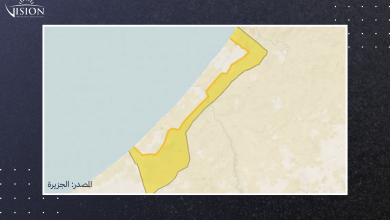
These realities are accompanied by statements from Israeli military and political leaders threatening a return to war on the Gaza Strip. During a tour by Israeli Chief of Staff Eyal Zamir in the northern Gaza Strip on December 7, he stated that the “Yellow Line” represents the new border with Gaza. This indicates an intention to retain occupation over more than half of the Gaza Strip’s territory, an occupation that is geographically expanding and contributes to displacement and the crowding of hundreds of thousands of people into a narrow, devastated area. This, in turn, contributes to the attrition and weakening of the “human community,” in a manner reminiscent of detention camps. Zamir added that there is a possibility of a sudden war, and although he did not specify the front on which such a war might occur, there have been successive threats from several occupation leaders, including Israeli Prime Minister Benjamin Netanyahu, who stated: “Hamas will be disarmed, either the easy way or the hard way.”
In addition, genocidal rhetoric is widespread within Israeli society. The onset of winter has enabled the reemergence of this discourse in Israeli media, to the extent that certain media outlets, such as Channel 14, have openly expressed ‘unabashed approval at the possibility of displaced persons’ tents in the Gaza Strip being flooded’. This indicates that the current conditions in Gaza, together with Israeli policies aimed at sustaining and worsening them, constitute a deliberate policy designed to perpetuate genocide and displacement.
The Reality of Genocide in the Gaza Strip During the Ceasefire
First: Continuation of Military Operations
As soon as the ceasefire agreement in the Gaza Strip was announced, television cameras and various media platforms shifted to covering general news here and political developments there, while military operations continued in areas classified as “safe,” or referred to as the “green zone,” behind the “Yellow Line.” The problem here is that the systematic destruction taking place behind the Yellow Line is being treated as if it were insignificant, despite the fact that this area constitutes nearly 60% of the total area of the Strip.
A report by the research group Forensic Architecture revealed a discrepancy between the boundaries of the Yellow Line and the locations of the yellow concrete blocks placed by the occupation army to demarcate it. The report showed that all 27 blocks are located outside the boundaries officially declared by the occupation army and extend up to 940 meters into areas where the Israeli occupation army is not supposed to be present.
In this regard, Ramadan Abu Sukran[1], a resident of the Shuja‘iyya neighbourhood, stated that he had pitched his tent one and a quarter kilometres away from the temporary Yellow Line, but today it is only a quarter of a kilometre away, “which poses a threat to our lives”, in light of continuous gunfire from occupation cranes, snipers, and tanks, as well as drones (“quadcopters”) dropping bombs and firing bullets toward displaced people. This is compounded by the advance of military vehicles and the detonation of booby-trapped vehicles, leading to the killing and injury of many civilians west of the Yellow Line.
The aforementioned report further indicated that, despite the ceasefire, the evidence shows that the Israeli occupation army continues to demolish homes and bulldoze land east of the Yellow Line, effectively transforming dispossession into actual displacement. West of the line, attacks on infrastructure persist, while reconstruction efforts are obstructed.
Recent satellite imagery also reveals an expansion of military positions along the Yellow Line since the ceasefire, with the occupation constructing roads, berms, and four new military sites amid the rubble of destroyed homes, reinforcing a long-term military presence.
On the other hand, more than two months after the ceasefire was announced, the Government Media Office[2] recorded approximately 738 violations of the ceasefire, including 205 incidents of direct gunfire at civilians, 37 incursions by occupation army vehicles that crossed the temporary Yellow Line, and 358 ground and aerial attacks. These resulted in the killing of 386 civilians and the injury of 980 others, in addition to the arrest of 43 people, up to the time of writing this report.
Second: Collapse of the Health System
Two months after the announcement of the ceasefire agreement, patients and the injured have experienced no noticeable improvement in the health situation in the Gaza Strip. Hospitals remain in a state of collapse, medicines are scarce, medical supplies are unavailable, and thousands of patients are still waiting for the opening of the Rafah Crossing in order to continue treatment outside the Strip.
On November 23, 2025, the Director General of the Ministry of Health in Gaza, Munir al-Barsh, wrote on his page on the X platform that the Israeli occupation is blocking the entry of medicines, intravenous fluids, antibiotics, dialysis machines, and surgical supplies. He added that hospitals are left without walls, operating rooms without equipment, medicines are rationed drop by drop, fuel is unavailable to operate generators, and there are no communications linking doctors with ambulance services, “leaving us in a daily struggle for survival with almost nonexistent tools.”
According to Dr. Munir al-Barsh, the Gaza Strip is suffering a health system collapse following the genocidal war and the ceasefire. He stated that 54% of essential medicines are unavailable within the Ministry of Health, 40% of emergency medicines are completely depleted, and there is a total shortage of 71% of medical supplies, the highest deficit in the history of the Gaza Strip. This has led to an increase in deaths that could have been prevented had basic treatments such as antibiotics or dialysis been available, in addition to the spread of infectious diseases among displaced populations, especially amid severe overcrowding in camps and shelters, and the accumulation of waste and sewage in the streets.
According to the Director General of the Ministry of Health, the closure of border crossings to patients has resulted in the deaths of 1,000 patients who were awaiting treatment abroad despite possessing official documentation. Meanwhile, 18,100 patients are still waiting to travel for medical care, leaving their lives suspended by a political decision rather than a medical one. Moreover, nearly 6,000 people have undergone amputations without access to rehabilitation programs, alongside the absence of even the most basic painkillers in the Gaza Strip.
Third: Food Insecurity
With regard to the starvation policy imposed by the occupying power on the Gaza Strip the core of the food security crisis remains unchanged and has seen no substantive improvement. The occupation has not lifted the siege due to its continued closure of border crossings, nor has it complied with facilitating the flow of food supply chains. The limited supplies that do enter are extremely scarce and insufficient, resulting in the continued suffering of children and pregnant women from malnutrition. The United Nations Children’s Fund (UNICEF) announced that approximately 9,300 cases of acute malnutrition were recorded among children under the age of five in the Gaza Strip during October 2025. The World Food Programme stated that around 640,000 people are living under famine conditions, while 132,000 children are at risk of death due to acute malnutrition.
For its part, the Palestinian Ministry of Health reported that 82% of children in Gaza under one year of age suffer from anaemia. Meanwhile, the number of deaths caused by starvation and malnutrition since 7 October 2023 up to the time of writing this report has reached 475, including 165 children, two of whom died after the ceasefire was announced on 10 October 2025[3].
The Director General of the Government Media Office, Ismail Al-Thawabta[4], argues that the current conditions do not constitute a “humanitarian calm,” but rather an extension of the starvation policy imposed by the Israeli occupation, which has now become an established and tragic reality. Rates of acute malnutrition among children and pregnant women are rising dramatically, while limited and irregular aid fails to meet basic needs, constituting a direct violation of the Fourth Geneva Convention and international humanitarian law. He added that the number of aid trucks entering Gaza is extremely small compared to actual needs: “Over the past two months, only 13,511 trucks have entered out of a scheduled 36,000, with a daily average of just 226 trucks instead of the required 600 per day, representing only 36% compliance. This means that starvation continues to be used as a systematic weapon of war.”
Furthermore, since the beginning of the genocidal onslaught in the Gaza Strip, the Israeli army has deliberately prevented the entry of essential components of normal life, including high-nutritional-value food items, according to the head of the Gaza Chamber of Commerce and Industry, Ayed Abu Ramadan. The occupation prohibits the entry of foodstuffs such as eggs, poultry, meat of all kinds, dairy products, vegetables, and fruits, foods that provide proteins, fiber, and vitamins essential for mitigating the accumulated effects of malnutrition among Gaza’s population. Meanwhile, it allows the entry of secondary food items such as sweets, biscuits, instant noodles, instant coffee, and similar products that have little to no nutritional value and, in the long term, are more harmful to public health than beneficial, even in the short term[5].
Even these secondary food items are subject to monopolization by war profiteers, who raise prices to such an extent that inflation has reached 150%, effectively preventing most families from purchasing them. As a result of the genocidal war, the poverty rate in the Gaza Strip has reached 100%[6].
Accordingly, the aforementioned data and indicators point to the failure of relief mechanisms under the ongoing Israeli siege and confirm that the ceasefire has not halted the trajectory of chronic starvation as a continuing crime.
Fourth: Mass Displacement Without Return
Thousands of displaced persons who had been forcibly uprooted by the Israeli army returned to their residential areas or nearby locations close to the temporary “yellow line”, immediately following the announcement of the ceasefire agreement 60 days ago. However, the Israeli occupation has left these displaced persons with no possibility of stability, even in destroyed homes or deteriorating tents. Attacks continued through live fire and bombs launched from “quadcopter” drones, military incursions, and the placement of explosive-laden vehicles near civilian homes. This was followed, as previously mentioned, by changes to the locations of the yellow concrete blocks marking the so-called “yellow line,” triggering new waves of displacement, particularly from the neighbourhoods of Al-Tuffah and Al-Shuja’iyya in eastern Gaza City toward Al-Daraj, Al-Nasr, and other areas in the city center.
This reflects the continued enforcement of “safe zones” and “restricted danger zones,” which obstruct civilian stability in the Gaza Strip and render residents effectively imprisoned in collective detention camps.
In this context, the United Nations Office for the Coordination of Humanitarian Affairs in the occupied Palestinian territory (OCHA) recorded 135,000 cases of forced displacement across the Gaza Strip between the implementation of the ceasefire on 10 October and 2 December 2025. The Israeli occupation continues to impose what may be described as a “displacement engineering” strategy that renders entire areas uninhabitable and prevents residents from returning to their homes. This constitutes a clear violation of the Geneva Conventions and is classified as a war crime and forcible transfer, adding to the ongoing crimes of genocide[7].
Fifth: Destruction of Basic Infrastructure
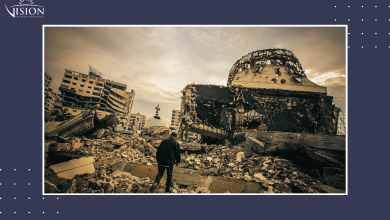
Basic infrastructure in the Gaza Strip remains extensively destroyed. The scale of destruction to homes, buildings, and roads is enormous, leaving hundreds of thousands without adequate permanent shelter. The urban landscape has undergone a radical transformation, and essential services have completely collapsed. Hospitals and health centers, schools, water, electricity, and telecommunications networks are either destroyed or nonfunctional. Sewage treatment facilities are unable to operate, and educational services are suspended or severely limited.
The Israeli army has destroyed 90% of civilian infrastructure, rendering 38 hospitals, dozens of health centers, and ambulances inoperable. It has also destroyed 670 schools and 165 universities and higher education institutes, along with most vital sectors in the Gaza Strip, whose initial losses are estimated at $70 billion[8].
In this regard, the Deputy Spokesperson for the UN Secretary-General, Farhan Haq, stated that the United Nations Satellite Centre recorded damage to 81% of buildings in the Gaza Strip. The French newspaper Le Monde reported that its Jerusalem correspondent, Luc Bronner, entered Gaza City accompanied by an Israeli military convoy during a rare three-hour visit, revealing unprecedented levels of destruction after entering areas that had been almost completely demolished by bombardment and bulldozers and were entirely devoid of residents.
Accordingly, Gaza’s basic infrastructure remains entirely collapsed due to the occupation’s obstruction and refusal to allow the entry of materials necessary for reconstruction, which it arbitrarily classifies as “dual-use,” despite their purely civilian nature, such as toilet seats and essential construction materials. This deepens the crisis and prevents any process of rehabilitation or reconstruction[9].
Restrictions on fuel and energy supplies also continue, paralyzing hospitals, water facilities, sewage systems, and desalination plants. Thus, the ceasefire has not altered the reality of destruction, as the occupation has maintained the same structural mechanisms that render Gaza uninhabitable.
Conclusion
Despite the cessation of large-scale military operations in the Gaza Strip, genocide, both in its legal and human dimensions, continues. Killings, destruction, and the forced displacement of residents in eastern areas persist, alongside the ongoing siege and closure of border crossings. The occupation also continues to engineer starvation through the deliberate erosion of food and health security, depriving civilians of the most basic necessities for survival, in full view of the mediating and guarantor states of the ceasefire agreement. As such, genocide has shifted from a rapid to a slow pace, unfolding before the eyes and ears of the entire world.
[1] Interview conducted by the researcher with Ramadan Abu Sukran on December 5, 2025.
[2] Government Media Office, November 2025, Press Release No. 1026.
[3] Interview conducted by the researcher with Zahir Al-Wahidi, Director of the Information Center at the Ministry of Health, on December 16, 2025.
[4] Interview conducted by the researcher with Ismail al-Thawabta, previous reference.
[5] Interview conducted by the researcher with the President of the Gaza Chamber of Commerce and Industry, Ayed Abu Ramadan, on December 17, 2025.
[6] Ibid.
[7] Interview conducted by the researcher with Ismail al-Thawabta, previous reference.
[8] Government Media Office, October 2025, Press Release No. 1000.
[9] Interview conducted by the researcher with Ismail al-Thawabta, previous reference.
NOTE: This text is adapted from original Arabic article.