The Israeli–Greek–Cypriot Alliance: A Policy of Containment Toward Turkey

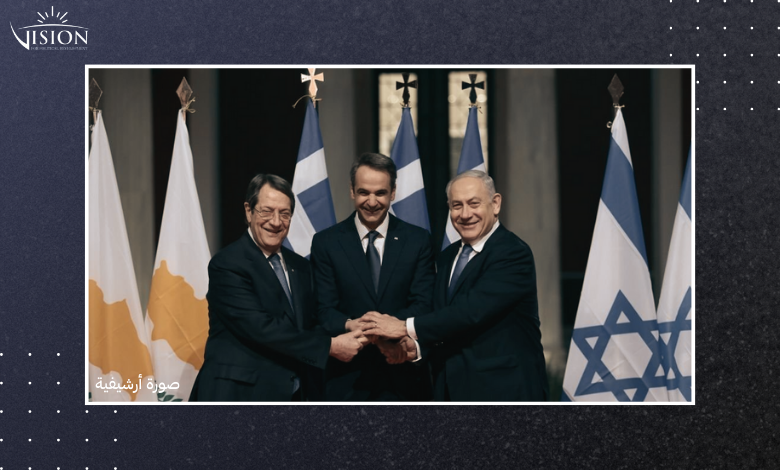
The escalation of Israeli–Turkish tensions cannot be separated from the qualitative shift in Israel’s relations with both Greece and Cyprus. This rapprochement with Ankara’s regional rivals has moved beyond the logic of sectoral cooperation to assume a broader strategic character, with a particular focus on cooperation in defense, security, and military affairs. This shift was clearly manifested in the trilateral summit held in Jerusalem on 22 December 2025 and in the accompanying official statements, which conveyed indirect political and security deterrence messages directed at Ankara.
This article examines this alliance through the lens of Israeli interests and to understand the contexts shaping what “Israel” describes as Turkish risks, in light of what Israeli decision-makers perceive as a growing linkage between developments in Syria and their spillover into the Mediterranean and other regional arenas. This is situated within a broader reconfiguration of regional power equations and alliance structures following 2023.
The Discourse of “Empires” and the Reproduction of the “Threat Narrative”
Following October 2023, tensions between Turkey and “Israel” have no longer been confined to political disagreements over Israel’s genocidal onslaught on the Strip. Rather, they have taken on a deeper dimension linked to Israel’s redefinition of the sources of regional threat. Within Israeli discourse, a new ideological-political framing of Turkey’s role has begun to take shape, promoting notions such as the “Sunni Crescent,” alleged Turkish neo-imperial ambitions, or what is commonly termed “neo-Ottomanism.” This is despite the absence of objective evidence for the existence of a Turkish project of regional hegemony, at least in the manner portrayed by the Israeli narrative. This indicates that such discourse serves a political-strategic function: it seeks to reorder regional threat priorities and to justify the expansion of Israel’s alliance network, particularly with Greece and Cyprus, without engaging in direct confrontation with Ankara.
This shift reached its peak at the Jerusalem trilateral summit, when Netanyahu stated during the joint press conference with the prime ministers of Greece and Cyprus: “As for those who dream of rebuilding their empires and taking control of our lands, I say: forget it. It will not happen. We are capable of defending ourselves, and our cooperation strengthens that capability.” Through this statement, Netanyahu clearly signalled an Israeli policy aimed at “constraining Turkey’s role.” His remarks reflect a transformation in Israeli political language, from managing contingent disputes to offering a structural characterization of Turkish influence as an expansionist project that must be deterred politically and militarily.
This narrative rests on the construction of an alternative threat, whereby “Israel” now views Turkey as the rising danger following the decline of what is known as the “Shiite Crescent,” after the weakening of Iran’s influence and that of its allies, the unravelling of the “unity of arenas” equation, and the collapse of the former Syrian regime. Having become confident that it has neutralized the immediate Iranian threat in its surrounding arenas, “Israel” has been able to reorder its priorities, shifting from confronting Iranian influence to monitoring other regional powers capable of shaping post-war balances, foremost among them Turkey.
Thus, within Israeli political and security discourse, particularly during 2025, Turkey began to be portrayed as a rising regional actor seeking to expand its geopolitical and military influence across multiple arenas, thereby creating, from the Israeli perspective, a long-term challenge to existing power equations. In January 2025, the government-appointed “Nagel Committee” warned that the emergence of a Sunni force in Syria backed by Turkey could constitute a new threat to Israel’s security, no less serious than the previous Iranian threat, and recommended that Netanyahu prepare for a potential war with Turkey. In April 2025, Yedioth Ahronoth published a military analysis expressing concerns about Turkey’s ability to fill the vacuum in Syria and to form an alternative “Sunni Islamic axis” to the Shiite Crescent, pointing to security threats linked to Turkish influence and Sunni dominance in parts of Syria as a substitute for former Shiite influence.
Within this context, portraying Turkey as a regional threat, as discussed in the Knesset in December 2025, becomes a tool for reshaping the threat environment surrounding “Israel,” justifying its moves in the Eastern Mediterranean, and strengthening its alliance with Greece and Cyprus as a defensive and pre-emptive network against an influence depicted as expansionist. Accordingly, Israeli-Turkish tensions after the Gaza war appear as part of Israel’s broader redefinition of its regional threat landscape and its efforts to confront Turkey’s multifaceted influence through diplomatic and alliance-based instruments and security narratives.
Israeli-Turkish Tensions After 2023: Security and Regional Influence
“Israel” views the so-called “Turkish threat” as a phenomenon of expanding regional influence that extends across multiple arenas, including Syria, the Eastern Mediterranean, Libya, the Horn of Africa, and the Red Sea, and most recently Turkey’s attempts to enter the Gaza arena. This Israeli narrative can be traced through official positions, diplomatic moves, and security policies adopted by “Israel” to confront what it portrays as Turkish expansionism.
First: Rejection of a Turkish Role in Gaza
One of the most prominent manifestations of escalating Israeli-Turkish tensions is Israel’s rejection of any Turkish participation in the proposed international force to monitor a ceasefire in Gaza. In official statements on 27 October 2025, Israeli Foreign Minister Gideon Sa’ar indicated that Turkey was not among the acceptable countries due to its “hostile” positions toward Israeli policies. Prime Minister Benjamin Netanyahu likewise affirmed his opposition to any Turkish role in Gaza, stating that “Israel” alone would decide who is permitted to deploy forces in the Strip. This reflects Israeli concerns that any Turkish presence in Gaza could evolve into a permanent platform of political and security influence in the Palestinian arena. This position goes beyond political disagreement to encompass control over the Palestinian security domain, as “Israel” insists on monopolizing the determination of which actors may influence post-war arrangements, while viewing Turkey as a potential competitor for this role, particularly given its relations with Islamic groups such as Hamas and its growing political and diplomatic involvement in the Palestinian conflict with the occupation.
Israeli-Turkish relations had already experienced heightened tension following the outbreak of the war, as Turkey adopted a stance opposing Israeli policies in Gaza. This included suspending energy cooperation with “Israel” in October 2023, halting all forms of trade in May 2024, and fully severing diplomatic relations in November 2024. In August 2024, Turkey announced its accession to South Africa’s genocide case against “Israel,” and a year later formally severed economic relations and closed its airspace and ports to “Israel.” This marked a turning point in the pragmatism that had previously characterized bilateral relations, as Ankara moved from political rhetoric to legal confrontation with Israel at the international level.
Second: Syria as a Central Arena in Israeli Calculations
In 2025, the scope of Israeli-Turkish tension expanded to include Syria, where “Israel” linked any potential expansion of the Turkish role to a direct threat to its military and security freedom of action. Israel viewed the growing Turkish influence as a possible for the former Iranian presence, potentially transforming Syria into a “Turkish sphere of influence” whose effects would extend to the Eastern Mediterranean, constrain Israeli manoeuvrability in Syrian depth, and reshape the deterrence environment in the north.
Reports cited Israeli officials expressing concern that Ankara might turn Syria into what they described as a “Turkish protectorate.” Reuters reported in April 2025 that “Israel” had informed Turkey of its rejection of any attempt to establish Turkish military bases in Syria, particularly in strategic areas such as Palmyra, describing this as a “red line.” This coincided with Israeli strikes on Hama airport and the T4 airbase in March 2025, intended to signal that “Israel” would not allow any infringement on its freedom of aerial operations.
In response, Turkish Foreign Minister Hakan Fidan stated in April 2025 that his country was keen to avoid direct confrontation with “Israel,” while criticizing Israeli strikes in Syria as undermining regional stability.
Accordingly, Israel’s rejection of the expansion of Turkish influence or role in Syria forms part of a broader reshaping of its threat narrative following the decline of the “Shiite Crescent,” with Turkey viewed as a rising and potentially expansionist regional power that must be monitored and contained to ensure Israeli operational freedom and to stabilize regional power balances in the aftermath of the Gaza war and its repercussions.
In addition, there is a geopolitical reading linked to the possibility of a Turkish–Syrian maritime boundary agreement. Previous experiences such as the 2019 Turkey-Libya maritime delimitation agreement, are seen as cautionary precedents in the region, having provoked widespread objections from Mediterranean states because of their potential to redraw maritime power maps. On this basis, “Israel” believes that any Turkish-Syrian agreement could create a new platform for Turkish influence in the Eastern Mediterranean and undermine Israel’s strategic position as an energy actor, opening the door to maritime arrangements that are incompatible with existing regional balances.
Third: Libya, the Horn of Africa, and the Red Sea
Israel’s rejection of Turkish influence goes beyond the immediate Levant to include strategic regions such as Libya and the Horn of Africa. In Israel, Turkey’s role and military and naval presence in Libya since the signing of the Ankara-Tripoli agreement in December 2019 are viewed as a threat to Israel and to the stability of the Eastern Mediterranean, particularly in the areas of energy and maritime boundary delimitation. The Israeli Ministry of Foreign Affairs declared the agreement “illegal,” arguing that it negatively affects energy arrangements and maritime borders in the region.
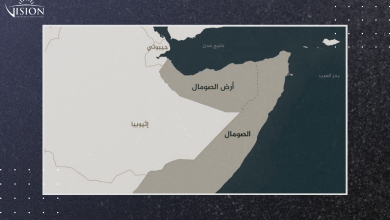
In the Horn of Africa, a new dimension of indirect tension with Turkey has emerged. On 26 December 2025, “Israel” announced its recognition of Somaliland as an independent state, becoming the first country to grant it official recognition and establishing full diplomatic relations with it. This decision sparked widespread Arab and African objections, while Turkish President Recep Tayyip Erdoğan described the recognition as “illegal and unacceptable,” stressing that preserving Somalia’s territorial integrity is a strategic priority for Turkey. One interpretation of this Israeli move is that it represents an attempt to Turkey’s growing influence in the region and its surrounding maritime space, within an expanded vision of redrawing regional power lines after the Gaza war and its repercussions extending into the Red Sea.
Accordingly, this development demonstrates that Israeli-Turkish tensions after the Gaza war are no longer confined to the Levant and the Eastern Mediterranean, but into new strategic arenas, where “Israel” employs diverse tools to balance and monitor Turkish military and economic expansion, and to establish deterrence spaces without entering into direct confrontation.
The Eastern Mediterranean After 2023
First: Accelerating Moves and the Redefinition of Alliances
The tension between “Israel” and Turkey coincided with the intensification of Israeli-Greek-Cypriot relations in 2025, expanding coordination frameworks from economic to security-diplomatic dimensions. On 13 March 2025, the foreign ministers of “Israel,” Greece, and Cyprus met in Athens to discuss regional cooperation and shared challenges. On 30 March 2025, Netanyahu’s meeting with the Greek prime minister in Jerusalem reaffirmed the depth of the strategic partnership between the two sides and included discussions on strengthening military relations and reviewing regional developments in the Eastern Mediterranean and Syria.
The Delphi Economic Forum in April 2025 further demonstrated the three states’ commitment to deepening security cooperation, moving beyond economic issues such as gas and energy to broader geopolitical dimensions. At the level of international coordination, May 2025 witnessed attempts to reactivate the “3+1” mechanism (Israel–Greece–Cyprus–United States) after a period of stagnation following the setback of the EastMed pipeline project, reflecting a desire to expand the umbrella of international coordination.
In September 2025, “Israel” delivered the Barak MX air defense system to Cyprus, a move viewed as strengthening joint deterrence capabilities against any potential aerial or missile threat. In parallel, Turkey and Egypt conducted joint naval exercises in the Eastern Mediterranean under the name “Sea of Friendship” for the first time in more than a decade, signalling rapprochement between them. This development raised Israeli concerns due to its implications for expanding Turkey’s and Egypt’s maritime and political manoeuvring space at a time when Israeli threats toward both states were increasing, and because of its connection to broader naval power competition in the region.
Amid these developments, the trilateral summit between Netanyahu, the Greek prime minister, and the Cypriot president on 22 December 2025 reaffirmed the security-strategic alliance among the three countries. They announced the expansion of military and security cooperation, with Netanyahu confirming that “Israel has agreed to enhance security cooperation with Greece and Cyprus.” A few days later, the Israeli military announced the signing of a trilateral military cooperation action plan for 2026, including joint military activities such as training, exercises, and strategic dialogue.
This was accompanied by Israeli reports discussing the study of establishing a “joint intervention force” consisting of 2,500 troops from the three countries, aimed at enhancing military cooperation in the Eastern Mediterranean. Although this idea remained, according to Israeli sources, at the planning stage without moving to implementation, the very proposal reflects a qualitative shift in security thinking and a move from political alliance toward exploring practical deterrence tools and mechanisms.
Second: The Trilateral Alliance as a Policy of Containment
The growing alliance between “Israel,” Greece, and Cyprus cannot be understood merely as a technical response to energy issues or as limited defense cooperation. Rather, it should be seen as part of a deliberate Israeli policy to contain Turkish influence, in light of what “Israel” considers a transformation in the regional threat map after 2023. This approach draws on historical tensions in the Eastern Mediterranean to achieve strategic balancing without direct confrontation.
The roots of Eastern Mediterranean disputes lie in longstanding conflicts over maritime sovereignty, territorial waters, and continental shelves among Turkey, Greece, and Cyprus. The Turkish–Greek dispute over the Aegean Sea, islands, and airspace has formed the core of this tension since the mid-twentieth century. Greece has insisted on viewing the islands as full extensions of its maritime sovereignty, while Turkey has rejected this position, considering it an infringement on its maritime rights, particularly near its western coasts. This dispute culminated sharply in the Imia/Kardak crisis of 1996, when tensions between Ankara and Athens escalated to the brink of military confrontation before U.S. mediation intervened. Although the crisis did not resolve the underlying causes, it established a pattern of managed escalation that continued in subsequent decades and resurfaced during the 2021 crises, when Turkey dispatched the research vessel Oruç Reis for seismic surveys in disputed areas, prompting Greece to raise its military readiness and strengthen defense partnerships, including with “Israel.”
At the same time, Cyprus constituted the second geopolitical node of dispute between the two countries, particularly after the island’s division in 1974 into a Turkish northern part and a Greek southern part, and the resulting conflict over “Exclusive Economic Zones.” The discovery of major gas fields between 2009 and 2011, such as Tamar, Leviathan, and Aphrodite, revived these tensions. Cyprus, Greece, and “Israel” sought to secure investments and build export routes to Europe via Egypt and Greece, while Turkey viewed these arrangements as an attempt to exclude it from the energy equation and impose strategic encirclement on its maritime interests.
Within this context, “Israel” entered the Eastern Mediterranean arena relatively late, but in a qualitative manner, relying on gas discoveries and linking them to security, politics, and maritime influence. It built strategic partnerships and agreements with Greece, Cyprus, and Egypt to secure export routes and enhance its regional presence, alongside projects such as the EastMed pipeline and electrical interconnections. This trajectory was further consolidated with the establishment of the Eastern Mediterranean Gas Forum in 2019–2020, involving Egypt, Jordan, Cyprus, Greece, and “Israel,” without Turkey’s participation, reinforcing Ankara’s sense of exclusion.
Accordingly, “Israel” leverages tensions between Turkey and both Greece and Cyprus to reorganize the surrounding regional space and create a strategic environment that renders any Turkish expansion more costly and less feasible. This approach aligns with a well-established pattern in Israeli strategic behaviour, known in Israeli literature as the “periphery doctrine,” which involves building alliances with actors on the peripheries of adversaries’ vital spaces to create a constraining geopolitical ring that limits the adversary’s freedom of action. In this sense, Israeli rapprochement with Greece and Cyprus represents a contemporary activation of this doctrine in the Eastern Mediterranean context. Rather than confronting Ankara directly in Syria or the Mediterranean, “Israel” applies pressure on the flanks of Turkish influence through economic arenas (energy and infrastructure), security domains (air defense, military and technological cooperation), and overt political coordination as a strategic message, thereby narrowing Turkey’s room for manoeuvre without declaring open hostility.
Within this framework, the trilateral alliance emerges as a dynamic containment mechanism that ensures the continuity of Israeli influence in the Eastern Mediterranean, particularly by positioning Greece and as pressure points on Turkey, without resorting to open confrontation. The alliance does not evolve into a traditional military pact or an explicit combat-oriented message, but rather into a multilayered deterrence network against what are perceived as advanced Turkish capabilities that could be used to impose favourable negotiating scenarios. The development of Turkish defensive and missile systems capable of countering aerial and naval threats has driven Greece and Cyprus to seek a partner able to fill air-defense and technological gaps, share intelligence, and coordinate joint military exercises, roles that “Israel” has been able to provide. Here, a clear Greek interest emerges in cooperation with “Israel” in air defense, not only to counter immediate threats but to raise the cost of any potential Turkish escalation in the shared strategic environment. Meanwhile, “Israel” finds in this cooperation an opportunity to influence Turkey’s calculations in the Eastern Mediterranean, to cement its position as a central actor in the region, and to transform its technological and military superiority into an instrument of regional influence.
Conclusion
The deterioration of Turkish–Israeli relations after 2023 reflects Israel’s shift from managing limited, sectoral disagreements to constructing a broader security narrative around Turkish influence, redefining Turkey as a “troubling” regional actor. This narrative is not based on a single event but is fed by multiple files across different arenas, where clashes between Turkish interests and Israeli objectives are reframed within the Israeli perception as a potential strategic threat. In this sense, Turkish influence in the post-Gaza war phase is reinterpreted through the intersection of developments in Syria, the Eastern Mediterranean, Libya, and the Horn of Africa, within a transitional regional moment in which “Israel” seeks to consolidate its gains and recalibrate power balances without sliding into direct confrontation.
Aware of the limits of direct conflict with Turkey-given its position within NATO and the entanglement of international interests surrounding it, “Israel” has adopted a non-confrontational approach centered on reengineering Turkey’s surrounding regional environment through alliance-building and coordination with Ankara’s traditional rivals in the Eastern Mediterranean. Consequently, tension with Ankara becomes part of a broader Israeli repositioning in the region, aimed at preventing the emergence of a regional actor capable of filling the void left by the decline of traditional adversaries (Iran and the “axis of resistance”) and at preserving Israel’s margin of superiority within a regional environment undergoing rapid transformation and reconfiguration.
NOTE: This text is adapted from original Arabic article.