Summary of Settlement and Occupation Army Violations During January 2026

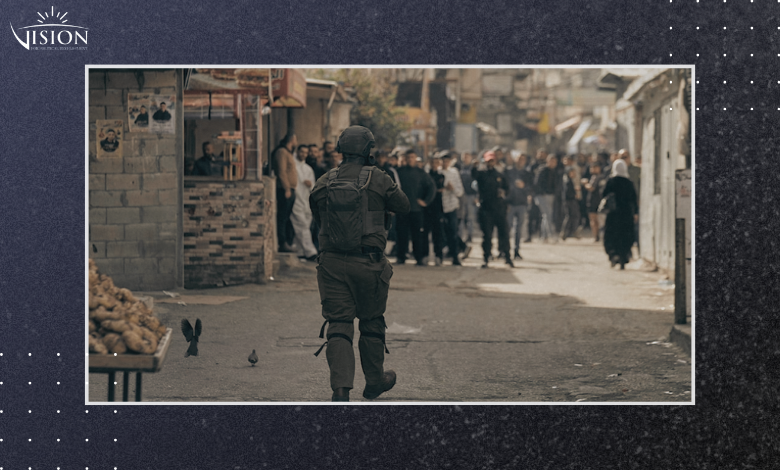
The data presented reveals a comprehensive scene of parallel escalation in Gaza and the West Bank, where the excessive use of military force intersects with policies aimed at reengineering Palestinian geography and demography. In Gaza, the pattern of large-scale targeting of civilians, destruction of residential infrastructure, and the imposition of coercive realities under the cover of the “yellow line” continues, amid a worsening humanitarian collapse compounded by displacement, cold weather, and the prevention of the entry of shelter supplies. In the West Bank, the same trajectory is evident through rising killings and settler attacks, unprecedented urban expansion, the construction of buffer roads, alongside an intensification of demolition orders and the imposition of legal and administrative measures that deepen control over the land. These policies reflect a systematic pattern aimed at entrenching a de facto annexation reality, undermining Palestinian geographic contiguity, and weakening the foundations of a viable Palestinian state, amid the continued heavy human and humanitarian cost.
The following summary reviews the most prominent attacks carried out by the occupation army and its settlers against Palestinian citizens and their lands during the month of January 2026. This report relies for its information on the United Nations Office for the Coordination of Humanitarian Affairs (OCHA), the Wall and Settlement Resistance Commission, Peace Now, and the Palestinian Observatory for Israeli Settlement Activities (POICA).
Genocide in the Gaza Strip Continues
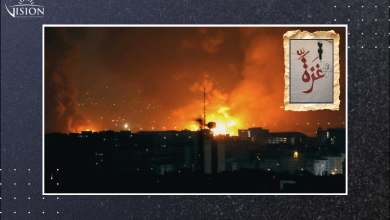
Ground realities continue to confirm the ongoing Israeli aggression against the Gaza Strip, through airstrikes, shelling operations, and gunfire across various areas, in a sustained pattern that has resulted in civilian casualties. This coincides with the continued deployment of occupation forces across approximately 50% of the Strip’s area located outside what is known as the “yellow line,” reflecting a practical expansion of the scope of military control and the imposition of a coercive reality on the population.
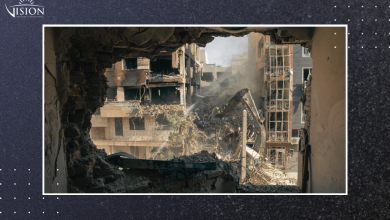
In this context, reports continue to document the demolition of residential buildings and systematic land levelling, including areas adjacent to the “yellow line” and those located to its east, within a policy aimed at emptying the area of its residents and altering its features. Violations persist, particularly strict restrictions on freedom of movement and the psychological and social pressures resulting from forced displacement, amid deliberate ambiguity and instability in the delineation of the “yellow line,” transforming it into a permanent and unpredictable mechanism of coercion. The United Nations Office of the High Commissioner for Human Rights (OHCA) has also reported that repeated Israeli military operations in areas west of the redeployment line (“the yellow line”) have led to civilian displacement and widespread demolition of residential buildings.
As for human losses, the number of Palestinian casualties since 7 October 2023 has risen to 71,667 killed and 171,343 injured, according to the Ministry of Health in Gaza. The ministry also reported the killing of 492 Palestinians and the injury of 1,356 others, in addition to the recovery of 715 bodies from under the rubble since the announcement of the ceasefire, indicating the depth of the destruction and the continuation of its lethal effects.
Since the ceasefire entered into force on 11 October 2025, the data reveals a consistent pattern of violations, including the continued targeting of civilians through airstrikes, shelling, and gunfire across all five governorates of the Gaza Strip, including incidents that occurred far from and around the “yellow line,” effectively undermining any claim of safe zones or adherence to a halt in bombardment.
On 21 January, at least 11 Palestinians were killed in a series of Israeli attacks, including an airstrike that targeted a vehicle near the Netzarim area, which reports indicated resulted in the killing of three journalists. This brings the number of journalists targeted and killed in the Gaza Strip to 258, underscoring a systematic pattern of deliberate attacks on media workers and the act of documentation itself.
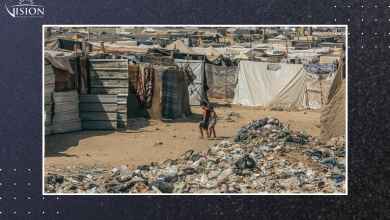
On the humanitarian level, for the third consecutive year, residents of the Gaza Strip are facing winter amid widespread displacement, shelter conditions that fail to meet minimum humanitarian standards, and overcrowded sites where the displaced seek the bare minimum of protection. According to the Ministry of Health in Gaza, 11 children had died from the cold as of 27 January, a direct result of the collapse of the shelter system and the deprivation of children of the basic conditions for life.
Although more than 100,000 tents have been brought into the Gaza Strip since October, harsh weather conditions are accelerating the deterioration of these tents, increasing the need for their replacement and entrenching reliance on repeated and unstable distribution operations. This comes amid the prohibition on the entry of caravans, depriving the displaced of more solid and sustainable shelter solutions and leaving them exposed to the cold and slow death.
Main Statistics on Violations Committed by the Israeli Occupation in the West Bank and Jerusalem
Throughout 2025, Israeli violations in the West Bank continued at an unprecedented pace, within a context that combines direct military violence, escalating settler attacks, and the acceleration of settlement projects and their associated infrastructure. This compounded pattern resulted in a large number of Palestinian casualties, an expansion of forced displacement, and a deepening fragmentation of Palestinian geography.
In this context, a total of 240 Palestinians were killed during 2025, including 55 children, representing 23% of the total fatalities. Data indicates that 225 were killed by Israeli forces, while nine Palestinians were killed by Israeli settlers, amid the recurring overlap between settler violence and the protection provided to them by Israeli forces.
In parallel, the United Nations Office for the Coordination of Humanitarian Affairs (OHCA) documented more than 1,800 attacks carried out by Israeli settlers during 2025, resulting in casualties or property damage in around 280 Palestinian communities across the West Bank, particularly in the governorates of Ramallah, Nablus, and Hebron. This figure represents a daily average of five attacks, the highest since the documentation of such incidents began in 2006.
These attacks led to the injury of 1,190 Palestinians, including 838 individuals, or 70%, injured by Israeli settlers, while 339 individuals, or 28%, were injured by Israeli forces. Of the injuries caused by settlers, around 60% occurred in the governorates of Ramallah, with 267 injuries, and Hebron, with 223 injuries, reflecting the concentration of settler violence in specific areas of strategic importance.
Regarding settlement expansion, the occupation authorities advanced settlement construction plans for more than 26,000 new housing units, covering an area exceeding 30,000 dunams of occupied Palestinian land. From the beginning of 2025 until the end of October, 194 settlement plans were put forward, concentrated in 56 Israeli settlements in the West Bank, most of them targeting settlements established in the occupied Jerusalem governorate. This step constitutes one of the largest waves of settlement expansion compared to recent years.
The plans focused in particular on expanding settlements surrounding the city of East Jerusalem, with the settlements of “Ma’ale Adumim” east of the city and “Givat Ze’ev” northwest of it emerging as main axes of expansion. 22 settlement construction plans were issued for “Givat Ze’ev,” alongside 16 plans in “Ma’ale Adumim,” including two plans in the E1 area. In Bethlehem governorate, the settlements of “Beitar Illit” were targeted with 17 plans, “Efrat” with 14 plans, and “Ma’ale Amos” with 5 plans. In Nablus governorate, the plans were concentrated in the settlements of “Eli” and “Alon Moreh,” with 7 and 3 plans respectively. In Ramallah governorate, the plans included the settlements of “Modi’in Illit,” “Beit Aryeh–Ofarim,” and “Rimonim,” while the settlement of “Ariel” accounted for the largest share of plans in Salfit governorate, alongside the settlements of “Etz אפרaim,” “Peduel,” and “Barkan Industrial.”
In the same context, Peace Now reported that tenders were issued for the construction of 9,629 housing units during 2025, a record number exceeding the total units advanced over the previous six years combined, including more than 6,700 units in “Ma’ale Adumim.” These plans deepen the isolation of East Jerusalem from the rest of the West Bank, undermine geographic contiguity between the northern and southern West Bank, and increase the risk of forced displacement for nearly 18 Bedouin communities, home to more than 4,000 people.
As part of entrenching this reality, the Israeli government announced its intention to implement what is known as the “Sovereignty Road” project in the occupied West Bank. The road extends between al-Eizariya and az-Za’ayyem east of Jerusalem and is expected to effectively close the “Ma’ale Adumim” area and the E1 corridor entirely to Palestinians, amounting to approximately 3% of the West Bank’s area. The project is viewed as a central step to strengthen Israeli control in the heart of the West Bank, with direct implications for the viability of a Palestinian state.
According to the official notification, the municipality of al-Eizariya and several affected Bedouin communities, including Jabal al-Baba, Wadi al-Jamal, and al-Saraya, were given a 45-day objection period, in implementation of a prior commitment made by the occupation authorities before the Supreme Court following petitions filed against the project. The road aims to separate Palestinian and Israeli traffic by diverting Palestinians onto bypass routes under Israeli control, thereby clearing existing roads of Palestinian presence, fully closing the surrounding area, and transforming the project from a transport infrastructure into a practical tool for annexing the “Ma’ale Adumim” bloc and the E1 corridor and linking them to Jerusalem.
In parallel, Israeli forces escalated demolition operations, beginning at the end of 2025 with the demolition of 25 buildings in Nur Shams refugee camp in Tulkarem governorate, based on prior military orders. The Israeli authorities rejected a legal request to freeze the demolitions, despite targeting standalone homes and multi-unit residential buildings, affecting around 70 families who had already been displaced from the camp. The demolitions were concentrated in the neighbourhoods of Jabal al-Salihin, al-Manshiya, al-Maslakh, and their surroundings.
Additional data indicates that a total of 280 buildings were destroyed in Nur Shams camp during 2025, representing approximately 35% of the camp’s total structures, according to a preliminary analysis of satellite imagery conducted by the United Nations Satellite Applications Programme (UNOSAT), without the possibility of field verification of the findings. Demolitions remain ongoing in Nur Shams camp, as well as in the Jenin and Tulkarem camps, amid continued restrictions preventing access to these areas for further assessments.
In East Jerusalem, Israeli forces raided and demolished buildings within a compound belonging to UNRWA in the Sheikh Jarrah neighbourhood, built on land leased by the agency from the Jordanian government since 1952, in a step representing a serious escalation targeting the humanitarian and institutional presence of Palestinian refugees in the city.
In the context of movement restrictions, 16 Palestinians were killed and more than 249 others injured while attempting to cross the wall, following the suspension and cancellation of most permits that had allowed Palestinian workers and others access to the occupied interior, reflecting the transformation of the wall and the permit regime into lethal tools used to manage movement through violence.
Reported Casualties:
During the period covered by the report, 6 Palestinian citizens, including one child, were killed in the context of raids and live fire carried out by Israeli forces in several areas of the West Bank. The governorates of Nablus and Hebron recorded the highest number of fatalities, with 2 killed in each governorate. Among the dead were 2 individuals who were field-executed by the Israeli army during raid operations, in a pattern that has recurred during military campaigns inside cities and camps. During the same month, 107 Palestinians were injured, including 14 children and 7 university students, as a result of gunfire and assaults associated with the raids.
This comes within a broader escalating context throughout 2025, during which a total of 240 Palestinians were killed in the West Bank, including 55 children, according to data from the United Nations Office for the Coordination of Humanitarian Affairs. The data indicates that 225 of those killed were executed by Israeli forces, and 9 by Israeli settlers. The office also documented the injury of 1,190 Palestinians during the same year, in the context of settler attacks and operations carried out by Israeli forces across various parts of the West Bank.
These figures reflect the continuation of a pattern of lethal force and excessive use of live ammunition, alongside the widening scope of attacks targeting civilians, including children and students, in a context marked by repeated raids and the escalation of organized settler violence.
Arrests:
During the month of January, Israeli occupation forces escalated arrest campaigns in the West Bank, with the detention of 822 citizens documented, including 42 children and seven women, in addition to a number of journalists.
Arrests were concentrated in Hebron governorate with 182 cases, followed by Ramallah governorate with 139 cases. The remaining arrests were distributed across the governorates of Jerusalem, Bethlehem, Jericho, Salfit, Qalqilya, Tulkarem, Nablus, Tubas, and Jenin, reflecting the extension of arrest campaigns to various areas of the West Bank.
Demolition of Homes and Structures:
The occupation authorities intensified their demolition policy in the occupied West Bank and Jerusalem, carrying out 59 demolition operations that resulted in the destruction of 126 Palestinian homes and structures, in a context aimed at undermining Palestinian urban presence and constricting the spatial space available to residents.
The majority of demolitions were concentrated in the governorates of Nablus and Hebron, where 26 structures were destroyed in Nablus and 21 in Hebron, followed by Bethlehem governorate with 8 structures. The remaining operations were distributed across other areas of the West Bank and occupied Jerusalem.
In addition, 40 Palestinian structures were served demolition or stop-construction notices on the pretext of lacking permits, a justification systematically used in areas classified as “C” and in occupied Jerusalem to restrict Palestinian urban expansion. Most of these notices were concentrated in Hebron governorate, with 10 notices recorded.
Land Seizure and Bulldozing:
Israeli occupation authorities continued their policy of seizing Palestinian land in the West Bank through various military orders, placing their control over approximately 1,043 dunams under the pretext of “military purposes,” a measure that is effectively used to entrench control and expand settlement infrastructure.
This included the seizure of around 47 dunams of land from the town of Burqa in the Nablus district, as well as lands in Silat ad-Dhahr and al-Fandaqumiya in Jenin governorate, with the aim of expanding a previous military order to pave a settlement road linking the settlements of “Homesh” and “Sanur,” where reconstruction has recently resumed. Approximately three dunams of land were also seized from the village of Ni’lin in Ramallah governorate, in preparation for the construction of an additional settlement road.
In a related context, the occupation authorities declared approximately 694 dunams of land from the towns of Kafr Thulth, Deir Istiya, and Biddya in the Salfit and Qalqilya governorates as “state land,” for the benefit of a new settlement plan aimed at establishing a residential cluster east of Qalqilya, a step that contributes to expanding the settlement belt around the city and deepening its isolation.
In addition, the occupation authorities issued 8 military orders under the designation of “taking security measures,” targeting cultivated agricultural lands for removal on the grounds of security and military needs. These orders affected approximately 298.7 dunams of citizens’ lands in the Hebron and Ramallah governorates, in a pattern that leads to land levelling, undermines agricultural livelihoods, and constitutes an extension of policies aimed at reducing Palestinian presence on the land.
Settlement Activity:
During the month of November, Israeli planning authorities reviewed 21 structural plans in favour of West Bank and Jerusalem settlements, including 12 plans for settlements in the West Bank and 9 in Jerusalem. These authorities approved 7 plans in the West Bank and deposited 5 others for subsequent approval, with the aim of building 1,463 new housing units on an area of approximately 2,632 dunams of citizens’ land. In Jerusalem, the occupation municipality approved 3 plans and deposited 6 others.
Jerusalem and the West Bank have recently witnessed parallel escalation at the levels of forced evictions and settlement expansion, in a context reflecting the consolidation of rapidly advancing facts on the ground with profound demographic and geographic dimensions.
In the Batn al-Hawa neighbourhood of Silwan, a judge of the occupation’s Supreme Court issued a decision obligating 62 Palestinians from 13 families to vacate homes they had lived in for decades, after rejecting appeals filed against lawsuits brought by settlers affiliated with the Ateret Cohanim association, which claims to represent a historic Jewish endowment. The decision follows a legal process in which available avenues were exhausted, opening the door to implementation of the evictions in the coming period, as part of a broader plan targeting around 700 Palestinians in the neighbourhood to make way for settlement outposts. The neighbourhood has already witnessed settlers moving into homes that were recently vacated.
In parallel, the Ministry of Construction and Housing advanced a tender to implement 3,401 housing units in the E1 area, following approval by the Higher Planning Council, in a step considered among the most serious settlement projects due to its implications for Palestinian geographic contiguity between Ramallah, East Jerusalem, and Bethlehem. This comes within a record wave of tenders during 2025 totaling 9,629 units, including more than 6,700 units in the settlement of Ma’ale Adumim.
The “Atarot” and “Nahalat Shimon” plans were also reintroduced for discussion in the Jerusalem Planning Committee. These two projects provide for the construction of 9,000 housing units north of Jerusalem and the demolition of the Umm Haroun neighborhood in Sheikh Jarrah to build 316 housing units.
In a related context, the occupation government announced its intention to begin implementing the “Sovereignty Road” between al-Eizariya and az-Za’ayyem within 45 days. The project aims to establish a separate road network and divert Palestinian movement onto bypass routes, enabling the closure of the “Ma’ale Adumim” and E1 area to Palestinians and their effective annexation, an area equivalent to approximately 3% of the West Bank.
The Higher Planning Council continues to hold weekly sessions to approve new settlement units, having approved 749 units since the beginning of 2026. This acceleration is partly due to an amendment that abolished the requirement for prior approval by the Minister of Defense at various planning stages, allowing for the procedural normalization of settlement construction and reducing the level of public debate surrounding it.
During this month, the occupation’s Civil Administration announced the classification of 694 dunams of land from the towns of Deir Istiya, Biddya, and Kafr Thulth, adjacent to the Wadi Qana nature reserve, as “state land,” in a step that falls within an integrated track between governmental initiatives and settlement activity. The move comes in the context of field escalation that began with the establishment of the “Nahal Qana” outpost in 2020, which imposed a coercive reality on Palestinian farmers by grazing inside their lands and preventing them from accessing hundreds of adjacent dunams. Data indicates that since December 2022, 26,653 dunams have been declared “state land,” equivalent to nearly half of the total area granted this designation since the signing of the Oslo Accords, signalling an unprecedented acceleration in the use of this tool to expand settlements and prepare land for the establishment of new settlement clusters.
The two measures: the establishment of a parallel antiquities authority in the West Bank and the allocation of an additional 550 million shekels for what is termed “strengthening security components”; signal a gradual transition from administering the occupation through temporary military and administrative mechanisms to institutionalizing direct Israeli civil and legislative governance in the occupied territory, thereby further entrenching the reality of de facto annexation.
The antiquities authority project does not merely expand professional powers; it transfers competencies from the “Civil Administration” to a body operating under direct Israeli legislation and subject to a government minister, with its authority extending into Areas “A” and “B.” Thus, antiquities shift from a cultural field to a sovereign tool used to impose additional planning restrictions on Palestinian construction and to redefine public space in the West Bank as subject to an Israeli legal framework.
Conversely, the financial decision reveals a deepening of the material infrastructure of control. The increase in allocations for so-called “security components”, including transportation fortification, road construction, and reinforcement of settlement clusters, does not represent a security response, but rather systematic funding to expand the network of bypass roads and settlement outposts and link them together, thereby enhancing the geographic spread of settlements and facilitating the imposition of permanent facts on the ground. Documentation of the construction of more than 222 kilometres of roads over two years, half of them on private land, illustrates how security pretexts are transformed into a mechanism of geographic engineering.
These policies reflect a composite pattern of legislation that redefines authority and sovereignty, and funding that reshapes geography and infrastructure. The result is the deepening administrative and security integration of settlements into the Israeli system, alongside the contraction of Palestinian sovereign space. In this sense, the measures represent a link in an accelerating trajectory aimed at normalizing annexation and reducing its political cost, at a time when the prospects for a settlement based on geographic separation and the establishment of a contiguous and viable Palestinian state are diminishing.