Between ‘Epic Rage’ and the ‘Roar of the Lion’: The Road to War with Iran

Iman Badawi and Kerim Kurt
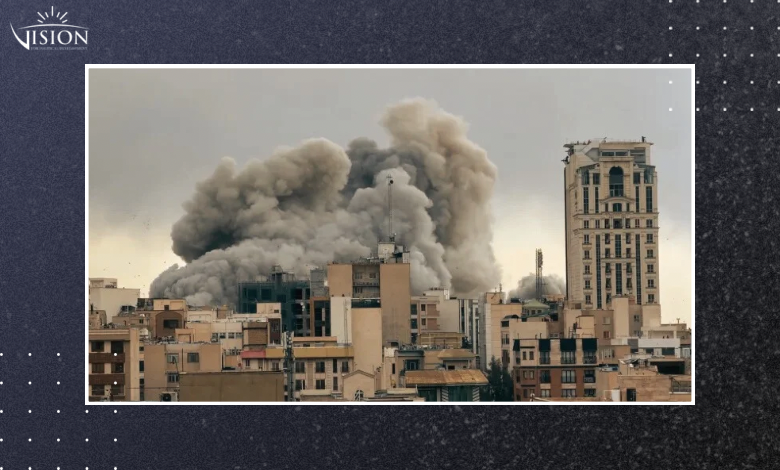
With the onset of the U.S.–Israeli assault on Iran on February 28, 2026, dubbed “Epic Rage” by the United States and “Roar of the Lion” by Israel, and the subsequent escalation of challenges and risks amid Iran’s and its allies’ responses, a political debate has resurfaced regarding the nature of the relationship between the two parties in the decision to go to war. This debate begins with a central question: Did Israel push the United States into war against Iran?
This paper builds on this debate to trace the trajectory that led to the decision for war, with a particular focus on the Israeli role in shaping the political and strategic environment within Washington to shift from managing the Iranian file to confronting it militarily. It does so by examining the context in which Iran emerged as a threat in both Israeli and American narratives, and subsequently analyzing how Israel capitalized on the repercussions and outcomes following October 7, 2023 as a critical turning point, one that paved the way for transforming years of U.S. “maximum pressure” policies and Israel’s indirect confrontation with Iran into the option of direct war.
Iran in American and Israeli Perspectives
The decision to go to war against Iran emerges from a long trajectory that has shaped the political and intellectual conditions for war within Washington. Iran has been portrayed within U.S. decision-making circles as a state hostile to American interests in the region since the victory of the Islamic Revolution in 1979 and the hostage crisis at the U.S. embassy in Tehran. This was followed by Washington’s severing of diplomatic relations with Tehran and the imposition of a trade embargo in 1980. This image was gradually reinforced with the expansion of Iran’s network of regional allies, leading to its designation in U.S. policy as a state sponsor of terrorism since 1984. In 2002, U.S. President George W. Bush described Iran as part of the “Axis of Evil,” alongside Iraq and North Korea, a year that also witnessed escalating tensions over Iran’s nuclear program following reports revealing secret nuclear facilities.
On the other hand, since the 1990s, Israel has worked to consolidate the notion that Iran represents the “central threat” to its security and to the stability of the region, while seeking to build support for this political and security framing within Washington. Through sustained political and security discourse, Israel has sought to present Iran as a strategic danger that must be contained before it reaches an uncontrollable level. This discourse intensified with the expansion of Iranian influence in the region following the 2003 invasion of Iraq, as Israel increasingly portrayed Iran as a power seeking to encircle it through a network of regional allies and by supporting armed groups in Lebanon, Palestine, Iraq, and Yemen.
Over the course of three decades, Israel has also warned that Tehran’s acquisition of nuclear capabilities would alter the regional balance of power and threaten its very existence. As early as 1992, Benjamin Netanyahu claimed that Iran could develop and produce a nuclear bomb within 3-5 years. In 2002, he told the U.S. Congress that Iran and Iraq were racing to acquire weapons of mass destruction. In 2003, Israel’s then–Minister of Defense announced that Israel was considering a military strike against Iran’s nuclear facilities, viewing it as its primary adversary following the fall of Saddam Hussein’s regime. Later, in his 2012 address to the United Nations, Netanyahu presented a diagram of a nuclear bomb, warning that Iran was approaching the “red line” in its nuclear program.
This narrative reached its peak during the administration of Barack Obama, coinciding with the negotiations that led to the Joint Comprehensive Plan of Action (JCPOA) in 2015. The agreement became a point of divergence between the U.S. administration, which viewed it as a mechanism to contain Iran’s nuclear program through technical restrictions and international oversight, and Israel, which rejected it and considered it an arrangement that granted Tehran a temporal window to develop its nuclear capabilities and expand its regional influence. During this period, Benjamin Netanyahu intensified his public opposition to the deal. In his 2015 address to the U.S. Congress, he warned that the agreement would also threaten U.S. security, arguing that a nuclear-armed Iran would trigger a regional arms race endangering all parties.
This position was preceded by a series of strategic speeches delivered between 2013 and 2014, including the Bar-Ilan speech II, his address at the Herzliya Conference, and a lecture at the Institute for National Security Studies at Tel Aviv University, in which Netanyahu articulated a political vision redefining the nature of conflict in the Middle East and its principal threats, foremost among them, in his view, Iran and its nuclear program. Within this framework, Netanyahu, and Israeli discourse more broadly, sought to reinterpret the causes of regional crises as stemming from the rise of Iranian influence and sectarian and regional rivalries, rather than from the Arab–Israeli conflict. This repositioning was closely tied to Israel’s opposition to the Obama administration’s approach to the Palestinian issue and to negotiations over Iran’s nuclear program.
However, this divergence over the nuclear file receded with the arrival of Donald Trump to the White House in 2017, as U.S.–Israeli alignment on Iran reached an unprecedented level. This convergence was concretely expressed in Trump’s 2018 decision to withdraw from the Joint Comprehensive Plan of Action and to reimpose sweeping sanctions on Iran under the “maximum pressure” policy, a move consistent with the position Israel had advocated since the agreement’s signing. This shift followed an intensive political campaign led by Netanyahu within the United States, most notably his 2018 presentation of what he described as the “Iranian nuclear archive,” which he claimed had been obtained through a Mossad operation in Tehran and which allegedly demonstrated that Iran had been secretly pursuing nuclear warheads. He further amplified this narrative in 2025 to justify the current military campaign, asserting that Tehran was accelerating efforts to produce a nuclear bomb. During this period, Washington also intensified economic sanctions on Iran and engaged in limited deterrent actions, most notably the assassination of Qasem Soleimani, commander of the Quds Force of the Islamic Revolutionary Guard Corps, in early 2020.
Despite this clear convergence in threat perception, U.S. strategy, even during Trump’s first term, remained cautious about direct military confrontation with Iran, preferring instead to rely on a combination of economic sanctions, political pressure, diplomatic isolation, and limited deterrence to weaken Tehran’s regional influence.
The October 7 Moment That Shaped the Course of the War
The arrival of the Biden administration in early 2021, following the Trump administration, marked a retreat from the hawkish policy pursued by the Trump administration. There were attempts to return to the nuclear deal, reach a settlement with Iran, and ease sanctions through negotiations. On the other hand, Netanyahu, who also returned to power in early 2023, amid the internal political crisis that led to his temporary departure from office in 2021–2022, set two goals for himself in his new term: normalization with Saudi Arabia and preventing Iran from acquiring nuclear weapons. However, the Biden administration was keen to ensure that Israel did not drag it into a war with Iran under a far-right government, as evidenced by the frequent visits at the time by Michael Corilla, commander of U.S. Central Command (CENTCOM), to Israel to ensure there would be no Israeli surprises against Iran.
Amid these developments, Palestinian resistance factions launched the “Tufan Al-Aqsa” operation, which upended all calculations and reshaped strategic considerations across the region. Practically speaking, October 7, 2023, marked a critical turning point toward direct military confrontation between Israel and Iran after years of a “shadow war” and a “war between wars” strategy involving Israel’s regional allies. This occurred through the intensification of strategic mobilization around decades of accumulated discourse, accompanied by a shift in the form and nature of Israeli military operations.
Following the “Tufan Al-Aqsa” operation, Israeli discourse focused on the claim that Iran and its support for its “proxies” in Gaza, Lebanon, Yemen, and Iraq were behind the current threats. On October 16, 2023, Netanyahu warned Iran and Hezbollah, stating: “Do not test us… the price today will be harsher,” an early attempt to link every attack and support operation to a broader Iranian strategy that would justify a response.
By early 2024, Israeli discourse escalated to portray Iran as a direct threat, going beyond its proxies, and emphasized the necessity of direct military action against Iranian territory and its nuclear program. In April 2024, Israeli Defense Minister Yoav Galant announced their readiness to respond “if any scenario develops regarding Iran,” signalling Israel’s intention to engage in direct war with Iran if required. This perception was reinforced by direct attacks between the two countries in April 2024 following the Israeli bombing of the Iranian consulate in Damascus, then in October/November in response to the assassination of Ismail Haniyeh in Tehran, and later the assassination of Hassan Nasrallah, breaking the previous policy of indirect confrontation between them for the first time. Subsequently, in November 2024, Netanyahu declared: “Israel’s main war is against Iran,” coinciding with a statement from Israeli Defense Minister Israel Katz that: “Iran is more vulnerable than ever to strikes on its nuclear facilities,” and that the opportunity was ripe, confirming that direct confrontation had become feasible from an Israeli perspective.
In 2025, with the outbreak of what later became known as the 12-Day War, Israeli rhetoric peaked in emphasizing the necessity of targeting the regime’s comprehensive capabilities. At the start of the “People Like Lions” operation, Netanyahu announced the attacks under the justification of confronting an “existential threat involving accelerated nuclear bomb production and expansion of ballistic arsenals.” This rationale also justified Washington’s direct military participation in what it termed Operation Midnight Hammer, which targeted Iran’s nuclear facilities directly. Unlike previous strikes in April and October 2024, in which the U.S. role was limited to defending Israel, Israel considered that striking Iran’s fully fortified nuclear facilities could not be carried out without U.S. involvement in planning and direct operational support, given Washington’s possession of advanced strategic bombers (such as the B‑2) and bunker-busting munitions capable of reaching the depths of Iran’s nuclear sites.
Prelude to the 12-Day War
Israel realized, following October 7, 2023, that turning U.S. policy toward Tehran into direct military action would require creating an actual strategic environment within the American political sphere, demonstrating that a military confrontation was feasible and of manageable cost. Israel viewed Iran’s strength as relying on its network of regional allies and its nuclear program, which could potentially be converted into a nuclear weapon. Consequently, Israel’s security planning focused on weakening these allies to pave the way for striking the nuclear project itself, thereby reducing Iran’s capacity to respond by complicating the battlefronts and expanding the scope of confrontation.
Accordingly, Israel pursued operations from October 2023 onward aimed at separating the main and support fronts and dismantling the “unity of the battlefields” equation. The targeted strikes and assassinations of Hezbollah leaders demonstrated Israel’s focus on key figures among Tehran’s allies, weakening command and control structures and compelling Hezbollah to accept a ceasefire agreement that removed it from the support front in November 2024. Meanwhile, a series of Israeli airstrikes on Syria prior to the fall of the Assad regime weakened the logistical support network for Iranian-linked factions. These raids and assassinations also facilitated internal moves to overthrow Assad, causing Tehran to lose a key position in its regional environment by December 2024, thus enhancing Israel’s ability to directly strike Iranian territory.
In parallel with these battlefield developments, significant changes emerged in the international political timeline with the return of Donald Trump to the presidency in January 2025. From February 2025 onward, his administration reactivated the “maximum pressure” policy against Iran, imposing additional economic sanctions and intensifying military threats, returning Washington to a more hawkish stance toward Tehran compared to previous U.S. administrations. This coincided with an escalation in Israeli rhetoric emphasizing the necessity of a military attack on Iran, creating a clear convergence between Israeli and U.S. perspectives in the post–October 2023 period.
Between April and June 2025, Tehran and Washington held several rounds of nuclear negotiations, but no decisive breakthrough was achieved. In this context, Israel emphasized that time no longer allowed anything but direct military action if Iran continued to delay, as it framed the situation, stressing that any agreement failing to fully eliminate the nuclear program would be unacceptable. While Trump occasionally expressed a preference for diplomatic options in public statements, the practical behaviour of his administration confirmed that his words alone were not indicative of actual U.S. policy. Concurrently with the negotiations, the U.S. strengthened its military presence in the region. Before the sixth round of talks scheduled for mid-June 2025, Israel launched a major military strike against Iran on June 13. Trump, for his part, announced that “the two-month deadline for diplomacy and reaching an agreement has expired,” confirming his prior knowledge of the attack.
Through these actions, Israel achieved two strategic objectives. On one hand, it halted the negotiations and shifted the nuclear file from the diplomatic arena to direct military confrontation, portraying Iran as a state unwilling to cooperate and continuing to develop its capabilities. On the other hand, it prepared the ground for Washington’s direct entry into the war to target nuclear facilities, making military action a practical option. Israel’s initial strikes demonstrated its ability to strike Iran’s air defense systems and missile platforms while assassinating key security leaders, revealing both the extent of penetration and the limits of Iran’s response, which remained confined to Tehran without involving its regional allies. This gave Washington the perception that the war could be managed without full-scale regional escalation.
Between June 2025 and February 2026
The June 2025 war lasted only twelve days, but it produced a set of strategic conclusions that paved the way for the current escalation. Although the United States and Israel announced that targeting the Natanz, Fordow, and Isfahan facilities caused significant damage to Iran’s nuclear program, the fact of complete destruction of the program remained disputed and unclear, reinforced by reports pointing to the unknown fate of nearly 400 kilograms of uranium enriched to 60% possessed by Iran.
The confrontation also revealed the effectiveness of Iran’s missile program, given the continuous pressure that ballistic missiles and drones exerted on Israel’s air defense systems and its stock of interceptor missiles. By the end of the June 2025 war, Israel intensified pressure on Washington to include the undermining of the missile program in the nuclear negotiation process, viewing it as the military tool most capable of causing direct harm to Israel. This later became a stipulated condition in the 2026 negotiations and a primary objective of the current war against Iran.
Additionally, the June 2025 war demonstrated to Israel that it was possible to confront Iran through limited, repeated rounds, similar to the “war between wars” and “cutting the grass” strategies, which cumulatively contribute to the destruction of the regime’s capabilities, weakening its centralization and state management capacity. This Israeli assumption was reinforced by the end of the war, as Iran’s response was measured, in contrast to previous Iranian threats.
The most important conclusion, however, was that weakening the regime itself, and ultimately toppling it, emerged as an Israeli objective in the nature of the attacks at that time. Israeli strikes targeted state institutions, internal security headquarters, and opposition prisons, with a focus on the Revolutionary Guards as the backbone of the regime, aiming to increase the cost of the regime’s survival domestically and prepare society for political changes.
At the same time, since September 2024, Netanyahu had publicly called on the Iranian people to act against the regime, a message he delivered directly and explicitly during the war through video segments directed at the Iranian public. On the other hand, Trump’s statements began to indicate that military and economic pressure could lead to regime change following the June 2025 attacks, viewing this as a desirable objective for Washington.
This coincided with intensified political coordination between the two sides. Between late December 2025 and February 2026, Netanyahu visited Washington twice and met with Trump to discuss the Iranian file. This rapid sequence of visits sparked wide political debate over whether Israel was seeking to push Washington toward direct confrontation with Iran, or whether it reflected an unprecedented level of strategic coordination between the allies.
All these conclusions confirmed that the next war on Iran was only a matter of time, as continuous Israeli steps and statements emphasized the need to resume targeting Iran. However, this time the focus was on Iran’s ballistic missile program, with Israel claiming that Iran had intensified its missile production and that the threat it posed to Israel was comparable to that of a small nuclear bomb.
In this context, Netanyahu visited Trump in late December 2025, bringing with him several files, foremost among them securing U.S. support to attack Iran again amid Tehran’s efforts to restore its nuclear program and intensify ballistic missile production.
Netanyahu’s visit to the U.S. coincided with a wave of internal protests in Iran between late 2025 and early 2026, triggered by the collapse of the Iranian rial against the U.S. dollar and record-high inflation. Although the protests were initially economic in nature, they expanded to calls for regime change. These protests were closely linked to the Israeli–American war on Iran and the maximum pressure policy: after the 12-day war, the European troika reactivated the trigger mechanism against Iran in September 2025, adding crushing international sanctions on top of U.S. sanctions. At the same time, the perception of regime fragility during the war—with the depth of Israeli penetration, Mossad networks, and airspace violations—encouraged a form of popular revolt against the regime.
Help on the Way
At that moment, the war entered the stage of actual preparation, and it can be said that the U.S. decision for war was made then. The war discourse immediately shifted from Israel to Trump himself, who announced his support for the protesters and his intention to assist them, threatening the Iranian regime with overthrow in response to the suppression of the protests. Here emerged the possibility of external pressure intersecting with internal unrest, which could actually lead to the collapse of the regime.
In Trump’s case, his successful experience in “regime change” in Venezuela, including the attempted capture of President Nicolás Maduro on January 3 in a swift, low-cost operation with virtually no consequences, may have incentivized him to replicate the approach in Iran. Therefore, it can be said that from January 13, the day Trump made his promise to the Iranian protesters that “help is on the way,” until February 28, when the aggression against Iran began, the region was primarily witnessing the preparation of the operational theater and military mobilization.
Although Tehran understood that the 2025 negotiations were a pretext for carrying out the attack, talks resumed mediated by Oman after months of stalemate. Rounds were held on February 6 and 18, 2026, under conditions imposing complete Iranian submission under military threat again. The talks coincided with an unprecedented American military buildup in the region since the 2003 invasion of Iraq, a move considered preparation for possible military strikes on Iran. This made the 2025–2026 negotiations essentially a diplomatic cover and part of a strategy to buy time while completing military preparations, given the real threat to Tehran through direct U.S.–Israel coordination, evident from the intensive exchanges of visits by Israeli and American officials across military, security, and political levels—most notably Netanyahu’s visit to Trump again on February 12. There is no doubt that Netanyahu’s repeated trips to Washington—seven meetings in a single year during Trump’s term—played a key role in accelerating American commitment to the war decision by providing accurate assessments of Israel’s readiness to strike Iran directly, pushing Trump to make the decision and support Israeli attacks with direct participation.
Conclusion
The trajectory traced in this paper demonstrates that the current decision to wage war against Iran was not a sudden event in the course of U.S. policy toward Tehran. At its core, it represents a convergence of a long-standing process, during which the narrative of the Iranian threat was shaped within Washington, and decades of Israeli efforts to provoke and push the U.S. toward direct confrontation were sustained. This occurred alongside the interaction of Israeli calculations with U.S. policies, under a level of strategic coordination and planning between Washington and Israel that intensified with Trump’s return to the White House.
However, the period after October 7, 2023, represented the critical turning point for Israel, which succeeded in pushing Washington to translate threat discourse and “maximum pressure” policies against Tehran into a practical decision to launch a direct war. This was achieved by creating an operational reality on the ground demonstrating the alignment of political and field conditions for a military response to “threats” after more than two years of targeting Iran and its allies, while highlighting their limited capacity to respond to concentrated attacks. This operational reality coincided with a series of changes in U.S. policy under Trump’s administration, marked by hawkish and reckless policies inspired by the Venezuelan model, which he possibly aimed to generalize against all his adversaries.
NOTE: This text is adapted from original Arabic article.