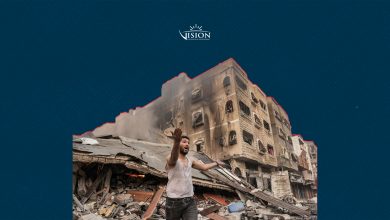
Gaza’s Daily Commute: Another Face of Genocide

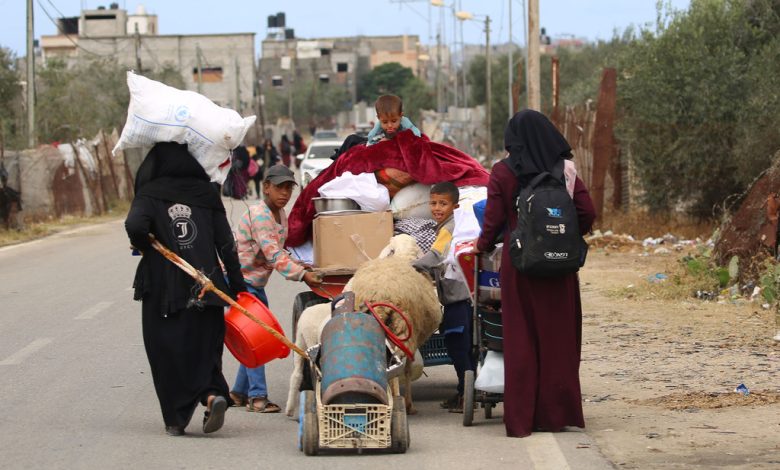
Getting around the Gaza Strip is no longer simply a matter of traveling from one place to another. It has become a dangerous daily ordeal, adding yet another burden to a population already exhausted by war. Residents spend long hours waiting for transportation under the scorching sun, amid a severe shortage of vehicles, overcrowding, and soaring fares. Many are forced to walk long distances to reach their workplaces, markets, or hospitals. The hardship is particularly acute for the elderly, children, women, and the sick, while roads have become increasingly perilous amid Israeli killing and targeting, turning even routine travel between areas into a constant threat to life.
The transportation crisis has worsened as the number of operational vehicles has declined, amid Israel’s continued restrictions on the entry of fuel, spare parts, engine oils, tires, and maintenance supplies. This has driven up transportation costs and prolonged waiting times. As residents struggle to meet their basic needs, they face damaged and unsafe roads and journeys that drain not only their time, money, and energy, but also expose them to the risk of being killed or targeted, in an ongoing violation of civilians’ right to freedom of movement and access to medical care and essential services.
Daily Battle to Get Around
Since the beginning of the genocidal war on the Gaza Strip on October 7, 2023, Israeli airstrikes have targeted vital roads and residential blocks, destroying large sections of streets and burning thousands of civilian vehicles parked beneath buildings or along roadsides.
With the entry of tanks and heavy military bulldozers, known as D9s, asphalt roads were torn up, while vehicles in the streets were crushed and deliberately reduced to charred wreckage. According to the spokesperson for Gaza’s Ministry of Transport and Communications, nearly 80% of main and secondary roads have been destroyed, while around 70% of all vehicles registered with the ministry have been crushed or destroyed. Another 10% of the remaining vehicles have been rendered inoperable due to shortages of oils and spare parts needed for repairs.[1]
The widespread destruction of infrastructure has translated into a grueling daily reality for residents. Tasneem al-Sarsawi[2] describes her frustration with “the daily commute, which has become a complicated journey that drains both time and money. Every day, I wait anywhere from half an hour to a full hour to find a vehicle. I often have to take more than one form of transportation to reach my destination, doubling the financial burden on me, especially as transportation fares have risen sharply—from just one shekel for a local route before the war to five shekels today.”
Displaced resident Raghad Abu Ajwa[3] describes a scene that encapsulates the acute shortage of transportation and extreme overcrowding inside vehicles. “A vehicle originally designed to carry four passengers now transports around 12,” she says. “These growing numbers are accommodated in ways that fall far short of even the most basic standards of safety and dignity: two passengers sit in the front seat, four in the back, another beside the driver, three in the trunk, and two on the hood. Others cling to the sides of jeeps or sit on their roofs.”
Palestinians also face risks from makeshift means of transportation. Arwa Ashour[4] describes a rudimentary form of transport locally known as the “ajala,” a trailer attached to and pulled by a motor vehicle to carry large numbers of passengers and luggage. “I am gripped by fear and terror throughout every journey I am forced to make on it,” she says. “I constantly worry that the trailer could detach from the vehicle while moving, especially after numerous traffic accidents have resulted in serious injuries and amputations among passengers.”
The testimony of journalist Lina Radi[5], a displaced mother living with her husband and two-and-a-half-year-old daughter in a shelter center in southern Gaza while her family remains in the north, illustrates the immense burden the transportation crisis has placed on her life. Visiting her family has become an arduous undertaking. She first walks for around half an hour to reach a transportation point, then waits between 30 and 40 minutes before embarking on a journey that can take around three hours because of repeated stops to pick up other passengers, including at Tabbat al-Nuwairi. “I have to stop feeding my daughter an hour before the journey to prevent her from repeatedly vomiting because of the severe jolting of the ajala,” she says.
The repercussions extend beyond physical hardship to Radi’s work as a journalist. “An entire day is consumed by transportation just to complete one report or interview in the north,” she says. The difficulty and risks of travel have forced her to turn down events, workshops, and initiatives and scale back her journalistic work. Local transportation costs around 20 shekels, while a journey between Khan Younis and Gaza City can cost 60 shekels.
The suffering caused by exorbitant fares and difficult daily travel also affects the healthcare system. Patients’ ability to reach hospitals, medical staff commuting to work, ambulance operations, and the transportation of medicines and medical supplies are all interconnected. Disruption to any one of these can obstruct residents’ access to healthcare, even when services themselves remain available. The crisis weighs most heavily on vulnerable groups, particularly the elderly, people with disabilities, patients with chronic illnesses, pregnant women, and children.
The experience of Aya Mohsen[6], a young woman with cancer who requires regular medical follow-ups, highlights another dimension of the crisis. “I am often forced to postpone my medical appointments or abandon them altogether because transportation is unavailable in my area,” she says. “That leaves me with two options: walking distances my body cannot endure or hiring a private car at an exorbitant cost that I cannot afford.”
For 70-year-old Maryam al-Madhoun[7], who has cancer, high blood pressure, and diabetes, the lack of transportation has had even more devastating consequences. “Doctors had to amputate my toes after I was unable to reach a doctor throughout the period when I was suffering from a severe infection because there was no transportation,” she says. “The camp where I live is around three kilometers from the nearest transportation point, a distance that is impossible for me to walk in my exhausted condition.”
The crisis has also made it increasingly difficult for many parents in Gaza to send their children to schools and educational centers, given the scarcity of transportation and the high cost of private transport. Um al-Mu’tasim Mushtaha[8] says that enrolling her daughters, Sama and Sarah, both in sixth grade, in a private school for orphans did not mean education had suddenly become easily accessible to them. “The school where I found places for them is around two to three kilometers from where we live, and walking there takes about half an hour,” she says. “Transportation is almost impossible for me to afford, as it costs between 150 and 200 shekels, an amount I cannot pay every day under the current economic conditions and without a stable source of income. Going to school has thus been transformed from a normal daily right into a physically and psychologically exhausting task.”
Roads as Sites of Sudden Attacks
Repeated attacks on roads across the Gaza Strip have become a constant source of fear for residents, turning any movement or necessary trip outside the home into a dangerous gamble. As streets and roads have become places where sudden attacks can occur, residents live with persistent anxiety for their own lives and those of their families, forcing them to plan their daily movements around their assessment of the risks on the ground.
Gaza resident Ezz al-Din Abdel Moati[9] says daily movement has become a cautious exercise governed by calculations of risk. “Whenever I leave home, I feel afraid and unsafe, which has led me to avoid going out except when absolutely necessary, such as to complete work-related tasks before returning immediately,” he says. “Because the streets are no longer safe due to indiscriminate bombardment and the deployment of military vehicles and equipment, I deliberately go out alone, without my family, to minimize potential losses in the event of an attack. I also avoid main roads and instead use side streets that are less exposed.”
This fear is not merely psychological; it is rooted in experiences residents have lived through and that have left indelible marks on their memories. Abdel Moati recalls one occasion when danger came within meters of his family: “During our displacement in the overcrowded Nuseirat camp, I went out with my wife to buy basic necessities when, suddenly, an attack struck just a few meters away. Panic swept through the displaced people around us, and amid the stampede and chaotic rush to escape, we suffered scratches and bruises. That moment confirmed a reality for us: safety on Gaza’s streets has become nothing more than an illusion.”
Displaced resident Rania Issa[10] describes the psychological toll caused by the scarcity of transportation and attacks on public transport vehicles. “I constantly feel a sense of heaviness and instability,” she says. “During periods when attacks on public transport vehicles intensified, I would say goodbye to my family and entrust myself to God before every trip, as though I might never return. Even periods of relative calm gave us no chance to catch our breath; every journey remained fraught with anticipation and fear.”
Issa also recalls narrowly surviving an attack and the psychological impact it has had on her daily life. “I escaped a devastating attack in the Rimal neighborhood by just a few minutes, but afterward the terror became a nightmare that followed me everywhere. I began imagining myself in the victims’ place and asking myself: How did I survive? It negatively affected my mental health and my ability to work. Every journey now begins with an exhausting wait for transportation that may never arrive and ends with tense streets and frayed nerves, erasing any sense of relief at finally reaching my destination.”
Drivers of the Crisis on the Ground
Gaza’s transportation crisis extends far beyond the breakdown of vehicles. It reflects a complex emergency shaped by overlapping and worsening economic and field conditions. Fuel shortages are no longer the sole factor. The crisis has deepened because of the widespread destruction of infrastructure, the depletion and scarcity of spare parts and oils in local markets, and the resulting record increases in prices.
The condition of the roads is a direct cause of the daily deterioration of the few vehicles that remain operational. The extensive destruction of asphalt, combined with rubble and scattered metal debris, has turned main and secondary roads into difficult routes that repeatedly damage vehicles and accelerate wear and tear. Driver Walid al-Jarjir[11] says: “The streets are destroyed and filled with stones, metal, and rubble, directly affecting vehicle tires and causing punctures and breakdowns. These are no longer occasional problems; they have become a continuous daily burden. Repairing vehicles and replacing tires have therefore become an essential part of every driver’s daily routine.”
This constant deterioration has coincided with an acute shortage of spare parts and motor oils, amid scarcity and a lack of price controls. According to mechanic Ahmed Dawoud[12], owner of Suleiman Dawoud Spare Parts and Motor Oils, the prices of vehicle supplies have risen to unprecedented levels, leaving drivers unable to afford even basic maintenance. The price of a car engine has risen from 4,000 shekels to around 35,000 shekels, while the cost of a tire has jumped from 300 shekels to between 2,500 and 8,000 shekels. The increases have not been limited to major components. Everyday maintenance supplies have also surged in price: a liter of motor oil has risen from eight shekels to 3,000 shekels, a windshield from 500 to 7,000 shekels, adhesive silicone from 90 to 3,000 shekels, and brake pads from 150 to 600 shekels.
These price increases have gradually forced a large proportion of otherwise operational vehicles out of service. The problem is no longer limited to whether a driver can afford fuel. Even a minor problem, such as a punctured tire or the need for an oil change, can now present a financial obstacle severe enough to take a vehicle permanently off the road, further reducing Gaza’s public transportation fleet.
With maintenance and spare-parts costs reaching these levels, drivers have been forced to pass some of the burden on to passengers. High operating costs, coupled with long waiting times, have translated into yet another expense residents must bear every day simply to make necessary—and dangerous—journeys.
Broader Economic Repercussions
Gaza’s transportation crisis is not limited to soaring fares or difficulties getting around. Its effects extend across economic life and essential services. Economist Ahmed Abu Qamar[13] says restrictions on the entry of oils, spare parts, and tires, combined with the destruction of vehicles and infrastructure and restrictions on fuel supplies, have disrupted vital sectors that depend on transportation—from water distribution and aid delivery to the operation of generators in hospitals and other essential facilities.
Abu Qamar notes that a single water truck breaking down because a spare part is unavailable can deprive hundreds of families of water supplies. Meanwhile, the increase in the price of a liter of oil from 15 shekels to more than 3,000 shekels reflects what he describes as “an artificially manufactured economy of scarcity imposed by force,” rather than ordinary economic inflation.
The destruction of more than 70% of vehicles registered in the Gaza Strip, combined with the loss of around 30% of the remaining vehicles due to shortages of spare parts and fuel, has severely weakened the transportation sector’s ability to recover. This has been reflected in transportation fares, which have risen by between 300% and 600%—or three to six times their previous levels—turning the cost of mobility into a daily financial burden for families.
The repercussions have also extended to supply chains and the livelihoods of thousands of drivers and transportation workers, as well as workshops, small factories, fuel stations, maintenance shops, and spare-parts businesses that depend directly or indirectly on vehicle movement. Amid this collapse, rudimentary forms of transportation such as the “ajala” have emerged as alternatives of necessity, despite lacking even the most basic safety standards, further increasing risks to residents’ lives and deepening the Strip’s economic and social vulnerability.
Conclusion
Gaza’s transportation crisis and restrictions on residents’ movement cannot be separated from the context of the ongoing genocide. The impact of destruction and attacks has not been limited to roads and vehicles; it has also undermined civilians’ ability to access basic necessities and carry out their daily lives.
The disruption of transportation, together with restrictions on fuel and spare parts, has made movement between areas more difficult, expensive, and dangerous. It has diminished residents’ ability to reach hospitals, shelters, food supplies, workplaces, and educational institutions at a time when they are already facing extremely harsh humanitarian conditions.
Restrictions on movement have thus become another manifestation of the impact of genocide on daily life, confining residents to particular areas, limiting their ability to access services and escape danger, and increasing their vulnerability amid continued killing and destruction.
References
[1] Anis Arafat, spokesperson for the Ministry of Transport and Communications in the Gaza Strip, interviewed by the researcher on August 27, 2026.
[2] Tasneem al-Sarsawi, a resident of Gaza’s Tel al-Hawa neighborhood, interviewed by the researcher on August 26, 2026.
[3] Raghad Abu Ajwa, a resident of the Shujaiya neighborhood who was displaced to Gaza’s Rimal area, interviewed by the researcher on August 26, 2026.
[4] Arwa Ashour, a resident of Gaza’s Zeitoun neighborhood, interviewed by the researcher on August 26, 2026.
[5] Lina Radi, a journalist from Gaza displaced to Khan Younis in the southern Gaza Strip, interviewed by the researcher on August 28, 2026.
[6] Aya Mohsen, a young woman with cancer from the al-Mawasi area of Khan Younis, interviewed by the researcher on August 28, 2026.
[7] Maryam al-Madhoun, an elderly woman with cancer from Gaza City, interviewed by the researcher on August 26, 2026.
[8] Um al-Mu’tasim Mushtaha, a Gaza resident, interviewed by the researcher on September 5, 2026.
[9] Ezz al-Din Abdel Moati, a resident of Gaza City, interviewed by the researcher on September 5, 2026.
[10] Rania Issa, a resident of Gaza City, interviewed by the researcher on September 5, 2026.
[11] Walid al-Jarjir, a driver of a vehicle towing a passenger trailer in Gaza City, interviewed by the researcher on August 26, 2026.
[12] Ahmed Dawoud, a mechanic at Suleiman Dawoud Spare Parts and Motor Oils, interviewed by the researcher on August 26, 2026.
[13] Ahmed Abu Qamar, economist, interviewed by the researcher on August 28, 2026.
NOTE: This text is adapted from original Arabic article.