Implications of the Shift in Israeli Discourse Toward Saudi Arabia After the Gaza Genocide

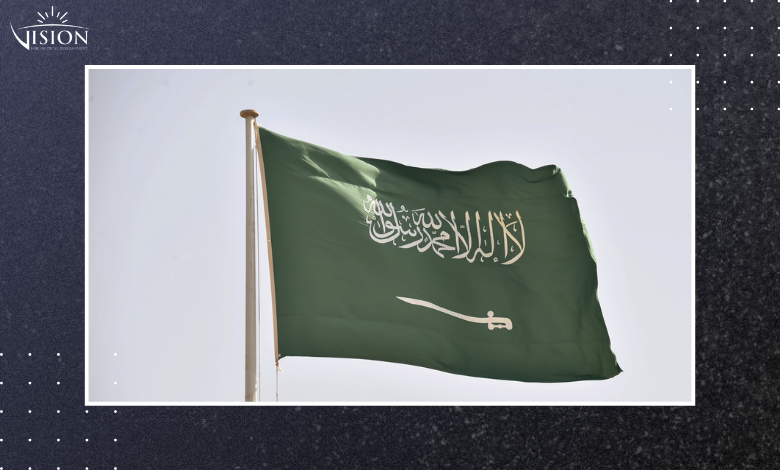
The escalation in the genocide on Gaza since October 7, 2023, reintroduced the issue of unofficial relations between “Israel” and the Kingdom of Saudi Arabia in a different context than before, following a visible shift in Israeli discourse from a language of diplomatic engagement associated with the possibility of normalization to a more critical and sharper tone, reflecting a decline in harmony and the emergence of divergences in regional interests between the two sides. This shift is no longer confined to immediate political reactions but is linked to broader changes in the region’s geopolitical environment and to the two parties’ differing approaches to a number of central issues, foremost among them the Palestinian cause, Yemen, the Horn of Africa, Syria, and the Iranian issue.
This article begins by examining the shift in Israeli political and media discourse toward Saudi Arabia as an indicator of a broader regional realignment. It seeks to trace the contours of this shift and analyze its contexts by linking it, on the one hand, to the stalling of the normalization process and, on the other, to the realignment of security priorities and interests on both sides. It also attempts to assess the implications and limits of this discourse, and whether it reflects a temporary divergence imposed by the circumstances of conflict, or a deeper shift that may affect the future of the relationship between the two sides and the nature of regional alignments in the coming period.
First: Israeli Discourse Toward Saudi Arabia Before the Gaza Genocide and the Path to Rapprochement
In the years preceding the outbreak of the Gaza genocide on October 7, 2023, Israeli political and media discourse toward the Kingdom of Saudi Arabia underwent a noticeable shift characterized by a relatively positive tone. This shift reflected a growing Israeli recognition of Saudi Arabia’s importance as a central actor in in Middle East. Within this discourse, Saudi Arabia was increasingly portrayed as a potential partner in building a new regional axis based on converging security and political interests, particularly with regard to countering Iranian influence and promoting regional stability in line with Israeli strategic perspectives.
In this context, the gained increasing prominence in Israeli discourse. The potential agreement with Saudi Arabia was often framed as the most significant link in the chain of normalization agreements that had begun with several Arab states, and as a strategic achievement capable of producing a qualitative transformation in Israel’s regional standing. This framing was reflected in opinion pieces and analytical assessments issued by Israeli research centers, which emphasized the anticipated political, economic, and security benefits of such engagement, as well as its potential to reshape the map of regional alliances.
Several Israeli political statements during this period echoed this perception, presenting the prospective agreement with Saudi Arabia as a step capable of generating a historic shift in Israel’s regional position and as the culmination of the normalization agreements pursued in the region.
Israeli discourse during this period was also marked by attempts to downplay the centrality of the Palestinian issue as an obstacle to normalization. This reflected an assessment prevalent in some political and media circles that broader regional interests, particularly in the fields of security, economics, and technology, might allow this issue to be bypassed or at least postponed temporarily. Within this framework, Saudi Arabia was portrayed in Israeli discourse as a pragmatic state seeking to advance its strategic interests within a new regional vision. This characterization aligned with Israeli interpretations of several political indicators that preceded the genocide, which were seen as signalling the approaching conclusion of a normalization agreement, or at least the entry of the process into its advanced stages. In some assessments, the announcement of such an agreement appeared to be a matter of political timing rather than a question of fundamental disagreement.
Accordingly, it can be argued that Israeli discourse prior to the recent genocidal onslaught on Gaza was characterized by attempts to construct a narrative of engagement grounded in shared interests and the possibility of transitioning from a state of historical hostility to one of regional partnership. This narrative, however, would later face a severe test with the outbreak of the Gaza genocide and the subsequent political and regional shifts that reordered the priorities of the actors involved, paving the way for the emergence of a different Israeli discourse toward Saudi Arabia in the period that followed.
Second: The Gaza Genocide as a Turning Point in Israeli Discourse Toward Saudi Arabia
The genocidal escalations in Gaza post October 7 marked a clear turning point in the nature of Israeli discourse toward the Kingdom of Saudi Arabia. The discourse that had previously emphasized opportunities for engagement and normalization gave way to a more critical and cautious tone, largely in response to the Saudi position, which reaffirmed the and made progress on it a prerequisite for any future normalization process. As a result, the Palestinian factor was reintroduced as a decisive element in Israeli political and media discussions, after a pre-genocide perception had prevailed that this issue could be bypassed or postponed in light of shared security and regional priorities.
In this context, and political statements in Israel began to display an increasingly critical tone toward the Saudi position, particularly regarding its insistence on linking normalization to the establishment of a Palestinian state or to concrete political steps in that direction. In Israeli discourse, this stance was often portrayed as a retreat from a process that had been widely believed to be approaching its final stages before the outbreak of the genocide. As military operations continued and international pressure intensified, this discourse expanded to include more direct criticism of Saudi policy, along with implicit accusations that Saudi Arabia was repositioning itself within another regional axis at the expense of rapprochement with Israel.
This shift was reflected in certain Israeli political statements, including remarks by Prime Minister Benjamin Netanyahu, who suggested that “Saudi Arabia could establish a Palestinian state on its own territory if it considered this a condition for normalization.” At the time, such remarks were interpreted as an indication that the discourse had moved from a language of engagement to a sharper and more confrontational tone in addressing the Saudi position.
The genocide also contributed to a broader reordering of regional priorities. Saudi Arabia found itself facing a more complex equation that combined regional security considerations with the political and religious responsibilities associated with its position. This was reflected in a more cautious discourse toward Israel and in repeated assertions that any regional settlement cannot bypass the Palestinian issue. In turn, this shift was mirrored within Israel through a political and media discourse that increasingly interpreted the Saudi stance as one of the factors behind the stagnation of the normalization process. Consequently, the discourse gradually moved from one emphasizing potential partnership to one focused on reassessment, opening the door to viewing the relationship as one shaped by shifting interests and the evolving dynamics of the conflict and its regional repercussions, rather than as a fixed or inevitable trajectory.
Third: Diverging Regional Interests and Their Impact on Israeli Discourse Toward Saudi Arabia
The shift in Israeli discourse toward the Kingdom of Saudi Arabia has not been limited to the repercussions of the genocide on Gaza alone. It has also been linked to growing signs of divergence in the two parties’ approaches to several regional issues, which became more evident in recent escalations. As the priority of the normalization track receded, Israeli political and media discourse began to reflect increased , stemming from a growing recognition that the convergence of interests between the two sides was no longer as clear as it had appeared in the previous phase.
This tendency can be observed in certain Israeli statements and analytical articles that interpreted recent Saudi moves as indicators of broader In some Israeli political and media narratives, Saudi engagement with Türkiye and Qatar was portrayed as a shift toward what was described in Israeli discourse as the “Muslim Brotherhood axis.” These narratives also referenced Saudi Arabia’s defense and regional relationships, including military cooperation with Pakistan and its comparatively less confrontational approach toward Iran as signs, according to Israeli interpretations, of an increasing divergence in regional security priorities between the two sides. Such readings were used within Israeli discourse to explain the decline in the level of political alignment that had characterized the pre-genocide period.
This divergence also became particularly evident in the cases of Yemen and the Horn of Africa. Saudi Arabia increasingly adopted more cautious positions regarding projects of territorial fragmentation or the redrawing of political maps in the region. Some Israeli analysts interpreted these developments as a departure from the pattern of that had been expected to form a common ground between the two sides. Additionally, Saudi-Emirati competition in certain regional arenas contributed to a broader Israeli reassessment of influence dynamics in the region, especially given the perception of the United Arab Emirates as a partner more closely aligned with Israeli perspectives on several regional issues.
In the Syrian context, another area of divergence emerged through the relative Saudi–Turkish rapprochement and support for approaches that preserve the unity of the Syrian state and limit scenarios of territorial fragmentation. These positions intersect with regional interests that differ in certain respects from Israeli strategic perspectives, particularly given Israeli concerns regarding Türkiye’s expanding role in northern Syria. Consequently, this development reinforced a line of Israeli discourse linking to a broader regional repositioning that does not fully correspond with Israeli security priorities.
The divergence appeared even more pronounced regarding the Iranian issue. Saudi Arabia has tended to adopt an approach aimed at de-escalation and avoiding scenarios of comprehensive confrontation or the collapse of the Iranian state, largely due to concerns about regional stability and the potential impact of a major conflict on Gulf security. By contrast, Israeli discourse continues to portray Iran as the requiring a more confrontational policy, thereby deepening the gap in threat perception and in the strategies proposed for addressing it.
Overall, these divergences have contributed to a shift in Israeli discourse, from one premised on the assumption of an emerging strategic partnership to a more cautious narrative reflecting the understanding that relations with Saudi Arabia are shaped by changing interests. In this sense, earlier rapprochement appears less as evidence of full strategic convergence than as the product of a temporary alignment created by specific regional circumstances.
Fourth: Implications of the New Discourse and the Future of Israeli-Saudi Relations
The transformation in Israeli discourse toward Saudi Arabia reveals a shift that extends beyond temporary political disagreements. It reflects a broader Israeli reassessment of the nature and limits of a potential relationship with Riyadh in light of the regional transformations triggered by the genocide on Gaza and the subsequent reordering of regional priorities. Whereas Israeli discourse had previously treated normalization as an almost inevitable trajectory driven by converging security interests, the relationship is now increasingly understood within more complex political and regional contexts that have restored the Palestinian issue to a central place in calculations of rapprochement.
As reflected in a number of recent Israeli political and media assessments, this shift indicates a growing recognition within Israeli political and media circles that Saudi Arabia does not view its relationship with Israel solely through a security lens. Rather, it approaches the issue within a broader framework linked to its regional and religious status, as well as considerations of internal and regional stability, factors that impose constraints on the prospects for rapid progress toward normalization. The new Israeli discourse also signals a tendency to recalibrate expectations regarding the relationship, moving away from the notion of a comprehensive strategic partnership toward a more pragmatic approach focused on managing differences rather than assuming their resolution.
Accordingly, Israeli discourse no longer treats the relationship as a fixed and steadily advancing trajectory. Instead, it is increasingly framed as a fluid relationship influenced by escalation in the Gaza genocide, the future of the Palestinian question, and the evolving configuration of regional alignments in the coming period. The new Israeli discourse also reflects a tendency to redefine expectations regarding the relationship, shifting from a vision of a comprehensive strategic partnership to a more pragmatic approach based on managing differences rather than assuming they can be overcome.
Conclusion
The developments examined in this article indicate that Israeli-Saudi relations are entering a new phase in which the limits of rapprochement are being redefined. Normalization is no longer viewed as an inevitable outcome of converging security interests, but rather as a process conditioned by shifting regional and political contexts. The genocide on Gaza has highlighted the limitations of the approach that prevailed prior to the onslaught and has demonstrated that bypassing the Palestinian issue is no longer feasible within any broad regional arrangements involving Saudi Arabia.
In this light, the relationship appears likely to continue within a framework of cautious engagement, governed more by the management of intersecting interests than by a vision of comprehensive strategic partnership. Saudi Arabia seeks to maintain a balance between its regional position and the requirements of domestic and regional stability, while Israel is recalibrating its expectations of the relationship in response to the transformations brought about by the genocide and its repercussions. This reassessment reduces the likelihood of a rapid transition toward a comprehensive normalization agreement, as had been anticipated prior to the genocide.
Accordingly, the shift in Israeli discourse does not necessarily signal a rupture, but rather reflects a transitional phase in which the boundaries and possibilities of the relationship are being redefined. Its future will remain closely tied to developments in the Palestinian file, the trajectory of regional arrangements in the aftermath of the genocide, and the extent to which both sides are able to identify new areas of shared interest that move beyond, without entirely abandoning, the conditions that shaped the previous phase.
The prospective implications of this shift can be summarized in following key points:
- The relationship is moving from the notion of an almost inevitable strategic partnership toward a pattern of conditional engagement subject to reassessment and change.
- The Palestinian issue has returned as the central determining factor in any future progress toward normalization with Saudi Arabia.
- Divergences on regional issues, particularly Iran, Syria, and post-war arrangements related to Gaza, are likely to exert increasing influence on political discourse between the two sides.
- The relationship remains contingent upon a delicate balance between Israeli security interests and Saudi considerations of regional and religious legitimacy.
- Israeli discourse toward Saudi Arabia is likely to remain cautious unless regional transformations emerge that recreate a convergence of interests similar to that which preceded the genocide.
NOTE: This text is adapted from original Arabic article.