Netanyahu’s Request for Presidential Pardon: Testing the Limits of Balance Between the Branches of Power and the Judiciary

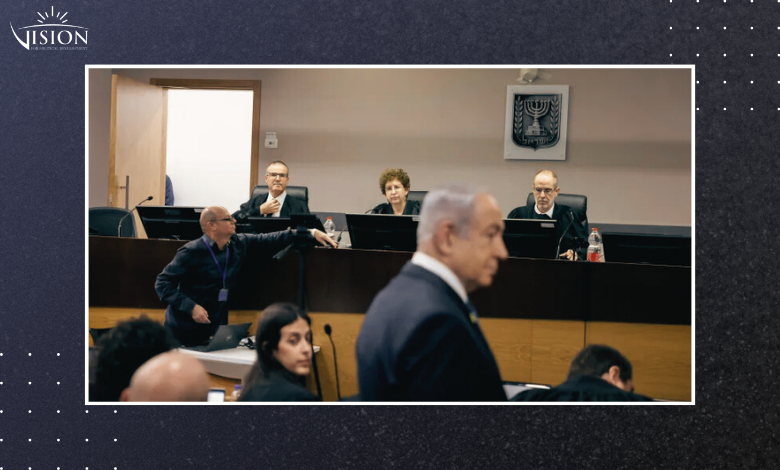
The trial of Israeli Prime Minister Benjamin Netanyahu is considered one of the most legally and politically complex cases since the founding of Israel, due to its overlap with his continued tenure in office and its entanglement with political, media, and economic interests. In 2019, he was charged with offenses ranging from fraud and breach of trust to bribery, in contexts linked to the use of political influence for personal or media-related gains. With the trial commencing in 2020, Israel entered an unprecedented phase in which the head of the executive branch has been subjected to extended public judicial accountability over several years, amid intense public and media scrutiny.
The most controversial development, however, emerged in late 2025, when Netanyahu submitted an official request for a presidential pardon before the judicial process had concluded and before a verdict had been issued. This request is not merely a legal procedure, but a move with political and constitutional dimensions, reflecting a redefinition of the boundaries between the branches of power at a moment of unprecedented mounting internal and external pressures.
Accordingly, this paper aims to analyze this development by tracing the judicial trajectory of the trial, reviewing attempts to circumvent it, unpacking the legal framework governing pardons, and assessing the impact of local and international political interventions on the course of the proceedings.
Criminal Cases Against Netanyahu – Background and Key Allegations
Cases 1000, 2000, and 4000 constitute the legal framework that has led Netanyahu to face the longest trial of a prime minister in Israel’s history. Despite the differing nature of each file, their common denominator is the suspicion of using political influence to achieve personal, media-related, or commercial gains, thereby undermining the core principle of public integrity.
Case 1000 involves Netanyahu and his wife receiving gifts valued at approximately 700,000 shekels (around 200,000 USD), including luxury cigars, bottles of champagne, and jewellery from businessman Arnon Milchan and billionaire James Packer. The prosecution argues that these gifts were not merely “personal courtesies,” but were given in exchange for services Netanyahu provided to Milchan’s business interests.
Although this case is considered the least severe in terms of potential punishment, it demonstrates the use of office for private purposes. Israeli reports highlight an additional analytical dimension: Case 1000 remains the most solid in terms of evidence, contrary to political narratives claiming a “collapse of the files.” Documents show that Netanyahu made official decisions benefitting Milchan’s interests, including instructing former Director General of the Ministry of Communications Shlomo Filber to provide consultancy to Milchan in a television merger deal he was pursuing. The prosecution considers this a clear example of a direct conflict of interest, affecting the prime minister’s duties and the nature of his powers.
Case 2000 centers on conversations between Netanyahu and Arnon Mozes, publisher of Yedioth Ahronoth, aimed at arranging positive media coverage for Netanyahu in exchange for legislative or political actions that would weaken the competing newspaper Israel Hayom. Although the agreement was never executed, the prosecution argues that the negotiation itself constitutes a breach of trust, undermining press freedom and fair political competition.
The most serious of the three cases is Case 4000, in which Netanyahu is accused of granting regulatory benefits valued at approximately 1.8 billion shekels to the telecommunications company Bezeq in exchange for positive and favourable media coverage for him and his wife on the Walla News website, owned by businessman Shaul Elovitch. This is the only case in which Netanyahu faces bribery charges, in addition to fraud and breach of trust, with a potential sentence of up to ten years in prison.
Judicial Trajectory of the Trial and Its Development Since 2016
Benjamin Netanyahu’s trial is the in Israel’s history, not only because of the seriousness of the charges against him, but also because of his political position as a head of government facing criminal prosecution while in office. Tracking the judicial process allows us to understand the context that paved the way for the request for pardon, as well as the legal and political pressures that have accompanied the trial from its inception.
against Netanyahu began in 2016, following the accumulation of testimonies regarding his receipt of valuable gifts and coordination with private media institutions. By the end of 2018, the police recommended indictments in Cases 1000, 2000, and 4000. In November 2019, the Attorney General officially announced the filing of an indictment including charges of bribery, fraud, and breach of trust.
In May 2020, court sessions began, making Netanyahu the first Israeli prime minister to appear in court while in office. From the very first session, the unprecedented nature of the trial was evident, with hundreds of witnesses on the list, including former close associates who became “state witnesses,” as well as businessmen, journalists, and government officials.
During the 2020–2023 phase, which covered most of the trial period, the proceedings focused on presenting evidence and witnesses. The prosecution submitted between Netanyahu’s office, media institutions, and business figures. The prosecution presented a comprehensive narrative of “systematic behaviour” involving exchanges of interests. Meanwhile, the defense concentrated on denying any causal link between government decisions and media or commercial gains, and on challenging the integrity of the investigative authorities.
indicated that during 2023–2024, the court expressed doubts about the prosecution’s ability to prove bribery in Case 4000 in the narrow legal sense, although there was sufficient material to support the charges of fraud and breach of trust. This marked a turning point in evaluating Netanyahu’s legal risk, without eliminating the possibility of conviction on lesser offenses.
At the beginning of 2024, the trial entered the , with Netanyahu’s legal team presenting counter-evidence and calling witnesses to refute the prosecution’s narrative and weaken the evidentiary basis of the cases. suggests that this phase will continue for an extended period before reaching final deliberations, due to the sheer volume of case materials and the complexity of the evidence presented in court.
During sessions in 2023–2024, the the slow progress of the trial and the large amount of documents and correspondences that needed to be reviewed before moving to the final phase. This in the November 2025 session, where the court noted that the volume of materials and the number of witnesses continued to prolong and complicate the trial process.
In summary, tracing the development of the trial shows that it moved from a phase of severe accusations to a complex judicial trajectory that does not allow for a swift resolution. Although some elements of the prosecution weakened politically or in the media, the overall structure of the cases remained strong enough to make conviction, even on lesser charges, a real possibility. This complexity, combined with the extended duration of the sessions and public pressure, explains Netanyahu’s turn toward an alternative path outside the judiciary, namely his request for a presidential pardon.
Netanyahu’s Attempts to Avoid the Trial
Netanyahu’s request for a presidential pardon was not an isolated step; it was part of a long series of initiatives through which he sought to limit the impact of the trial or avoid it altogether. Among these initiatives, widespread discussion emerged around the “French Law”[1] and the “Norwegian Law”[2], despite the differences in their substance and function within the Israeli system.
The “French Law,” as it became known in the media, emerged following the opening of corruption files against Netanyahu. Its proposed amendment aimed to prevent investigation or prosecution of the prime minister as long as he remained in office. The clear political objective behind this proposal was to provide Netanyahu with temporary protection from criminal accountability and to postpone consideration of the cases until after his term. Although the law was never enacted, merely proposing it and repeatedly reviving it within right-wing coalitions reflected an explicit desire to redefine the rules of immunity for a specific legal benefit.
The “Norwegian Law,” contrary to popular perception, does not grant any form of judicial immunity. Its primary function is to regulate the relationship between government membership and the Knesset, allowing ministers to resign their Knesset seats for other candidates on the list and later return to their positions. This law serves to manage coalition politics but does not affect the prosecution’s or court’s ability to try the prime minister or ministers.
Linking the Norwegian Law to Netanyahu’s cases in public discourse largely reflects either a misunderstanding or an attempt to present the immunity debate in a technical guise. In reality, the legal instrument that some actors sought to pass to protect Netanyahu was exclusively the French Law.
The 2022 Plea Bargain
Netanyahu turned to the option of a plea bargain after leaving office in mid-2021, when the opposition coalition succeeded in forming Israel’s 36th government, known as the “Bennett-Lapid Government.” Although there were predictions that the government would collapse quickly due to its unstable composition, it managed to endure for some time. These predictions eased somewhat after the government successfully passed the budget law in November 2021, the greatest challenge it faced, which had threatened its collapse within a few months.
At the beginning of 2022, Netanyahu’s defense team entered with the Attorney General to reach a plea bargain that would end the trial under mitigated conditions.
The proposed deal was based on three key elements:
- Partial admission of fraud and breach of trust, without a bribery charge.
- Replacement of a prison sentence with community service.
- Inclusion of a “stigma clause”[3], requiring a political retirement of no less than seven years.
This clause, in particular, represented the central obstacle to the agreement, since any admission whether formally linked to the stigma clause or not would effectively end Netanyahu’s political career. Although the judiciary encouraged a re-examination of the possibility of a deal during 2021–2022, with proposals for judicial mediation, the negotiations ultimately collapsed due to the outright refusal of any arrangement that would remove Netanyahu from the political arena. This coincided with signs of fragmentation in the ruling coalition and the eventual collapse of the Bennett-Lapid government, which announced early elections in June 2022. This development pushed Netanyahu to set aside the plea bargain option as the likelihood of his return as prime minister at the head of a strong, cohesive coalition increased.
Request for a Presidential Pardon
Netanyahu’s request for pardon from Israeli President Isaac Herzog in late 2025 represents an unprecedented move in Israel’s judicial and political history. It tests the limits of presidential clemency and the extent to which it can be used to end an ongoing criminal trial. The timing and content of this request reveal complex legal and political dimensions, reflecting the depth of the crisis surrounding the trial and Netanyahu’s position within the governing system.
While the law grants the president broad powers in this area, constitutional conventions established over decades impose practical limits on its use, especially concerning senior officials still subject to judicial proceedings.
The president’s clemency authority is based on of the Basic Law: which allows the president to mitigate or cancel penalties, and even grant a pardon before a verdict. However, Israeli judicial practice, particularly following the precedent (1984), has established a cautious principle: pardons should not be used to circumvent the judiciary or protect officeholders from accountability and should remain exceptional, justified by specific circumstances.
Although the law does not explicitly prohibit pre-conviction pardons, this option is constitutionally problematic, as it is seen as a direct encroachment on the separation of powers, especially if issued without an admission of responsibility or acceptance of judicial outcomes. In this context, Netanyahu’s request can be understood as testing the unwritten boundaries of Israel’s constitutional system rather than merely a technical .
Netanyahu submitted a full pardon request before any judgment, without admitting criminal responsibility, making it closer to an attempt to halt the judicial process entirely than to seek mitigation of a potential sentence. His request relied on several arguments, including that the length and intensity of the trial sessions hinder his ability to perform his duties as prime minister, particularly in managing security and diplomatic affairs. He also claimed that ending the trial would serve the “national interest” and help bridge internal political divides amid sensitive political and security circumstances. Netanyahu continued to question the integrity of the investigations, portraying the trial as politically motivated rather than a purely judicial process.
These justifications were widely rejected in legal circles, with legal experts and the prosecution emphasizing that a pardon is not a substitute for the judiciary and is not a legitimate tool to stop an ongoing trial. Using it in this way contradicts constitutional conventions that typically link clemency to post-conviction or at least acceptance of responsibility. In this context, the president’s office announced that the request would undergo “a thorough legal review,” emphasizing the need to maintain judicial independence and respect for the separation of powers.
External Influence and U.S. Intervention
Statements by U.S. President Donald Trump, particularly his public call on President Herzog to grant Netanyahu a pardon, added an unprecedented external dimension to an internal judicial process still pending in court. This was perceived as direct political interference in a domestic criminal matter, sparking widespread debate in Israel about the limits of U.S. influence on political and judicial decisions, and the legitimacy of introducing an external factor into a domestic constitutional dispute.
Netanyahu leveraged this stance as political support, reinforcing his narrative that his trial was politically motivated, and used Trump’s statements to strengthen his position within the right-wing camp, projecting the perception of international, especially American, backing at a time when public trust in state institutions was declining. At the same time, this political use intensified legal and constitutional criticism.
Although U.S.–Israeli relations are unique, interference in a judicial process concerning the head of the executive is highly unusual and raises concerns about undue pressure on the presidency and the intrusion of foreign politics into a process that should remain purely judicial. Legal experts and former officials warned that yielding to such pressures undermines sovereign decision-making and violates a fundamental principle of the constitutional system: that the judiciary operates independently of political interference, whether domestic or foreign.
Political and Legal Repercussions
Politically and legally, the pardon request created a sharp division within Israel. Supporters of Netanyahu saw it as a necessary measure to ensure political stability and continuity of governance, while opponents and legal experts viewed it as a dangerous precedent, and potentially politicizing presidential powers to protect the head of the executive from accountability.
The sensitivity of the issue is heightened by the symbolic position of the president, expected to remain above political conflicts. Granting a pardon to a prime minister accused of corruption could be interpreted as judicial interference or providing political protection, while rejecting it could be seen politically as opposing the prime minister. In this context, the president’s office emphasized that the request would undergo a “thorough legal review” while maintaining judicial independence.
The debate surrounding the pardon highlights rising tension among the three branches: an executive seeking to leverage its position, a judiciary insisting on the continuation of the trial, and a presidency caught at the center of a delicate balance. This occurs amid broader political efforts to reshape the judicial system, from “judicial reform” projects to immunity proposals, making the pardon request part of a structural landscape extending beyond the criminal case itself.
Conclusion
Netanyahu’s attempt to obtain a presidential pardon before a judicial verdict reveals a qualitative shift in the relationship between politics and law in Israel. The case is no longer merely a criminal trial of a prime minister; it has become a testing ground for the meaning of separation of powers and the limits of political influence over the judiciary. This moment marks a turning point in Israel’s constitutional system, where legislative initiatives, legal settlement attempts, and internal and external political pressures converge to redefine the framework in which authority is exercised.
The developments point to two central outcomes:
- The Israeli judicial system remains capable of enforcing its procedures on the head of the executive, despite immense pressure and attempts to limit its independence.
- The political center of gravity is shifting toward an open struggle over the limits of authority, where the pardon is no longer a matter of legal mercy but a strategic tool shaping the future form of governance.
Thus, the most important question is not the fate of the pardon request itself, but whether Israeli institutions can uphold constitutional rules in the face of rising politicization. The outcome of this struggle will determine whether Israel moves toward a model that consolidates the rule of law or toward one in which major decisions are made according to political power, both domestic and foreign, at the expense of judicial independence.
[1] The French Law: This is a legislative proposal put forward in Israel aimed at granting the prime minister temporary immunity from criminal investigation or prosecution for the duration of their term in office, similar to the model in France, where the president is not prosecuted while in office. In the Israeli context, the term was used to describe legislative attempts that would have suspended or postponed Benjamin Netanyahu’s trial until after he left office, before these initiatives ultimately failed to pass in the Knesset.
[2] The Norwegian Law: This is a legal arrangement applied in Israel that regulates the relationship between government membership and the Knesset. It allows ministers and deputy ministers to resign from their Knesset seats while holding executive positions, with other candidates from the party list taking their place, and permits them to return to the Knesset upon leaving the government position. This law does not grant any judicial immunity and does not affect the powers of the prosecution or the courts; rather, it aims to facilitate coalition functioning and the practical separation between the executive and legislative branches.
[3] Disgrace (kalon): This is a legal and ethical tool that prevents convicted politicians from holding public office for a long period of time and is a decisive criterion in cases relating to public integrity. In Israel, it is therefore considered one of the most serious consequences of a conviction at the political level, even when the criminal penalty itself is lenient.
NOTE: This text is adapted from original Arabic article.